2025 Transit Safety and Security Report

Story by Brandon Lewis, data compiled by Megan Perrero
Many high-profile public transit agencies throughout the U.S. have spent the past year boosting their efforts on safety and security, consistently communicating with riders about what they’re doing to deter crime and other unwanted behavior. From updates to rider policies and the crackdown on fare evasion, to technological advancements and additional police presence on transit systems, 2025 was a year that saw agencies take meaningful and visible steps to show they understand and are responding to riders’ and officials’ concerns regarding safety on transit.
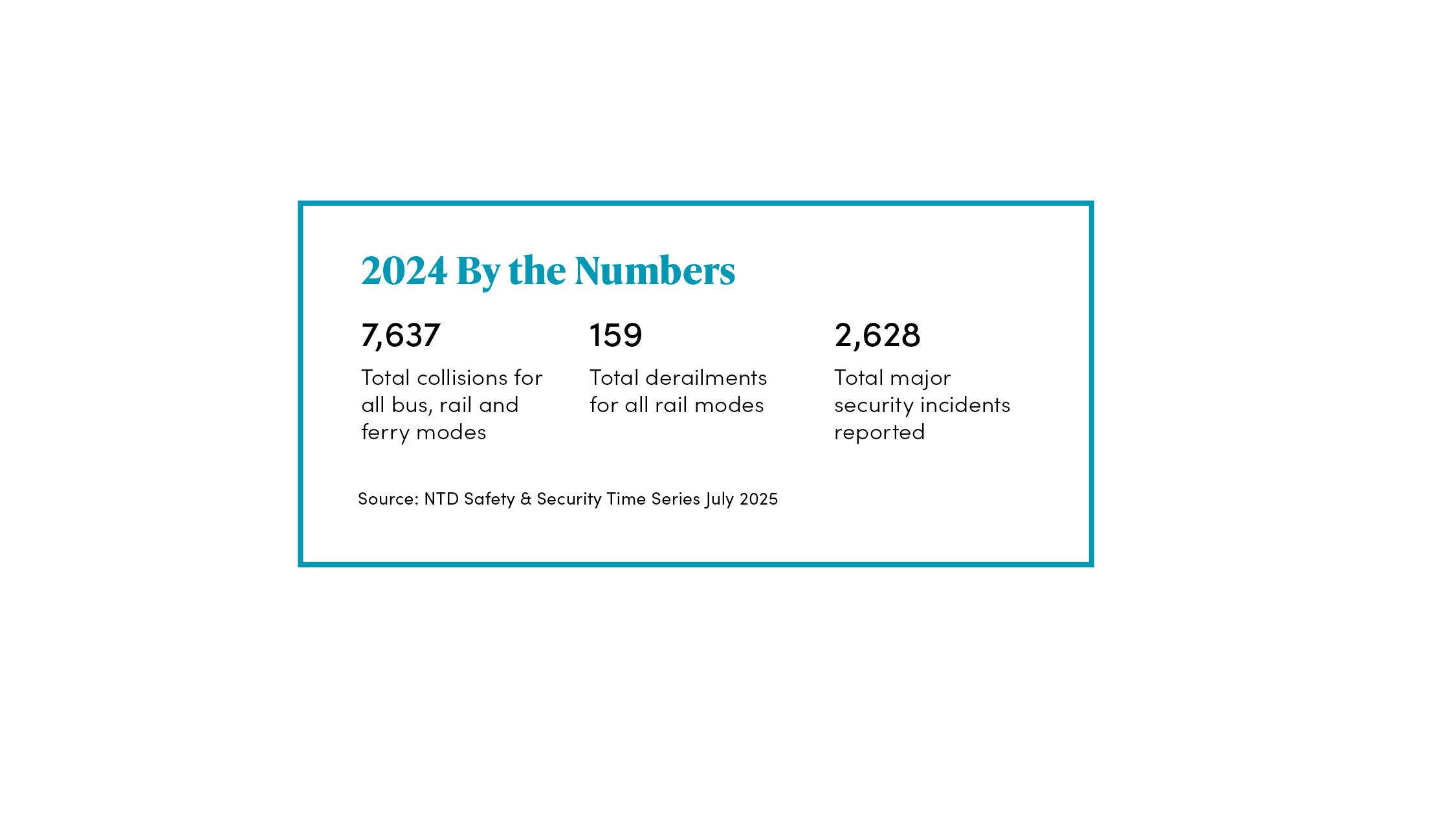
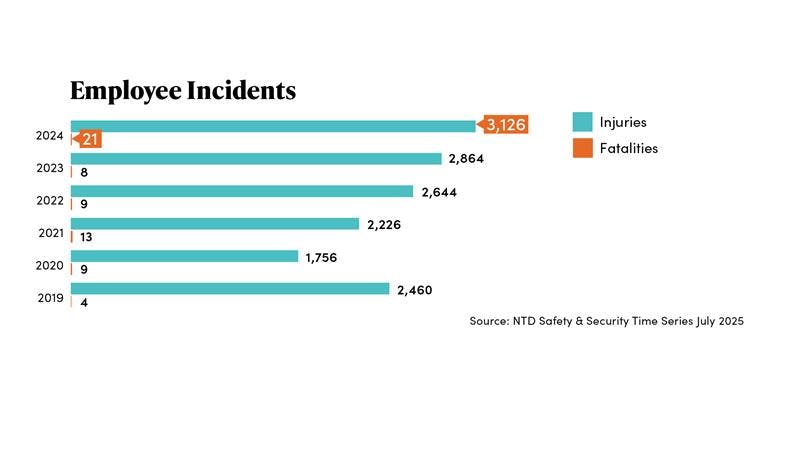
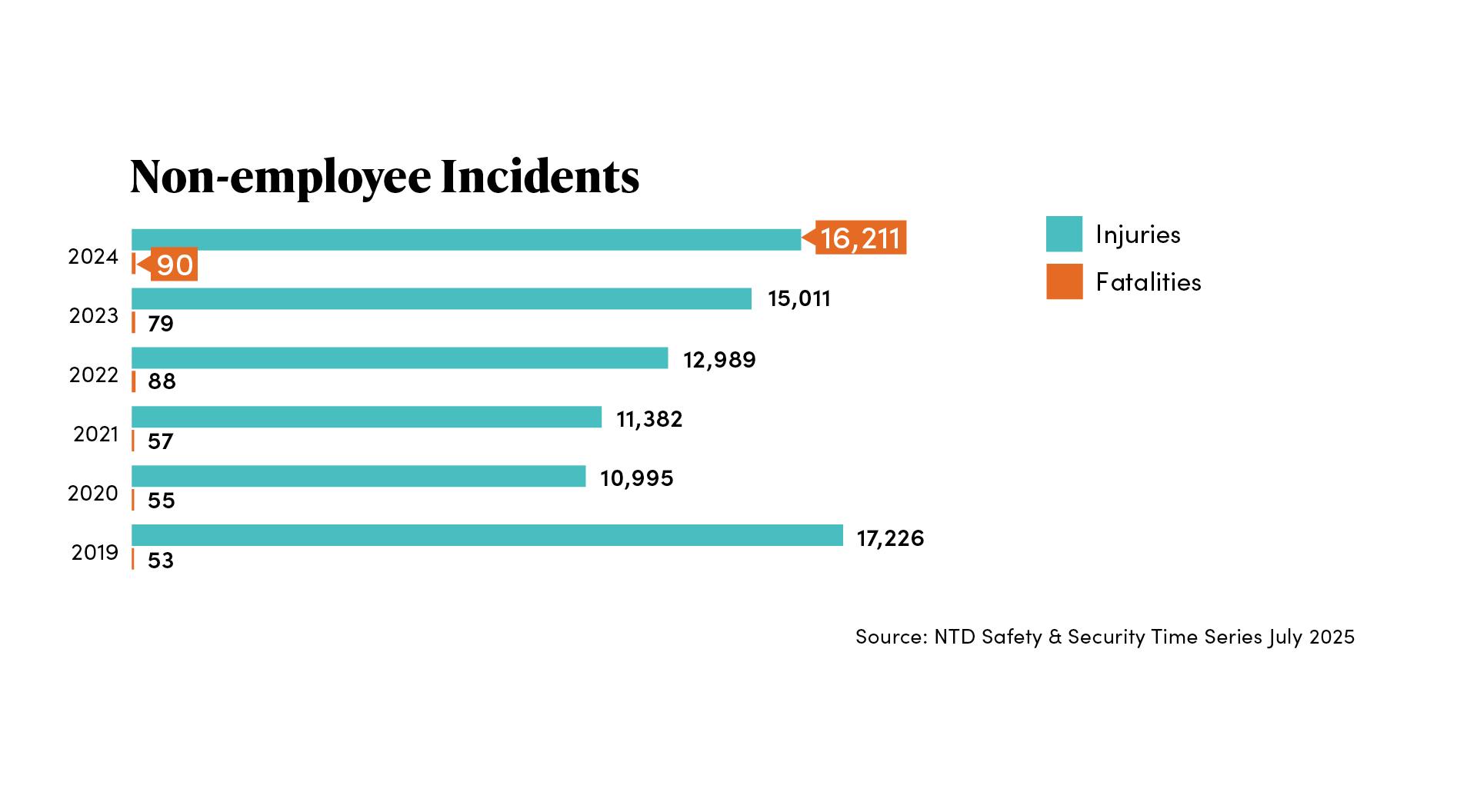
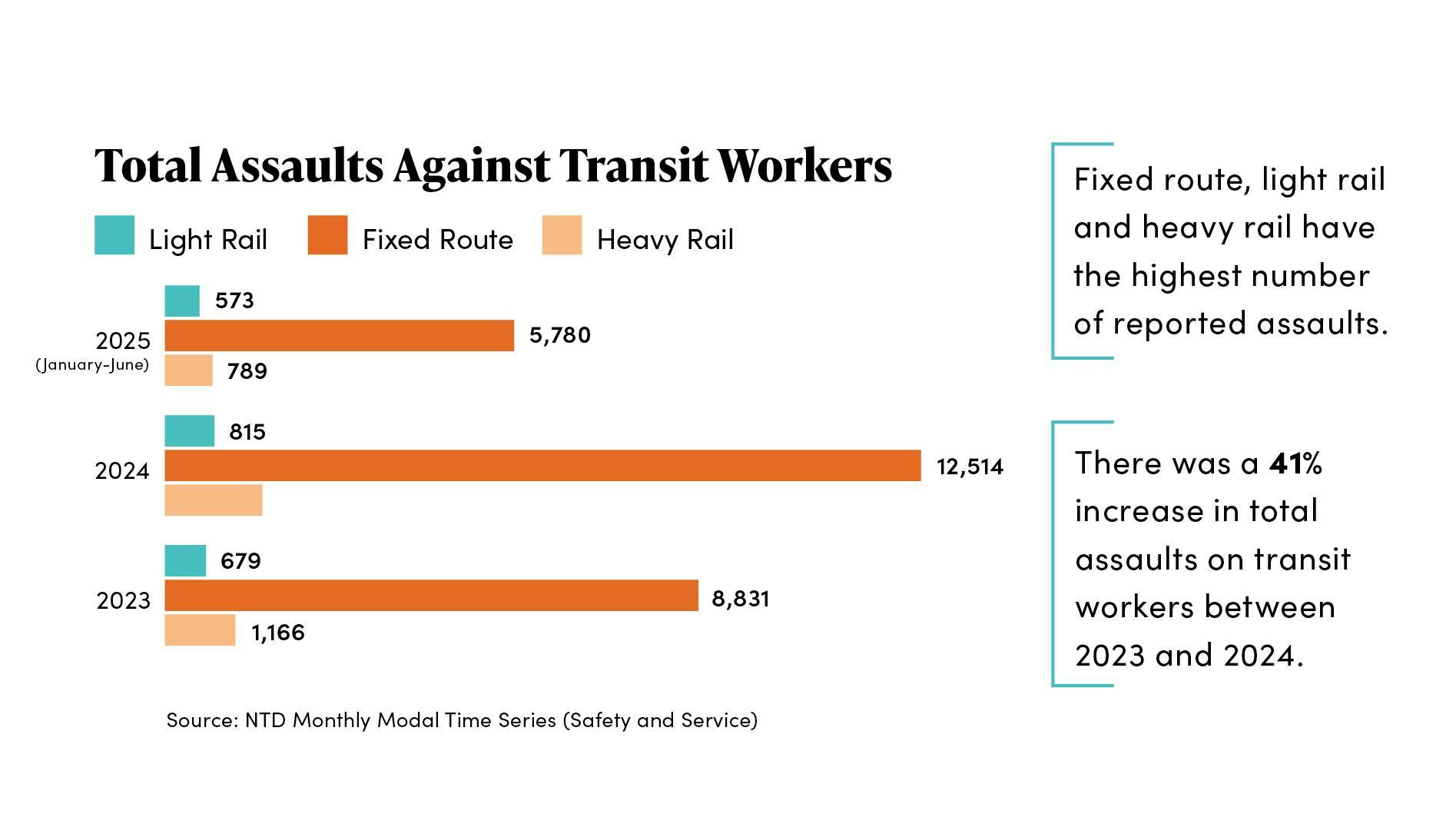
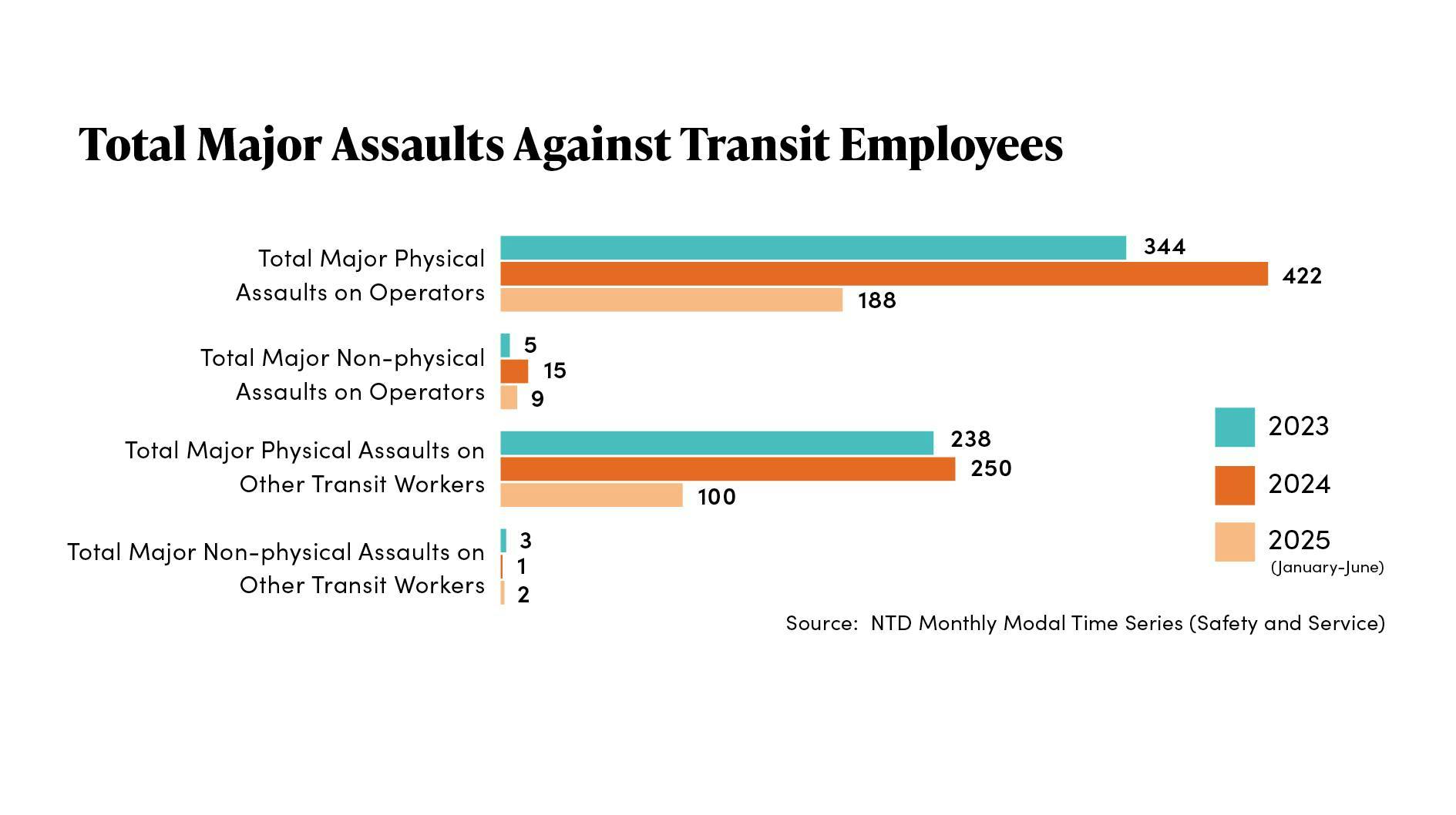
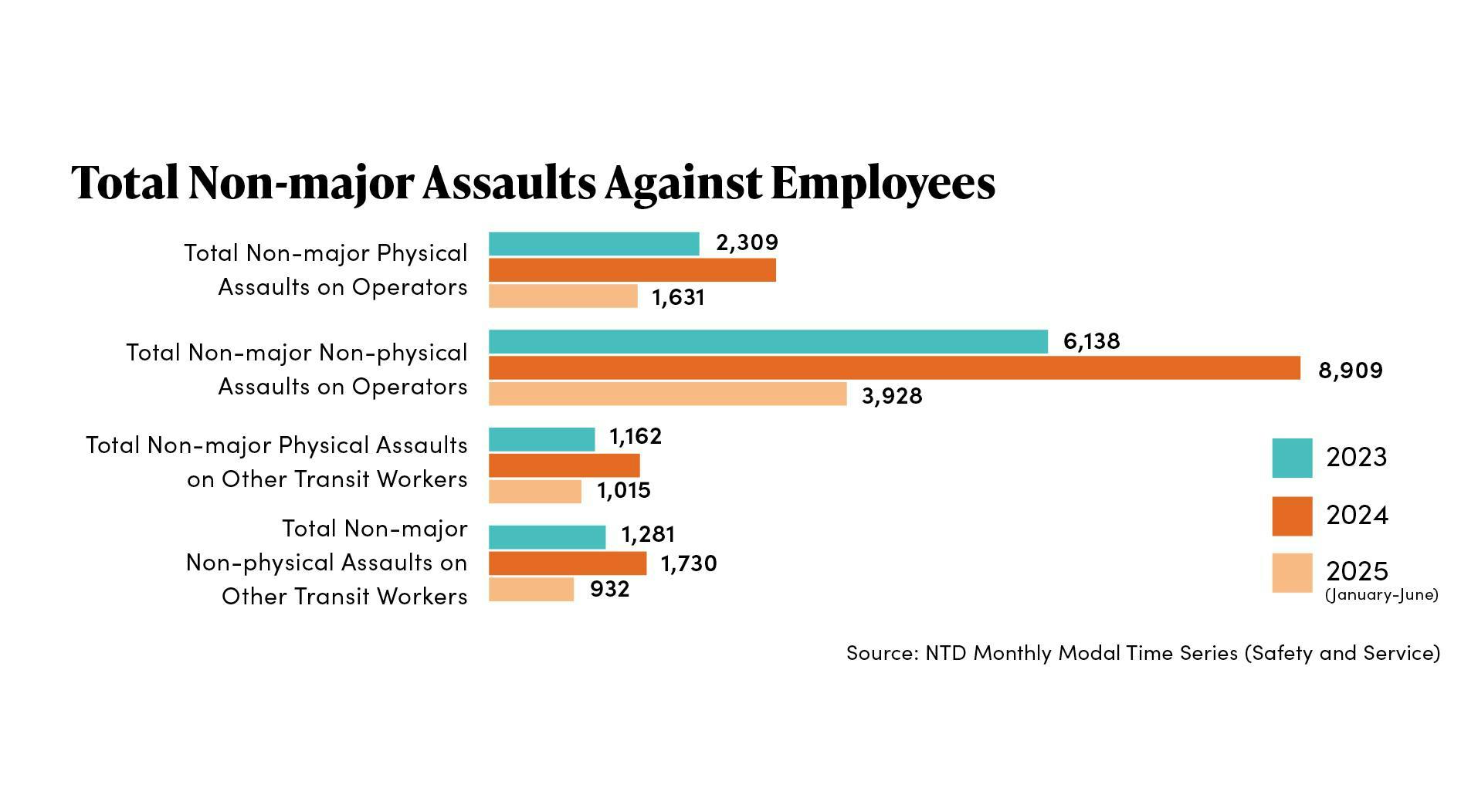
This report focuses on national trends in safety and security incidents and what specific actions agencies are taking to address them. Throughout the story, data is compiled into graphs and charts to further illustrate safety and security incidents transit agencies have faced in the past few years.
Enforcing code of conducts, new rider policies
Many agencies this year have introduced or amended policies that give staff more authority to enforce rules and codes of conduct. In California, the San Mateo County Transit District (SamTrans) implemented a new Passenger Suspension Policy. Built upon the district’s Code of Conduct and Enforcement Policy, the Passenger Suspension Policy allows SamTrans personnel to temporarily suspend individuals for engaging in unsafe, threatening or disruptive behavior on agency property or vehicles, as well as at bus stops and stations.
Community Transit upgraded its Rules of Conduct in November that, among other changes, allows for individuals to receive proper notice for a violation, as well as an opportunity to comply with clear information about how to appeal exclusions. The city of Albuquerque, N.M.’s, ABQ Ride began implementing its long-range transit safety plan after three years of planning, which includes establishing a new transit safety division. The Washington Metropolitan Area Transit Authority (WMATA) Board of Directors adopted a banning policy that prohibits a person who commits a sex or sex-related crime or any assault on a WMATA employee, contractor or customer from entering or using the WMATA system, properties or facilities for more than 24 hours. The policy allows for appeals of any banning period longer than 24 hours.
Based on its rider code of conduct, Rules of the Ride, the Maryland Transit Administration (MTA) launched a new public awareness campaign that outlines expectations of riders while utilizing its system. On Oct. 1, the state also began enforcing a new law that allows the MTA to ban or suspend riders from the system who violate the rider code of conduct.
Deterring fare evasion with modernized gates
Bay Area Rapid Transit (BART) and WMATA have taken action during the past calendar year to make sure riders are paying their fares.
BART finished installing next generation faregates at 50 stations four months ahead of schedule. The gates include a unique door locking mechanism that makes swing barriers difficult to push through, jump over or maneuver under. Each fare gate array forms a minimum 72-inch-high barrier to deter fare evasion.
In 2024, WMATA installed new faregates at all 98 Metrorail stations and during the past year, the new faregates have resulted in a decrease in fare evasions of over 80% throughout the whole system, with the majority of the decrease occurring on the rail side.
Artificial intelligence (AI) integrating into safety tools
As AI has integrated itself into more segments of everyday life, the tool has also been used to enhance safety on transit systems. Hayden AI has launched automated enforcement programs with Culver Citybus, the city of Sacramento, Calif., and Sacramento Regional Transit (SacRT), the Chicago Transit Authority (CTA) and the Southeastern Pennsylvania Transportation Authority. The technology helps ensure transit services remain efficient by reducing delays caused by parking violations in transit zones and improving bus reliability, as well as removing obstacles at bus stops for smooth boarding, particularly for riders who rely on wheelchair ramps or other accessibility features.
ZeroEyes’ AI-based technology pilot has been deployed on the CTA and the Regional Transportation Commission of Southern Nevada. The technology provides a visual gun detection and situational awareness software platform based on computer vision and advanced machine learning AI that notifies local law enforcement of a threat after the system has a detection.
Increasing police presence
Many public transit agencies have also invested in adding more police presence to their systems. The Denver Regional Transportation District (RTD) and TriMet have each launched police bureaus to their transit police divisions. In Texas, the Capital Metropolitan Transportation Authority (CapMetro) Transit Police Department selected Mark43 to provide a records management system, advanced analytics and a mobile app to help the department modernize and enhance customer safety.
CapMetro has also sworn in RenEarl Bowie as its chief of the Transit Police Department and introduced additional officers to support a range of public safety responsibilities, from routine patrols and emergency response to customer assistance and community outreach. Denver RTD also named Steve Martingano as the agency’s next chief of police and emergency management and the Metropolitan Transportation Authority (MTA) appointed Thomas J. Taffe as chief of the MTA Police Department.
The Port Authority of New York and New Jersey added 71 officers to its police department and WMATA celebrated 22 graduates from the Metro Transit Police Department Criminal Justice Academy.
Valley Metro introduced Inter-Con Security on board its light rail and streetcar systems. The security officers wear yellow uniforms while supervisors wear white uniforms, helping to stay visible while prioritizing rider safety and supporting fare inspections. The agency recently conducted a study of more than 1,100 riders that showed most have experienced significant enhancements in security, cleanliness and rider behavior. The agency has also seen a drop of more than 50% year over year in rail security incidents.
As part of its fiscal year 2026 budget, SacRT is making a $1 million investment in its safety and security program. The funding will support staffing improvements to monitor and increase visibility across the transit system.
In April, the Metropolitan Transit Authority of Harris County reported that the Metro Police Department had reached full staffing for the first time in years. The agency is investing $7 million to enhance safety and security measures as part of the METRONow plan.
About the Author
 Brandon Lewis
Brandon Lewis
Associate Editor
Brandon Lewis is a recent graduate of Kent State University with a bachelor’s degree in journalism. Lewis is a former freelance editorial assistant at Vehicle Service Pros in Endeavor Business Media’s Vehicle Repair Group. Lewis brings his knowledge of web managing, copyediting and SEO practices to Mass Transit magazine as an associate editor. He is also a co-host of the Infrastructure Technology Podcast.
 Megan Perrero
Megan Perrero
Editor in Chief
Megan Perrero is a national award-winning B2B journalist and lover of all things transit. Currently, she is the Editor in Chief of Mass Transit magazine, where she develops and leads a multi-channel editorial strategy while reporting on the North American public transit industry.
Prior to her position with Mass Transit, Perrero was the senior communications and external relations specialist for the Shared-Use Mobility Center, where she was responsible for helping develop internal/external communications, plan the National Shared Mobility Summit and manage brand strategy and marketing campaigns.
Perrero serves as the board vice president for LIT, the second vice chair of the American Public Transportation Association’s (APTA) programs and communications committee and is a member of APTA’s Marketing and Communications Committee. She holds a bachelor’s degree in multimedia journalism with a concentration in magazine writing and a minor in public relations from Columbia College Chicago. Her work has been recognized with a first place AdWheel Award, AZBEE Bronze Regional awards, an AZBEE Regional Gold Award and an AZBEE National Silver Award.