A Look at 2026 Passenger Rail Trends for the U.S.

The U.S. passenger rail industry is deep in its build out era. Voter-approved system expansions are completed or nearing completion. Preferred alternatives are being selected. Rail line extensions are moving into the design and engineering phase. Projects are advancing into the construction phase. One rail line is even one step closer to becoming a reality to connect Denver to Fort Collins, Colo. A lot of movement is happening from coast to coast.
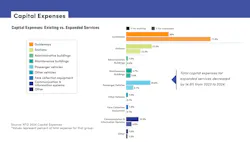
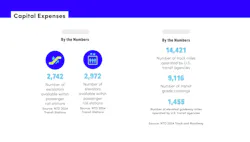
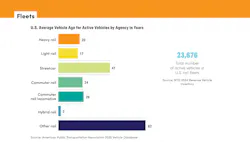
This can be seen by the nearly 5% increase in transit agencies’ track miles over the past few years, according to data from the National Transit Database. In 2020, there were 13,755 track miles transit authorities operated on in the U.S. This number jumped to 14,421 in 2024 and will continue to grow in the coming years as new lines and extensions enter service. A similar bump is reflected in the number of active rail vehicles, jumping from 22,896 in 2023 to 23,676 in 2024. Again, this number is anticipated to increase as agencies like New Jersey Transit, the Metropolitan Transportation Authority and Amtrak take delivery and roll out modernized rolling stock onto their systems.
While the passenger experience continues to be a priority, this is seeming to be prioritized by several agencies through new service offerings. Yes, optimizing schedules, offering flexible fare payment options and real-time information accuracy is still top of mind. However, the passenger experience can only improve when a community has access to a new rail line or connection—especially for the first time. Take the light-rail projects that have come online this year alone. At least 11 new miles have entered service, connecting at least just as many communities to new destinations.
New projects enter revenue service
It’s been a standout year for light-rail systems. After nearly 18 years, Sound Transit completed its voter-approved Link system expansion with the opening of the Crosslake Connection—the final Link 2 Line segment. Even more notably, this light-rail project required an engineering feat—constructing the world’s first light-rail floating bridge. The teams had to leverage innovative engineering techniques to address the unique challenges of running electric trains across a moving body of water. The feat was worth tackling. Thanks to this connection, the seven-mile segment now unites the Eastside with Seattle, Lynwood, Federal Way and the Seattle–Tacoma International Airport via a transfer to the 1 Line. Sound Transit’s Link system now spans 63 miles, with stops at 50 stations.
While shorter in distance, the Kansas City Streetcar Authority’s newly opened 0.7-mile Riverfront Extension provides connectivity that’s just as meaningful. Thanks to the $62-million extension, riders can now seamlessly travel from the University of Missouri–Kansas City through downtown all the way to Kansas City’s riverfront. This project marks a meaningful investment as the city invests in the area to be more accessible, connected and multimodal. With the streetcar serving as the backbone, a bridge for bikes and pedestrians will offer additional options to access the riverfront.
Turning to heavy rail, the Los Angeles County Metropolitan Transportation Authority (L.A. Metro) is also providing new community connections with the opening of the first section of the D Line Subway Extension Project. With 3.9 miles added, riders can now travel west beyond the original station in the Koreatown neighborhood into Beverly Hills. At least four communities will have access to three new underground stations. The extension also creates a one-seat ride from downtown L.A.’s Union Station to La Cienega in Beverly Hills. L.A. Metro completed the extension as part of its Twenty-Eight by ’28 initiative to enhance the region’s transit infrastructure ahead of the 2028 Olympic and Paralympic Games.
Other rail projects continue to progress
The Austin Light Rail project in Austin, Texas, is quickly moving ahead. In under two years, the Federal Transit Administration (FTA) issued a record of decision for the project’s final environmental impact statement. The Austin Transit Partnership, the entity tasked with overseeing the implementation of the system, can now move forward with the federal funding process and begin more detailed project work. Shortly after FTA’s decision was issued, ATP also selected Austin Rail Constructors (ARC) as its development partner. ARC is a joint venture between Stacy Witbeck and Sundt Construction responsible for constructing a majority of the system—including the transitway, tracks, systems, stations, bridges, traffic signals, utilities and drainage structures. Another voter-approved initiative, phase one of the project will connect communities to places such as downtown, East Riverside and South Congress.
Up in the Tri-State area, one of the nation’s most critical infrastructure projects—the Hudson Tunnel Project—continues progress after overcoming federal funding obstacles from earlier in the year. In April, the Gateway Development Commission awarded Package 1C: The Hudson River Tunnel Section to Traylor/Walsh/Skanska joint venture. This construction package includes boring the section of the new tunnel tubes under the Hudson River and installing the tunnel liner and floor. Now, six of the 10 construction packages that make up the project are either in progress or completed.
Back out in California, the Claremont Extension of L.A. Metro’s A Line is pushing forward on two fronts. At the start of this year, the Foothill Gold Line Construction Authority awarded the design and engineering services contract to Parsons Transportation Group, Inc. The $60-million contract includes designing all elements of the 2.3-mile light-rail extension from its current design level of approximately 30% to approved for construction drawings, as well as supporting the project with any needed design services during construction. Second, at the time of publication, the authority was planning to award the construction manager contract to one of the four teams that submitted bids. Both contracts utilize the construction manager at risk delivery method. When complete, the extension will connect riders in Claremont to Pasadena, Calif., and into downtown Los Angeles.
Updates from Amtrak
Amtrak is also starting the year out strong. While newer state-sponsored routes like the Mardi Gras and Borealis service are seeing high demand, Amtrak more recently is turning its focus to modernizing its rolling stock. Earlier this year, Amtrak introduced the first new Airo trainset that’s slated to begin passenger service on the Cascades route in the Pacific Northwest. All eight trainsets should complete manufacturing by the end of this year. By 2027, Amtrak will expand the Airo trainsets to the Northeast Regional route, giving more riders a chance to ride on the sleek new trains. Amtrak plans to expand the Airo to other short- and mid-distance routes in the future.
But long-distance travelers need not fret. Shortly after the Airo debut, Amtrak released an updated strategy to replace its long-distance fleet. Amtrak canceled its request for proposals on bi-level trains after receiving industry feedback and completing a joint review with the Federal Railroad Administration. Instead, Amtrak is asking suppliers to bid on its new long-distance fleet replacement contract. Amtrak plans to add over 800 new railcars across 14 routes through its replacement program. The selected supplier is scheduled to be announced by the end of 2027.
This all follows the highly anticipated launch of Amtrak’s Acela fleet, which debuted last year on the Northeast Corridor. These premium, high-speed trains are modernizing the passenger experience and helping reshape the idea of train travel. Updated amenities and enhanced design features are creating a new experience for riders connecting up and down the corridor. Time will tell if Amtrak is able to build upon the Acela’s excitement with its upcoming rolling stock and truly usher in the next generation of what it means to travel by train.
About the Author
 Megan Perrero
Megan Perrero
Editor in Chief
Megan Perrero is a national award-winning B2B journalist and lover of all things transit. Currently, she is the Editor in Chief of Mass Transit magazine, where she develops and leads a multi-channel editorial strategy while reporting on the North American public transit industry.
Prior to her position with Mass Transit, Perrero was the senior communications and external relations specialist for the Shared-Use Mobility Center, where she was responsible for helping develop internal/external communications, plan the National Shared Mobility Summit and manage brand strategy and marketing campaigns.
Perrero serves as the board vice president for LIT, the second vice chair of the American Public Transportation Association’s (APTA) programs and communications committee and is a member of APTA’s Marketing and Communications Committee. She holds a bachelor’s degree in multimedia journalism with a concentration in magazine writing and a minor in public relations from Columbia College Chicago. Her work has been recognized with a first place AdWheel Award, AZBEE Bronze Regional awards, an AZBEE Regional Gold Award and an AZBEE National Silver Award.