2026 Mobility Outlook Miniseries: The Rider Experience

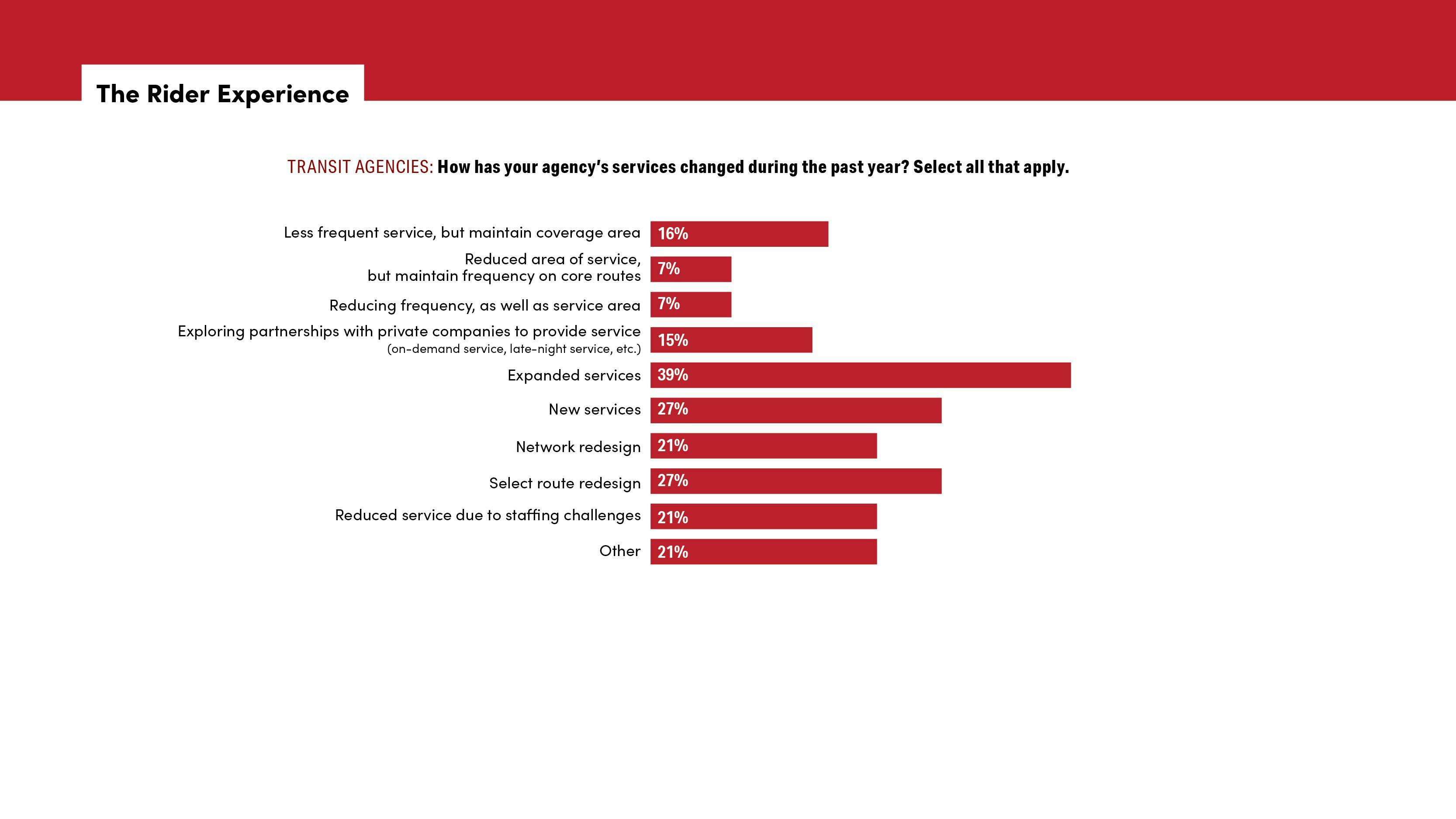
As part of our Annual Mobility Outlook Survey where we poll Mass Transit subscribers to paint a picture of what to expect for the year ahead, we broke out some of the data to create three separate miniseries on key topics (read our Zero-emission Transition outlook and Cybersecurity Trends outlook). This year, we added more questions focused on the rider experience as agencies continue to deploy new tactics to enhance passengers’ journeys. Out of our transit agency respondents, 78% said they measure rider satisfaction, indicating the ongoing importance of understanding what’s most important to riders.
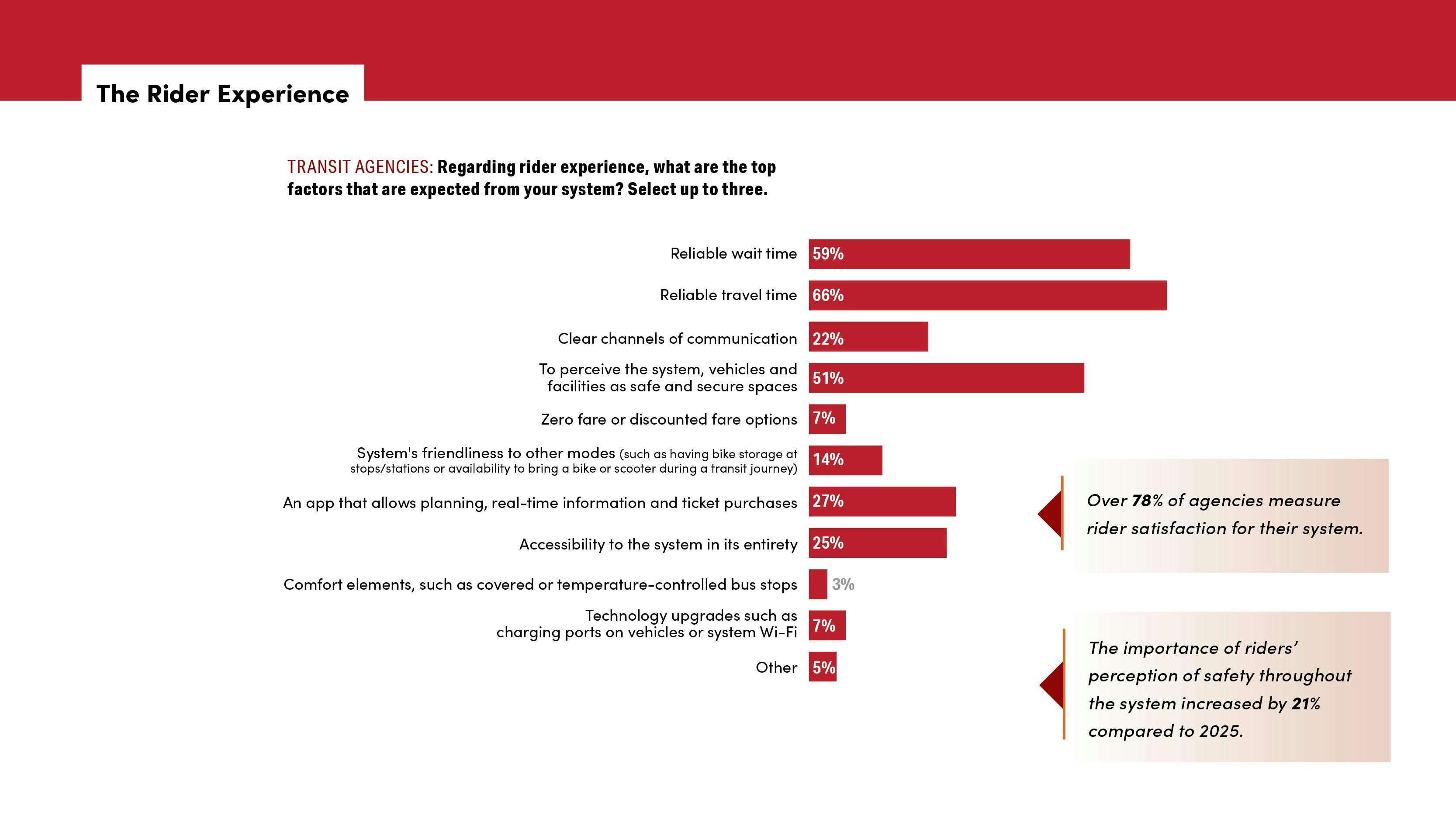
In the past year, we’ve seen investments ranging from new vehicles with additional onboard amenities, updated mobile apps and new tap-and-go payment options. These investments reflect our survey results, with respondents reporting reliable wait time (59%) and reliable travel time (66%) as the top two factors riders expect of their systems. Vehicles with onboard digital signage keep riders informed throughout their journey; Wi-Fi allows riders to stay connected and check arrival times if they’re making a connection; and contactless fare collection can speed up the boarding process, helping prevent delays and keep routes on schedule.
New vehicles enhance reliability
Several bus orders were placed in 2025 from Texas to New Jersey as fleets reach the end of their useful life. Dallas Area Rapid Transit’s 476 vehicle order will ensure reliable travel and wait times as the new vehicles are phased into service, replacing an aging fleet that’s required more frequent maintenance and repairs. The vehicles also include onboard digital signage that provides rider alerts in English and Spanish.
New Jersey Transit (NJ Transit) is continuing to reach its goal of replacing or modernizing every outdated bus and rail vehicle in its fleet by 2031. In October, the agency took delivery of the first of its 175 40-foot buses. At the time of the unveiling, NJ Transit President and CEO Kris Kolluri noted how investing in these modern vehicles enables the agency to “deliver on our promise of a modern, reliable transit system.” These vehicles feature a low-floor design with ramps for faster, easier boarding, helping cut down on wait times.
Real-time information supports reliable wait times
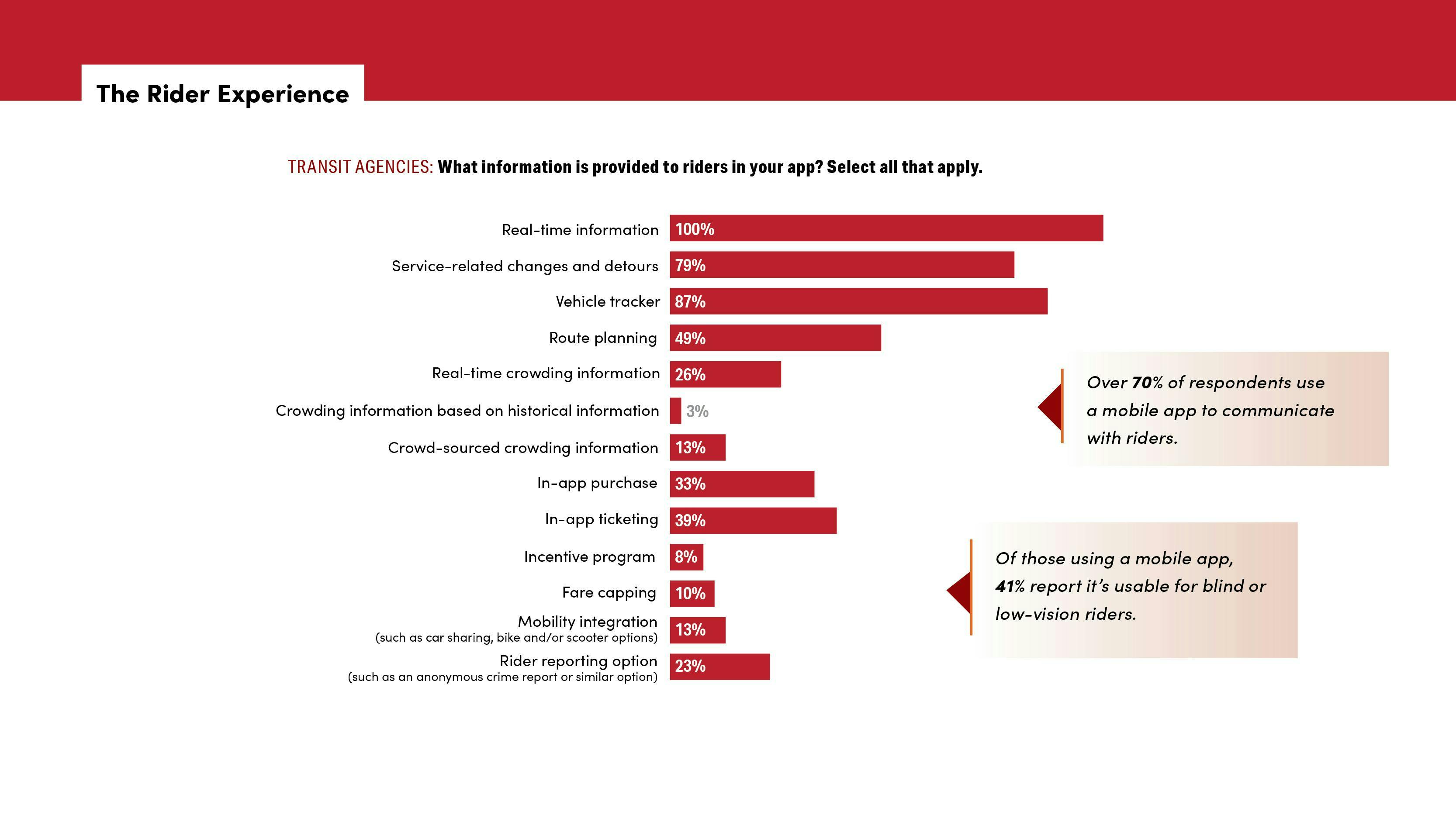
Over 70% of agency respondents use a mobile app to communicate with their riders. Within these mobile apps, all of them provide real-time information—compared to 91% last year; 79% communicate service-related changes and detours; 87% have vehicle trackers; and nearly half offer route planning. All these features support what riders want to know the most: where is my vehicle and does my vehicle come when it says it will.
A handful of agencies released new or updated mobile apps in the past year to better communicate with riders. In Washington, D.C., Washington Metropolitan Area Transit Authority riders now have access to MetroPulse. Features include real-time arrival information, trip planning and a direct way to chat with customer service representatives.
In Chattanooga, Tenn., Chattanooga Area Regional Transportation Authority partnered with Citymapper to launch a mobile app that includes trip planning and real-time information. Real-time bus tracking and instant service alerts keep riders informed, better managing expectations on wait times.
Amtrak and Los Angeles County Metropolitan Transportation Authority also made updates to their respective apps, honing in on providing better notifications for the duration of a passenger’s trip.
Of note, 27% of responding agencies indicated that an app with route planning and real-time information was a top three must have for their riders. Additionally, 41% who responded they do offer a mobile app report that it’s usable for blind or low-vision riders.
Modernized fare collection leveraged as a passenger amenity
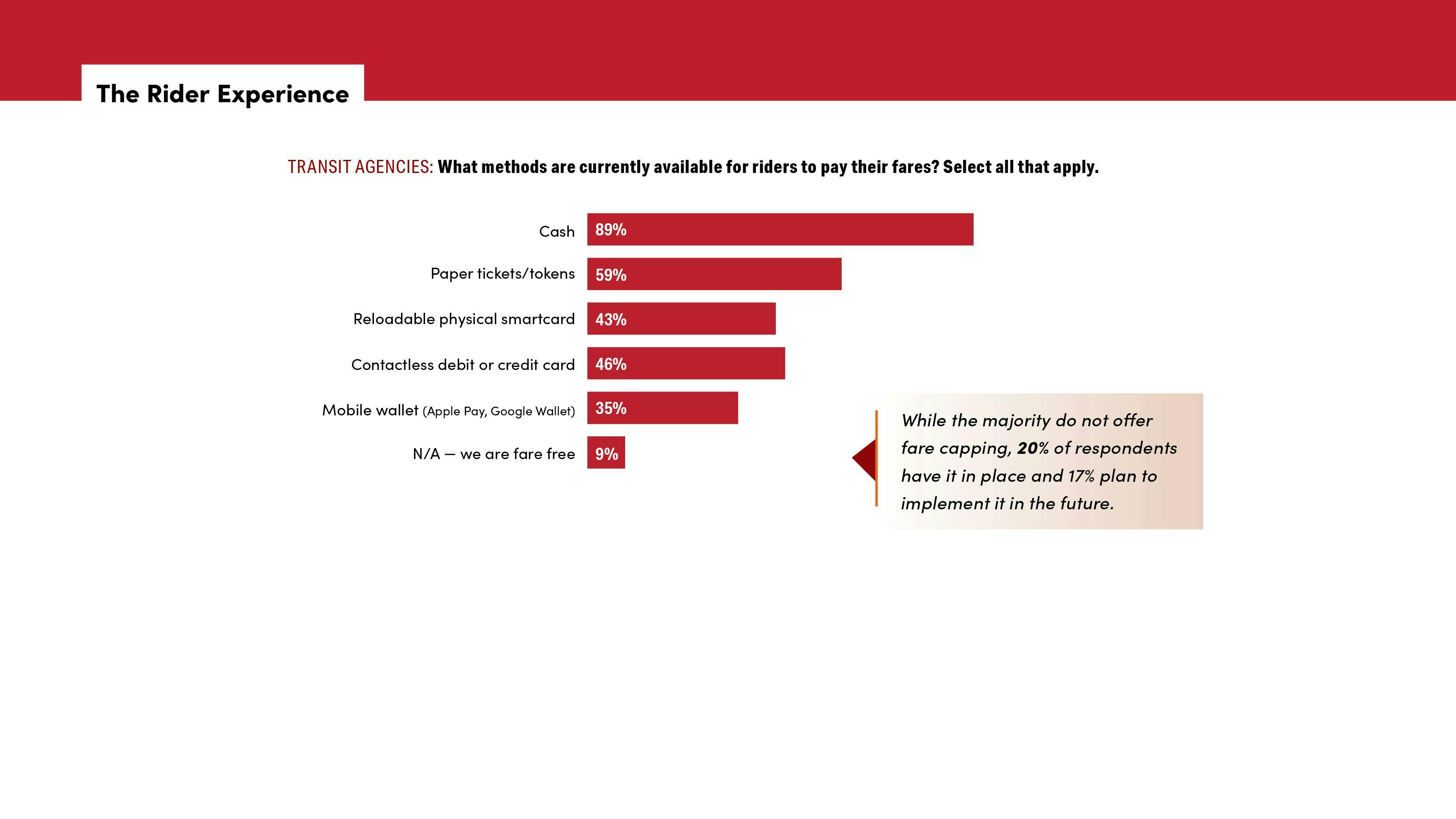
While 80% of survey respondents accept cash or paper tickets/tokens, there has been a notable increase in agencies launching tap-to-pay and other contactless fare collection systems. Over 45% of agencies responded they accept contactless payment and nearly 35% accept mobile wallet payments, helping to make paying for transit easier and more seamless.
For instance, Southeastern Pennsylvania Transportation Authority (SEPTA) riders now have contactless payment options for SEPTA’s Regional Rail. At the time of the launch, SEPTA Interim General Manager Scott Sauer said this would help increase efficiency and “help us continue to rebuild our ridership and support the major events coming to Philadelphia in 2026.”
Down in Nashville, Tenn., WeGo Public Transit (WeGo) rolled out tap-and-go payment options for its buses and WeGo Star commuter train. In addition to tapping a contactless debit or credit card, riders can also tap their phone or smartwatch to use their mobile wallet. The system also supports fare capping.
The Orange County Transportation Authority launched its new Wave fare payment system, featuring reloadable fare cards and contactless options through a mobile app and debit or credit cards. The Wave system also supports fare capping.
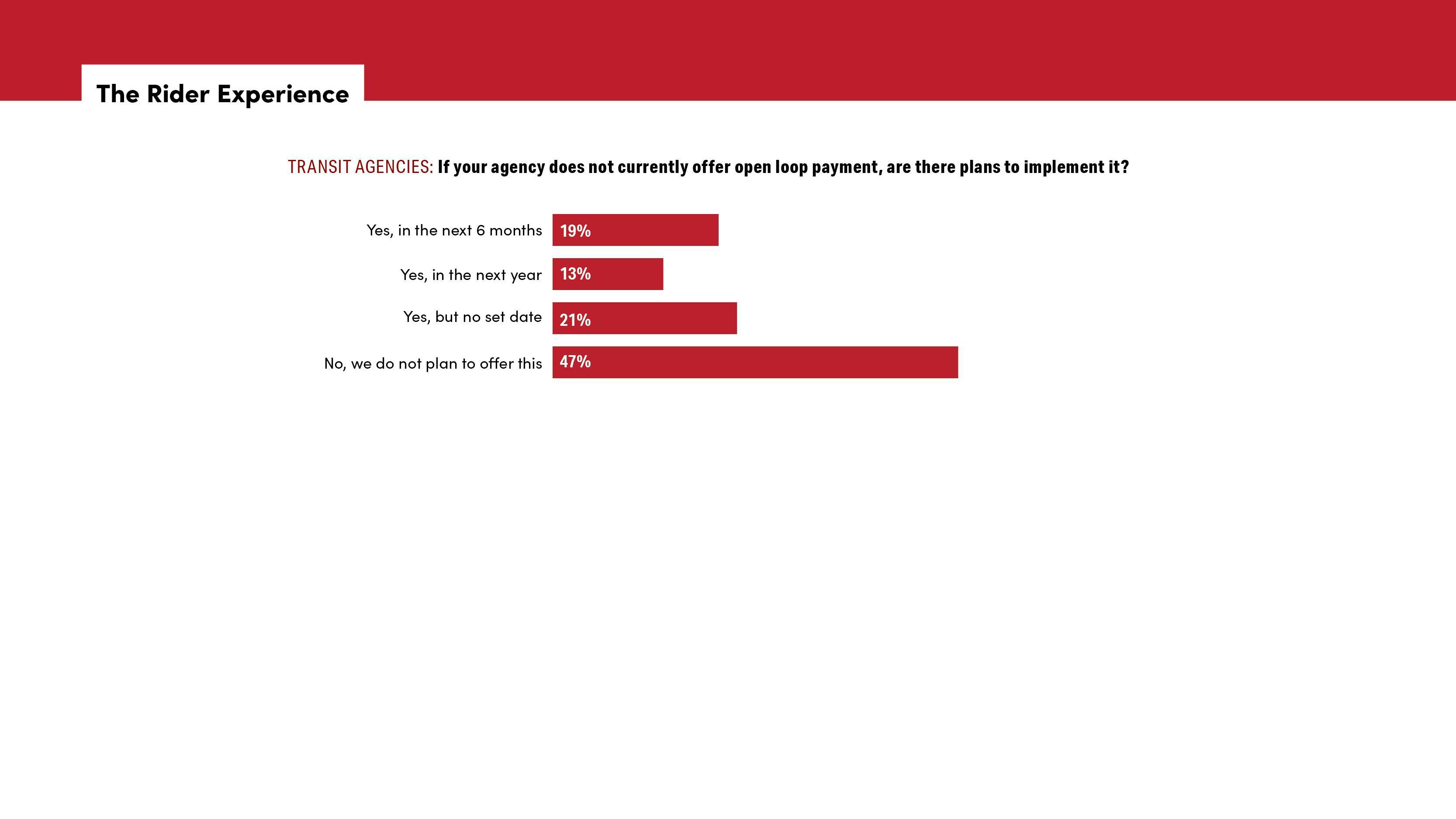
According to survey responses, most agencies don’t currently offer fare capping. However, 20% say they have fare capping in place and 17% said they plan to implement it in the future. This is supported by past survey responses. In 2025, 35% of agencies said they saw opportunity in rolling out more contactless ways to pay. Of the agencies who said they plan to implement fare capping, 19% plan to do so in the next six months, 12% in the next year and 21% have plans but no set date.
The importance of safety perceptions
In addition to technology upgrades and added passenger amenities, rounding out the top three factors agencies said their riders expect from their system is the perception of feeling safe. Following reliable travel times and reliable wait times, nearly 51% of responding agencies said riders expect to perceive the system, vehicles and facilities as safe and secure spaces. The importance of riders' perception of safety throughout the system increased by 21% compared to 2025.
According to the American Public Transportation Association’s 2025 Public Transportation Vehicle Database, 87% of buses now feature security cameras. For instance, St. Louis Metro Transit built upon its video security system, now allowing safety teams to monitor activity in real time thanks to the real-time camera center.
But agencies aren’t just relying on technology; equally important has been the growth in transit ambassador programs and other outreach efforts. Twin Cities’ Metro Transit is increasing the presence of Metro Transit police officers, community service officers, Transit Riders Investment Program agents and supplemental security officers. Sacramento Regional Transit District is increasing the number of transit ambassadors, and Valley Metro reported a 40% increase in security personnel presence during peak hours on its rail system.
More 2026 insights
Want to read more about our outlooks for 2026? Check out our 2026 Mobility Outlook Miniseries: The Zero-emissions Transition and our 2026 Mobility Outlook Miniseries: Cybersecurity Trends.
See all of our insights in the 2026 Mobility Outlook: The Year Ahead.
About the Author
 Megan Perrero
Megan Perrero
Editor in Chief
Megan Perrero is a national award-winning B2B journalist and lover of all things transit. Currently, she is the Editor in Chief of Mass Transit magazine, where she develops and leads a multi-channel editorial strategy while reporting on the North American public transit industry.
Prior to her position with Mass Transit, Perrero was the senior communications and external relations specialist for the Shared-Use Mobility Center, where she was responsible for helping develop internal/external communications, plan the National Shared Mobility Summit and manage brand strategy and marketing campaigns.
Perrero serves as the board vice president for LIT, the second vice chair of the American Public Transportation Association’s (APTA) programs and communications committee and is a member of APTA’s Marketing and Communications Committee. She holds a bachelor’s degree in multimedia journalism with a concentration in magazine writing and a minor in public relations from Columbia College Chicago. Her work has been recognized with a first place AdWheel Award, AZBEE Bronze Regional awards, an AZBEE Regional Gold Award and an AZBEE National Silver Award.