Best Practices: Building Safer Transit and Stronger Communities Through Security Innovation
When we talk about safety and security on St. Louis Metro Transit, it’s easy to focus on the visible changes—new gates, fencing and more cameras at our stations and on our vehicles. But the real story goes much deeper. Our Secure Platform Plan (SPP) moves beyond hardware; it’s a comprehensive, layered approach transforming how we respond to incidents, and just as importantly, keeping the entire bi-state region safer.
Our journey began in 2018, when we engaged outside experts to take a hard look at our system’s vulnerabilities. They produced 99 recommendations, ranging from technology upgrades to rebuilding relationships with law enforcement. When I was hired in 2020, many of those recommendations had already been implemented. I’m proud to say that today we’ve implemented nearly all of them. The blueprint created has become the foundation for everything we do, and we continue to build upon it.
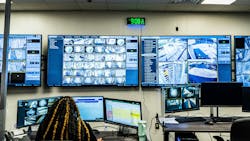
The SPP is a force multiplier—an integration of people, technology and process. At the heart of this transformation is our real-time camera center (RTCC). Previously, our staff was limited to the review of footage after an incident occurred. With upgraded digital cameras that have grown from 800 to nearly 2,000 feeds, our public safety team can now monitor activity in real time, across platforms, buses and trains.
The impact of our approach is measurable. Since rolling out the first 11 gated platforms, we’ve seen a 50% reduction in incidents per 100,000 boardings, and ridership is up significantly at those locations. Yet the impact doesn’t stop there. Our RTCC and special operations teams have become critical resources for law enforcement agencies across the region. Video evidence has helped police track and apprehend a serial offender responsible for multiple homicides; aided in an ongoing investigation by the Illinois State Police by identifying the last known location of a missing person; assisted the FBI in locating a juvenile victim of trafficking; and provided the U.S. Postal Inspector General with video evidence in a mail theft case. These are just a few of the more than 3,000 requests we’ve fulfilled for outside agencies since 2019.
This collaboration is at the core of our approach. While our partnering police departments operate independently, we’ve built strong partnerships and a shared commitment to public safety. Our zoned deployment model means the same security personnel are present at the same platforms and riding the same routes, building relationships with riders and the community. It’s community policing, enhanced by technology.
While the progress is real, security is never done. It’s a dynamic, evolving process. We constantly evaluate and adapt because the challenges of today won’t be the same as tomorrow. Yet, one thing is clear: by investing in the right tools, the right people and the right partnerships, Bi-State Development is not only delivering a safer transit experience, but also helping to make the entire region a safer place to live, work and travel.
—Kevin Scott is the executive vice president of public affairs and security for the Bi-State Development, which operates Metro Transit in the St. Louis region.
About the Author
 Kevin Scott
Kevin Scott
Kevin Scott is the executive vice president of public affairs and security for the Bi-State Development, which operates Metro Transit in the St. Louis region.