
Bus fleets continue to require investments on all fronts: stations, guideways, vehicles, facilities—you name it. This shouldn’t come as a surprise. According to Mass Transit magazine’s 2026 Mobility Outlook Survey, 41% of responding transit agencies said their bus fleets require the most immediate investment regarding the state-of-good-repair backlog.
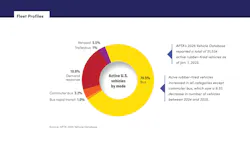
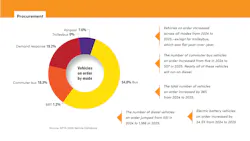
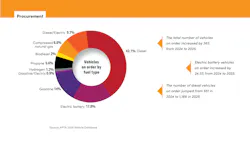
Fleet investments have been reflected in the past year through numerous vehicle orders, facility expansions and station modernization projects. For vehicles alone, 75% of agencies who responded to the Mobility Outlook Survey say they plan to award vehicle contracts in 2026. This builds upon the 2,766 rubber-tired vehicles that were on order as of Jan. 1, 2025, according to the American Public Transportation Association’s (APTA) 2025 Vehicle Database.
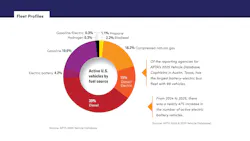
While the number of diesel vehicles ordered has increased exponentially, alternative fuel buses continue to draw demand. For instance, the Washington Metropolitan Area Transit Authority is adding 100 low- and zero-emission vehicles to its fleet through a contract with New Flyer of America Inc. King County Metro Transit expanded its battery-electric fleet with the addition of 40-foot GILLIG buses. In California, Victor Valley Transit Authority introduced 13 new hydrogen fuel cell buses.
Expanding and optimizing bus facilities for the future
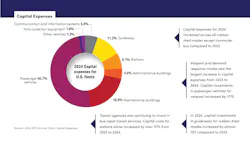
With the expansion of alternative fuels comes the need to retrofit or expand existing facilities. Mass Transit magazine’s January/February issue included a deep dive on several agencies’ approach to building the next generation of bus facilities for zero-emission fleets. It’s to the point where bus depots and maintenance facility capabilities are now determining how fast agencies can rollout more zero-emission vehicles. From California to Washington and Virginia, fueling stations, bus yards and charging infrastructure are being added to properties.
Foothill Transit is adding a second hydrogen fueling station at its Arcadia bus yard. The new fueling site is anticipated to power 19 hydrogen fuel cell buses; the agency currently operates 33. The Santa Clara Valley Transportation Authority (VTA) and the San Mateo County Transit District (SamTrans) are both investing in charging infrastructure, with Santa Clara VTA building a microgrid to store excess energy and SamTrans moving forward to install overhead pantograph chargers and supporting equipment.
Finally, King County Metro Transit and the Alexandria Transit Company—which operates DASH bus service—are upgrading and expanding their facilities. At King County Metro’s Atlantic Base Yard Facility, work is being done to improve the overhead wires for its trolley buses. Out in Alexandria, Va., the agency broke ground on its facility expansion project, which will include infrastructure for up to 24 future overhead pantograph electric bus chargers.
Street modifications prioritize bus reliability
In addition to rolling out new vehicles, street modification projects—paired with technology solutions—are working to enhance bus reliability and increase service speed. Often constructed in tandem with departments of transportation, street changes prioritizing transit vehicles continue to be popular throughout the country.
The city of Nashville, Tenn., introduced a new queue jump lane for WeGo Public Transit buses. The New York City Department of Transportation has completed several bus-only lane projects, including nearly eight miles of bus-only lanes on Hillside Avenue in Queens. Three major transit corridors in Philadelphia are also getting bus-only lanes through a partnership with the Pennsylvania Department of Transportation and the Southeastern Pennsylvania Transportation Authority.
Bus lanes and queue jumps aren’t new, but more agencies are incorporating camera enforcement to ensure these lanes remain clear. The Metropolitan Transportation Authority has been continuously adding automated camera enforcement (ACE); at least 1,400 buses are now ACE equipped, covering 560 miles of routes to ensure busways, bus lanes and bus stops remain clear. Big Blue Bus in California joined Culver City and the Los Angeles County Metropolitan Transportation Authority in deploying Hayden AI’s automated transit enforcement platform to monitor bus lanes and bus stops. SamTrans is also deploying Hayden AI’s enforcement technology on 235 fixed-route buses.
Policy and standardizations
The industry is continuing its efforts to standardized bus vehicle procurements across the U.S. In December 2025, APTA’s Bus Manufacturing Task Force 2.0 published an updated report outlining new standardizations for designs and practices to increase consistency in procurements. While Mass Transit reported in the last bus fleet report that a couple of agencies adopted policies to reduce customization, this may become more important as inflation and tariffs ripple across the supply chain.
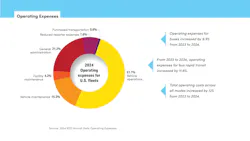
According to APTA’s 2025 Vehicle Database, the average cost for a new bus vehicle between 2023-2024 was $887,001—a 16.6% increase compared to buses on order from 2022-2023. New commuter bus vehicles saw the largest price increase between 2022-2023 and 2023-2024 at 33.1%, or averaging $852,002 per vehicle. Keep in mind these prices reflect only what was paid to the manufacturer.
One other notable development should help agencies looking to boost bus operator hiring. Last year, the Federal Motor Carrier Safety Administration granted a waiver to give state driver licensing agencies the ability to waive the under-the-hood portion of the skills test requirement for people pursuing a commercial driver’s license. The goal is to lift unnecessary burdens on people who would otherwise pass the exam, helping alleviate the national driver shortage. APTA has issued a fact sheet to help agencies push their states to adopt the waiver.

About the Author
 Megan Perrero
Megan Perrero
Editor in Chief
Megan Perrero is a national award-winning B2B journalist and lover of all things transit. Currently, she is the Editor in Chief of Mass Transit magazine, where she develops and leads a multi-channel editorial strategy while reporting on the North American public transit industry.
Prior to her position with Mass Transit, Perrero was the senior communications and external relations specialist for the Shared-Use Mobility Center, where she was responsible for helping develop internal/external communications, plan the National Shared Mobility Summit and manage brand strategy and marketing campaigns.
Perrero serves as the board vice president for LIT, the second vice chair of the American Public Transportation Association’s (APTA) programs and communications committee and is a member of APTA’s Marketing and Communications Committee. She holds a bachelor’s degree in multimedia journalism with a concentration in magazine writing and a minor in public relations from Columbia College Chicago. Her work has been recognized with a first place AdWheel Award, AZBEE Bronze Regional awards, an AZBEE Regional Gold Award and an AZBEE National Silver Award.