OCTA completes major rail protection project at San Clemente’s Mariposa Point
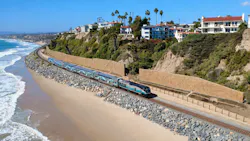
The Orange County Transportation Authority (OCTA) is completing a major coastal rail protection project at Mariposa Point in San Clemente, Calif., allowing a popular section of the San Clemente Beach Trail to reopen to the public.
The OCTA-led project, estimated to cost approximately $93 million, includes a nearly 1,400-foot catchment wall designed to protect the railroad tracks from falling rocks, soil and debris from the adjacent coastal bluff.
“This project is another example of OCTA delivering our commitment to protect this vital rail connection while also returning a popular recreational amenity to the community,” said OCTA Chair Jamey Federico. “Protecting the rail line requires strong partnerships at every level, and I’m grateful to my fellow OCTA Board members, the city, our state and federal partners and the community for working with us to get this important work completed.”
Construction on the protective wall and pedestrian trail began in September 2025 as part of OCTA’s broader emergency effort to protect the coastal rail corridor through San Clemente. The work included construction of the wall along the bluff side of the tracks, along with improvements necessary to rebuild and restore the adjacent beach pedestrian trail.
The project follows years of challenges along the San Clemente coastline. Since 2021, passenger and freight rail operations have been interrupted multiple times because of coastal bluff failures, beach loss, erosion and deterioration of railroad shoreline protection.
The Los Angeles – San Diego – San Luis Obispo Rail Corridor Rail Corridor through San Clemente is a critical link in Southern California’s transportation network, carrying Metrolink and Amtrak Pacific Surfliner passenger trains, as well as freight and military transportation.
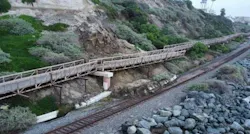
At Mariposa Point, those challenges have also affected public access to the coast. A January 2024 landslide from private property above the rail line deposited soil and debris on the track and destroyed the city’s beach trail bridge through the area, interrupting passenger rail service again.
OCTA and Metrolink responded by constructing a 200-foot protective wall that allowed regular passenger service to resume in March 2024.
The project now being completed provides more extensive protection along Mariposa Point while rebuilding the beach trail and restoring the coastal connection for the community. The beach trail itself is estimated to cost about $24 million of that overall cost, funding primarily with state and federal sources.
OCTA is advancing emergency projects at several vulnerable locations through San Clemente that include repairing and reinforcing existing riprap, adding up to 690,000 cubic yards of sand to help buffer the railroad from wave action, constructing shoreline protection and protecting the tracks from bluff movement.
In September, the OCTA Board declared an emergency along the coastal rail corridor to help accelerate contracting and other actions needed to advance additional protection. OCTA has secured more than $300 million in state and federal funding for coastal rail stabilization and continues working closely with San Clemente and local, state and federal partners on the effort.
At the same time, OCTA is looking beyond the immediate emergency work. The Coastal Rail Resiliency Study evaluates strategies for protecting approximately seven miles of the coastal rail corridor through Dana Point and San Clemente for the next 30 years while a separate state-led effort will examine longer-term solutions beyond that timeframe.
About the Author
 Brandon Lewis
Brandon Lewis
Associate Editor
Brandon Lewis is a recent graduate of Kent State University with a bachelor’s degree in journalism. Lewis is a former freelance editorial assistant at Vehicle Service Pros in Endeavor Business Media’s Vehicle Repair Group. Lewis brings his knowledge of web managing, copyediting and SEO practices to Mass Transit magazine as an associate editor. He is also a co-host of the Infrastructure Technology Podcast.