Metropolitan Transportation Authority, Maryland Transit Administration advance TOD projects near regional rail stations
The Metropolitan Transportation Authority (MTA) of New York, along with the state of Maryland and Annapolis, Md., officials, are advancing transit-oriented development (TOD) projects near their regional rail services.
MTA Board approves Westbury Long Island Rail Road (LIRR) station parking lot redevelopment
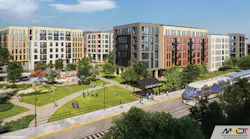
The MTA Board has greenlit a transaction with the GO Westbury, LLC, an affiliate of the Gotham Organization (Gotham) to redevelop the MTA-owned parking lot at the Westbury LIRR station. The MTA says the redevelopment will allow for the first TOD project on LIRR-owned land to move forward.
“Westbury is revitalizing its downtown with a more walkable and dynamic environment that brings new housing within steps of the LIRR, connecting residents to jobs, education and opportunities throughout the region,” said MTA Chair and CEO Janno Lieber.
The Westbury Commons development, located immediately adjacent to the Westbury LIRR station, is set to include 184 rental apartments—of which the agency says 19 will be designated as income-limited affordable homes. It will also feature a 2,000 square foot retail space, a public plaza and 254 parking spaces on the cellar and ground floor level. The MTA Board’s approval of this project follows the unanimous approval by the Westbury Village Board of Trustees in September 2026.
“Westbury Commons will deliver much-needed new homes along with a public plaza, retail space and new parking—supporting a vibrant residential community with direct access to the LIRR network, and because this project generates funding for the MTA capital program, it’s not just a win for Long Island riders—it benefits everyone who depends on our transit system,” said MTA Construction and Development President Jamie Torres‑Springer.
The MTA says that the 99-year ground lease is expected to deliver $15.5 million on a net present value basis to the MTA capital program, along with delivery of a new public open space at the Westbury Station, real estate taxes and other significant public benefits. Under the agreement, the MTA is set to retain ownership of the property, while Gotham will be responsible for development, operation and maintenance of the Westbury Commons site.
“Westbury Commons represents exactly the kind of thoughtful, transit-oriented development that can help meet Long Island’s housing needs while strengthening the communities around our region’s transit infrastructure,” said Gotham Development President Bryan Kelly. “The MTA Board’s approval marks a significant step forward for the project and brings us closer to transforming this underutilized site into a new residential community at the heart of Westbury. We’re grateful to the MTA and Village of Westbury for their partnership in moving the project forward.”
The agency says that this transaction highlights the MTA’s commitment to TOD, ensuring MTA assets support critical housing development goals across the region while also supporting the transit system New York relies on.
“The Westbury Commons development is a win-win for Long Island residents and the LIRR,” said LIRR President Rob Free. “This project will provide easy access for LIRR commuters while also generating revenue to fund MTA capital projects that will make Long Island an even more desirable and convenient place to live.”
The commuter parking lot at the Westbury LIRR station became available for redevelopment in 2021 after a new 683-space commuter parking garage was built north of the station to accommodate the Main Line Expansion project. Completed in 2022, the agency notes that this overhaul aimed to eliminate delays and bottlenecks at the 9.8-mile section of the LIRR Main Line between Floral Park and Hicksville, N.Y., by removing eight street-level grade crossings, modifying seven rail bridges and installing sound and retaining walls throughout the corridor to reduce train noise. The project also featured ADA improvements and enhanced stations as well as new substations and parking facilities.
“I and the village board are pleased that the MTA Board has given final approval for the land lease for the Gotham project,” said Westbury Mayor Peter Cavallaro. “This project has been in gestation for a long period of time and will uplift the property owned by the MTA and formerly utilized as a surface parking lot. The project will create a new gateway on the southern end of our downtown and as well as new housing opportunities for our residents and bring other significant public benefits to the community. This is the latest of several that have been approved that advance out TOD vision for creating a more sustainable, vibrant and eclectic downtown and positioning Westbury as one of the best places on Long Island to live, work, dine, recreate and raise a family.”
Maryland official break ground on $56 million Odenton MARC TOD project
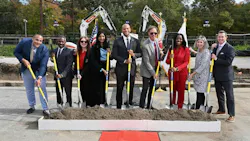
Maryland regional transit leaders have broken ground on the Odenton Maryland Area Regional Commuter (MARC) Station Commuter Garage, a $56 million TOD project that aims to integrate high-density housing directly with high-frequency public transit.
The commuter parking garage groundbreaking marks the first physical phase as the precursor to a $200 million project. Initial efforts are set to include temporary ADA parking relocation to accommodate commuters.
"Our administration is dedicated to building transit accessible communities for Marylanders to enjoy for generations to come,” said Maryland Gov. Wes Moore. “Soon, it will be easier than ever for Odenton residents to access the reliable and sustainable infrastructure they deserve, and we are excited to take this first step towards connecting our communities through accessible transit that leaves no one behind."
Located adjacent to the Odenton MARC station, the public-private partnership is set to transform four acres of what the administration calls underutilized surface parking into a vibrant, mixed-use community hub. The project is funded through a combination of federal transit-oriented development grants, state affordable housing tax credits and private capital investment, with target completion set for autumn 2028.
"Transformative public works projects are built on strong partnerships," said Maryland Department of Public Works Director Karen Henry. "Working alongside our state and local partners allows us to align our long-term goals and deliver high-impact investments like this. Together, we are creating a more connected, accessible and sustainable regional transit network for everyone."
According to the Maryland Transit Administration and Maryland Department of Transportation (MDOT) shared projections, this modernization of the state's third-busiest MARC station is expected to yield over $270 million in new tax revenue for the state and Anne Arundel County over the next 30 years following a full redevelopment of all three existing surface lots located along east and west sides of the rail corridor.
Phase 1 of the garage construction is set to focus on foundation excavation, utility infrastructure updates and the lower-level parking structures. Metro rail and bus services will operate on normal schedules throughout construction, with designated temporary pedestrian paths guiding transit riders safely around the construction zone.
Local businesses surrounding the MARC station will remain open and accessible, according to the administration.
About the Author
 Noah Kolenda
Associate Editor
Noah Kolenda is a recent graduate from the Craig Newmark Graduate School of Journalism with a master’s degree in health and science reporting. Kolenda also specialized in data journalism, harnessing the power of Open Data projects to cover green transportation in major U.S. cities. Currently, he is an associate editor for Mass Transit magazine, where he aims to fuse his skills in data reporting with his experience covering national policymaking and political money to deliver engaging, future-focused transit content.
Prior to his position with Mass Transit, Kolenda interned with multiple Washington, D.C.-based publications, where he delivered data-driven reporting on once-in-a-generation political moments, runaway corporate lobbying spending and unnoticed election records.
Related
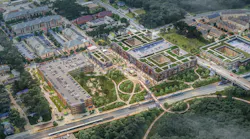 MDOT's new study highlights growth opportunities at six stations along the corridor, potential to create more than 5,0000 new jobs.