OKC Streetcar goes permanently fare-free
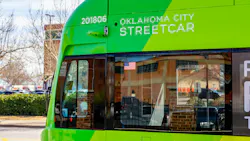
The Central Oklahoma Transportation and Parking Authority (COTPA) has opted to remove the fare for the Oklahoma City Streetcar (OKC Streetcar) and establish a zero-fare service.
EMBARK established a free fare pilot program in January to test whether removing fares from the OKC Streetcar would increase usage. A ridership analysis comparing January through June 2025 with the same months in 2026 revealed a jump in ridership on the OKC Streetcar by an average of 71% month over month compared with the same period last year.
“We’re pleased to see these positive results from the ridership analysis and to create a zero-fare OKC Streetcar system for our residents and visitors,” said EMBARK Director Jesse Rush. “As our city continues to invest in projects and host major events coming to downtown Oklahoma City, the streetcar can improve downtown circulation, help ease traffic congestion and boost economic activity for downtown businesses.”
The Transit Cooperative Research Program reports in its 2023 Fare-Free Transit Evaluation Framework that fare-free transit is used to increase ridership, improve operating efficiency because time need not be spent collecting fares, increase social equity through a reduction of barriers and to save costs on infrastructure used to collect fares.
OKC Streetcar is also not the first agency to zero out fares, coming behind the Greater Richmond Transit Company and Mountain Metropolitan Transit, who continued offering free fares to its riders in their 2026 budgets after going fare-free in 2020 and 2022 respectively.
Beginning operations in December 2018, the OKC Streetcar operates seven days a week across two loops with 22 stops, served by seven streetcars. The agency says the service aims to strengthen community connections, support economic growth and enhance mobility for residents and visitors in OKC's core, further supported by going fare-free.
About the Author
 Noah Kolenda
Noah Kolenda
Associate Editor
Noah Kolenda is a recent graduate from the Craig Newmark Graduate School of Journalism with a master’s degree in health and science reporting. Kolenda also specialized in data journalism, harnessing the power of Open Data projects to cover green transportation in major U.S. cities. Currently, he is an associate editor for Mass Transit magazine, where he aims to fuse his skills in data reporting with his experience covering national policymaking and political money to deliver engaging, future-focused transit content.
Prior to his position with Mass Transit, Kolenda interned with multiple Washington, D.C.-based publications, where he delivered data-driven reporting on once-in-a-generation political moments, runaway corporate lobbying spending and unnoticed election records.