SEPTA, CTA report drops in system crime as agencies fortify security efforts
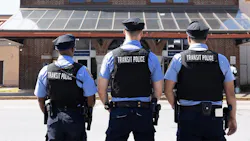
Transit agencies across the country have been taking steps to reduce crime on their systems, like the Southeastern Pennsylvania Transportation Authority (SEPTA), which has taken multiple steps to improve system security, resulting in multiple double-digit reductions in crime. Similarly, the Chicago Transit Authority (CTA) has taken increasing strides to expand its security efforts, now with a new campaign informing riders of the consequences of transit-related crimes through new signage.
SEPTA reports drops in crime on multiple lines
As SEPTA continues to build on its efforts to enhance safety and security on the system, like with its partnership with Norristown Police, SEPTA Transit Police reported a 21% reduction in serious crimes in the second quarter of 2026 compared to the same period last year, including a 40% decrease in aggravated assaults.
According to new quarterly data, there were crime reductions of double-digit percentage points on the [L] Market-Frankford Line, [B] Broad Street Line and buses.
SEPTA says it continues to focus and invest resources on recruiting and retaining Transit Police Officers. The Transit Police force now has 220 officers – six over the budgeted headcount.
The report comes just weeks after SEPTA supported a series of major events in Philadelphia, including the FIFA World Cup.
“Transit Police played a critical role in ensuring that more than 155,000 fans who took the B after the six World Cup matches had a safe and positive experience on our system,” said SEPTA General Manager Scott Sauer. “This was the largest security posture in Transit Police history with enhanced foot patrols, K9 units and real-time monitoring by our Virtual Patrol to manage the massive crowds at NRG Station, and it was a huge success.”
SEPTA reports that Transit Police continue to prioritize fare evasion and smoking—two of the most often-cited complaints by riders. Fare evasion enforcement is up by nearly 19% this quarter compared to the second quarter of last year, and smoking citations are up by 27%.
SEPTA is also installing more full-height fare gates. The first phase of this initiative, covering 10 stations, was completed earlier this year. SEPTA’s fiscal year 2027 budget includes funding to bring full-height gates to an additional 13 stations.
Modified turnstiles are also being piloted at Walnut-Locust Station with plastic extensions to the gate’s arms, side plexiglass panels and redesigned internal mechanisms that lock sooner when someone attempts to force the gates backward.
“Fare payment is not just about revenue—it is about fairness and safety,” said SEPTA Transit Police Chief Charles Lawson. “When people do not pay, everyone loses. By stepping up enforcement and making strategic investments, we are working hard to ensure that every rider does their part.”
CTA launches new campaign to combat crime on transit
The CTA has announced a new initiative to help deter crime on the system—the installation of more than 7,000 signs on buses and trains that highlight the Cook County State’s Attorney’s Office (CCSAO) policy of seeking pretrial detention for violent felonies committed on public transit.
"In order to have a safe and thriving city, we need to have a safe public transportation system,” said State's Attorney (SA) Eileen O’Neill Burke. “The Cook County State’s Attorney’s Office is committed to doing everything we can to make our public transportation system the safest in the nation. We are putting up these signs to show how seriously we take these cases and to reinforce the consequences offenders will face for bringing violence onto the CTA.”
As part of the campaign, signs will be placed on every vehicle in CTA’s fleet, which includes more than 1,500 railcars and nearly 2,000 buses. The signs reflect the detention policy that SA O’Neill Burke announced on her first day in office: there is no place for violent crime on the public transit systems.
“Everyone deserves a safe and welcoming transit environment. These signs are a message to riders and employees that we're working together to ensure transit safety is prioritized at every step,” said CTA Acting President Nora Leerhsen. “More than ever before, we're investing in new strategies to ensure appropriate resources are available to riders and that action is taken to keep your journey safe.”
The signs read: “Violence on the CTA will not be tolerated. The Cook County State’s Attorney’s Office will prosecute and seek pretrial detention for all violent offenses on public transit.”
The signage campaign follows the launch of SA O’Neill Burke’s Regional Transit Task Force (RTTF) in May 2026, a collaborative effort bringing together local, county, federal and transit agencies to strengthen safety across Chicago-area transit systems. RTTF participants include representatives from the CCSAO, the Chicago Police Department (CPD), CTA, Cook County Sheriff’s Office, Metra and Pace Suburban Bus.
The CCSAO also established an internal CTA task force, which focuses on prosecutions of transit-related crime in Chicago. With guidance from the CTA and CPD, this internal task force has trained more than 30 Assistant State’s Attorneys on video technology available to support law enforcement investigations and how it can be presented in court as evidence.
From 2025 to 2026, overall crime has plummeted by 30% on every form of public transit – buses, bus stops, garages/lots/properties, platforms/stations/tracks and trains – with a 76% drop in violent crime on the Red Line.
About the Author
 Noah Kolenda
Noah Kolenda
Associate Editor
Noah Kolenda is a recent graduate from the Craig Newmark Graduate School of Journalism with a master’s degree in health and science reporting. Kolenda also specialized in data journalism, harnessing the power of Open Data projects to cover green transportation in major U.S. cities. Currently, he is an associate editor for Mass Transit magazine, where he aims to fuse his skills in data reporting with his experience covering national policymaking and political money to deliver engaging, future-focused transit content.
Prior to his position with Mass Transit, Kolenda interned with multiple Washington, D.C.-based publications, where he delivered data-driven reporting on once-in-a-generation political moments, runaway corporate lobbying spending and unnoticed election records.