New economic report highlights impact of Denver RTD services
The Denver Regional Transportation District (RTD) has unveiled a new economic impact study, showing what it calls a major contributor to the local economy. The report highlights that the agency supports approximately 17,500 jobs, while also generating an estimated $2.1 billion in annual economic activity. Further, Denver RTD highlighted it provides roughly $1.6 billion each year in community and mobility benefits.
Conducted by EBP, the agency notes that the study evaluated the economic value generated by Denver RTD’s operations and capital investments, along with the mobility benefits transit provides to residents, businesses and communities throughout the region.
The Economic Impact of the Denver Regional Transit District report compared current conditions with a hypothetical scenario in which Denver RTD transit service did not exist. Researchers found that every $1 invested in Denver RTD generates $2.42 in economic value for the region, demonstrating a strong return for residents, employers and communities.
"[Denver] RTD isn't just moving people. It's helping power the regional economy," said Denver RTD General Manager and CEO Debra Johnson. "This study confirms what many residents and employers already know: transit connects people to opportunity, supports business growth and provides benefits that reach far beyond our customers."
Denver RTD notes it commissioned the study to quantify the value transit delivers across the region. The findings provide leaders and stakeholders with compelling, data-driven insights into how transit supports employment, business activity, mobility and quality of life, helping inform future investment and planning decisions.
The report also isn’t the first of its kind, following a recent study the Canadian Chamber of Commerce conducted on TransLink’s economic impact, which found its economic impacts to be within a few pennies of Denver RTD’s when converted into U.S. dollars. Further, in a March report, the American Public Transportation Association noted that a program of enhanced transit investment over 20 years “can have a total effect on the economy and society of approximately five times the amount being spent annually.”
Denver RTD says its economic impact extends beyond regional benefits to the everyday mobility that keeps the region moving. By providing access to jobs, education, healthcare and essential services, the agency says that transit helps residents participate in the workplace and remain connected to their communities.
The study found that nearly one in five Denver RTD trips would not occur if transit were unavailable, underscoring the role transit plays in helping residents reach essential destinations such as jobs, school and medical appointments.
The study estimates that without Denver RTD, the region would lose approximately 4,500 jobs and more than $1 billion in economic activity. The study also found that Denver RTD helps customers save money by providing an affordable alternative to driving, ride-hailing services and taxis. Transit customers collectively avoid:
- More than $211 million annually in vehicle ownership costs, including insurance, registration, depreciation and financing expenses.
- Approximately $445 million annually in fuel, parking, vehicle operating, taxi and ride-hail costs. The average Denver RTD standard fare for a three-hour pass costs $2.75, compared with approximately $5.38 for driving and more than $22 for a taxi or transportation network company trip.
Denver RTD notes it also helps reduce congestion. Without transit service, researchers estimate the region would experience an additional 464 million vehicle miles traveled annually, resulting in an estimated $56 million each year in lost time and productivity.
Beyond its economic benefits, Denver RTD notes it contributes to public safety and environmental quality. The study found transit helps prevent an estimated:
- 19 fatalities annually
- 778 injuries annually
- 1,955 vehicle crashes and property-damage incidents annually, resulting in an estimated $464 million annual safety benefit
Further, the study highlighted that Denver RTD also reduces greenhouse gas emissions by approximately 125,000 metric tons of carbon dioxide each year, equivalent to the annual energy use of about 26,000 homes or the amount of carbon absorbed bv approximately two million trees over 10 years.
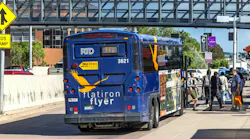
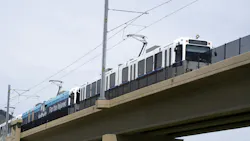
The study found that communities served by high-capacity transit service account for a substantial share of the region’s economic activity, jobs and property value as well. In counties served by Denver RTD's rail system and Flatiron Flyer service, approximately 40% of commercial property value and 11% of residential property value are located within one-half mile of high-capacity transit, despite those areas representing a much smaller share of total land area.
The agency says that the findings highlight transit's role in supporting economic development, attracting investment and creating vibrant, connected communities throughout the region.
Denver RTD's annual operating, maintenance and capital investments support approximately 9,300 jobs and generate more than $1 billion in community and mobility benefits. The agency says spending supports workers, suppliers, contractors and local businesses throughout the Denver metropolitan area.
"As the region continues to grow, transit remains essential infrastructure that supports mobility, economic opportunity, sustainability and quality of life," Johnson said. "The benefits of extend well beyond our buses and trains. They help strengthen the entire region."
About the Author
 Noah Kolenda
Associate Editor
Noah Kolenda is a recent graduate from the Craig Newmark Graduate School of Journalism with a master’s degree in health and science reporting. Kolenda also specialized in data journalism, harnessing the power of Open Data projects to cover green transportation in major U.S. cities. Currently, he is an associate editor for Mass Transit magazine, where he aims to fuse his skills in data reporting with his experience covering national policymaking and political money to deliver engaging, future-focused transit content.
Prior to his position with Mass Transit, Kolenda interned with multiple Washington, D.C.-based publications, where he delivered data-driven reporting on once-in-a-generation political moments, runaway corporate lobbying spending and unnoticed election records.