
MTA begins 125 Street Subway Extension environmental review
The Metropolitan Transportation Authority (MTA) has released the draft scoping document and opened the public comment period for the planned 125 Street Subway Tunnel Extension.
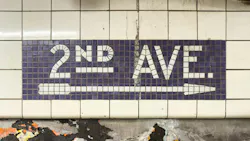
The Second Avenue Subway (SAS) Phase 2, currently under construction, is set to extend the Q Line from its current terminus at 96 Street with three new stations, ending at 125 Street and Lexington Avenue. Phase 2 will utilize two tunnel boring machines (TBMs) that will end their run under West 125 Street between Lenox and Adam Clayton Powell, Jr Avenues.
The agency says this presents an opportunity to make use of these machines to build the tunnel for a future crosstown subway under 125 Street. By continuing westward, the 125 Street Subway Tunnel Extension would facilitate future crosstown subway service with transfer stations at Lenox Ave (2/3 trains), St. Nicholas Avenue (A/C/B/D trains) and Broadway (1 trains). The future extension, first identified in the MTA’s last 20-Year Needs Assessment, aims to improve travel across 125 Street—the busiest crosstown bus corridor in Manhattan. It would connect to seven subway lines and Metro-North Railroad while giving Harlemites a one-seat ride to jobs, health care and other destinations on Manhattan’s East Side and West Sides.
According to the authority, reusing the tunnel boring machines from SAS Phase 2 could save taxpayers hundreds of millions while speeding tunnel construction by more than two years.
“Given the huge potential to save time and money, it would be irresponsible not to explore options to keep digging westward under 125 Street, and we are of course making it a priority to get community input and feedback as we kick off the environmental review process,” said MTA Chair and CEO Janno Lieber.
Funding to advance the project’s feasibility study was included in New York Gov. Kathy Hochul’s fiscal year 2026 budget, which also included an amendment to the state environmental quality review act that allows early design work and engineering on the tunnel to proceed while an environmental review is underway.
Planning for the 125 Street tunnel extension began in 2024 when Gov. Hochul and the state legislature funded a feasibility study, which concluded the project is achievable and beneficial. The project would construct the new subway tunnel beneath West 125 Street, with subway infrastructure like tracks, signals and stations to be designed and constructed at a later stage. Environmental review is now underway to study how the proposed tunnel construction would impact the surrounding community and environment.
“The 125 Street tunnel extension is another example of the MTA’s commitment to explore ways to deliver upgrades better, faster, and cheaper—saving time and money by reusing the tunnel boring machines already in motion for the Second Avenue Subway.” said MTA Construction and Development President Jamie Torres-Springer. "With environmental review now underway, we’re beginning the critical process of hearing directly from the communities that would most benefit from a new crosstown connection."
The scoping document released the specific topics, issues and potential impacts that will be formally analyzed during environmental review. The public comment period, which runs through Nov. 13, gives community members and stakeholders the opportunity to provide input on the content of the scoping document and ensure the environmental review is comprehensive and reflective of community concerns and desires. The Draft Environmental Impact Statement is expected to be released in the first quarter of 2027.
About the Author
 Noah Kolenda
Noah Kolenda
Associate Editor
Noah Kolenda is a recent graduate from the Craig Newmark Graduate School of Journalism with a master’s degree in health and science reporting. Kolenda also specialized in data journalism, harnessing the power of Open Data projects to cover green transportation in major U.S. cities. Currently, he is an associate editor for Mass Transit magazine, where he aims to fuse his skills in data reporting with his experience covering national policymaking and political money to deliver engaging, future-focused transit content.
Prior to his position with Mass Transit, Kolenda interned with multiple Washington, D.C.-based publications, where he delivered data-driven reporting on once-in-a-generation political moments, runaway corporate lobbying spending and unnoticed election records.