MTA advances final construction contract for Second Avenue Subway Phase 2
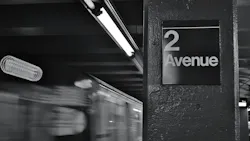
The Metropolitan Transportation Authority (MTA) is proceeding with the fourth and final construction contract for Phase 2 of the Second Avenue Subway with a request for qualifications (RFQ). Once complete, the project will extend Q service to 125th Street in East Harlem, N.Y. Following this RFQ, the MTA notes that it plans to issue a request for proposals to contractors by the end of the year, further noting it anticipates selecting a contractor in mid-2027.
Contract four is the largest contract of the Second Avenue Subway Phase 2 project and includes the construction of station infrastructure, tracks and signals for the subway expansion. Work on contract four will begin in 2027.
“Three contracts down, one to go in our quest to bring long-awaited transit justice to East Harlem,” said MTA Chair and CEO Janno Lieber. “This fourth and final RFQ covers the architectural finishes and the communications and other systems in the stations – the things that riders directly experience – and we can’t wait to get started.”
With the first three contracts progressing concurrently, the project budgeted at just shy of $7 billion is expected to be fully completed by the fall of 2032. The MTA says this project is made possible by congestion relief revenue and $3.4 billion in federal funding. Upon completion of Phase 2, Q service is set to run north from 96 Street to 125 Street and Lexington Avenue, an extension of approximately 1.5 miles with three new stations at 106 Street, 116 Street and 125 Street.
“The MTA has saved more than $1 billion to date by applying lessons learned from Phase 1 to Phase 2. We're bringing that same approach to this final contract to bring these stations to life better, faster and cheaper than before and get East Harlem riders the service they’ve waited for," said MTA Construction and Development President Jamie Torres-Springer.
In addition to providing the full systems fit-out for the three fully accessible stations at 106 Street, 116 Street and 125 Street and connecting tunnel segments, the agency reports that the fourth contract includes work to connect the new 125 Street Station to the existing 125 Street 4/5/6 station and an entrance at Park Avenue one block over, enabling transfers to Metro-North Railroad’s Harlem-125 Street Station and M60 Select Bus Service, with service to LaGuardia Airport.
Major work in this last construction contract includes:
- Structural work: Construction of entrance canopies, station platforms and six above-ground ancillary buildings, which will house ventilation, mechanical and electrical equipment, as well as space for possible ground floor retail and community uses.
- Mechanical, electrical and plumbing work: Install HVAC, smoke management, fire protection, station and facility power, lighting, plumbing and drainage and related systems.
- Accessibility work: Install 22 elevators and 20 escalators across the three stations and facilities.
- Communications and security systems work: Install public address systems, customer information screens, Help Point intercoms, Wi-Fi, radio, fire and emergency alarms and security cameras.
- Track, signal and Communications-Based Train Control work: Install track, third rail, traction power, wayside signal equipment, train detection and communication infrastructure throughout the stations and tunnels.
- Station finishes: Install architectural finishes, station lighting, signage and wayfinding, fare arrays, customer service facilities and artwork.
- Testing and commissioning work: Test, integrate and commission all systems installed.
- Site restoration: Complete permanent utility connections and restore streets, sidewalks, traffic signals and other affected areas within the Phase 2 project limits.
Phase 2 construction progress
The first contract, awarded in January 2024, covers utility relocation work at the future 106 Street Station. The project is currently about 60% complete and is expected to be finished by summer 2027.
The second contract, awarded in August 2025, includes construction of two tunnels, rehabilitation of existing tunnels, construction of the new 116 Street Station box, seven shafts for future ancillary buildings and station entrances and the structural shells for the 116 Street and 125 Street stations. Final design is more than 50% complete. The tunnel boring machine (TBM) is currently under construction, and crews are preparing the TBM launch site for excavation. Excavation of the 125 Street entrance shaft has also begun. The contract is forecast to reach substantial completion in September 2029.
The third contract, awarded in April 2026, includes excavation and construction of the 106 Street structural shell, tunnel connections, ancillary buildings and station entrances, as well as utility work. The contract is expected to reach substantial completion in the third quarter of 2030.
“New Yorkers have been waiting for the Second Avenue Subway for nearly a century and now, with major work underway, we are moving full speed ahead with the final contract to fully deliver this transformative new transit connection to East Harlem,” said New York Gov. Kathy Hochul. “We fought hard to keep this project moving forward earlier this year and finally break ground on new tunnels this summer. Once this contract is completed, three beautiful and accessible new subway stations will welcome East Harlem to the subway line they have long been promised.”
Delivering better transit for East Harlem
The MTA notes that East Harlem is a historically underserved neighborhood, which has one of the largest concentrations of affordable housing in the U.S.—and where 70% of residents rely on transit. Phase 2 is building three new accessible stations right in the heart of the community at 106 Street, 116 Street and 125 Street and will offer one-seat rides from East Harlem to the Upper East Side, West Midtown and Coney Island, shortening travel times by up to an estimated 20 minutes. The authority also reports that the Second Avenue Subway Phase 2 project is creating thousands of jobs, including union-wage construction jobs. A 20% local hiring goal set by the MTA for the project is designed to generate good-paying job opportunities for hundreds of East Harlem residents.
The MTA says East Harlem has long been promised a new subway connection on Second Avenue. In the 1920s, the Second System proposal, which ultimately became the Independent Subway System, included service on Second Avenue. In 1948, New York City voters approved bonding intended to build the Second Avenue Subway, which was ultimately left unbuilt after the start of the Korean War. In 1972, construction on the line finally commenced in East Harlem, but was later abandoned in 1975 during the city’s fiscal crisis. Sections of the tunneling constructed in the 1970s will be adapted and utilized in Phase 2, including for the 116 St station.
“I’m excited to see the MTA take another major step in delivering this once-in-a-generation transportation project for Upper Manhattan,” said New York City Council Majority Leader Shaun Abreu. “This subway line will dramatically improve life uptown, from commute times to job opportunities and boosts to small businesses. Like so many others, I’m excited to see the new stations come to life, and I’m grateful for Gov. Hochul and Chair Lieber’s continued leadership.”
About the Author
 Noah Kolenda
Noah Kolenda
Associate Editor
Noah Kolenda is a recent graduate from the Craig Newmark Graduate School of Journalism with a master’s degree in health and science reporting. Kolenda also specialized in data journalism, harnessing the power of Open Data projects to cover green transportation in major U.S. cities. Currently, he is an associate editor for Mass Transit magazine, where he aims to fuse his skills in data reporting with his experience covering national policymaking and political money to deliver engaging, future-focused transit content.
Prior to his position with Mass Transit, Kolenda interned with multiple Washington, D.C.-based publications, where he delivered data-driven reporting on once-in-a-generation political moments, runaway corporate lobbying spending and unnoticed election records.