NITA Act transition period begins, ushers in new era for Chicago-area transit
Key milestones for NITA implementation
- June 1, 2026: The NITA Act advances into the next phase, and the Chicago RTA prepares for governance transition.
- Summer 2026: NITA Board members will be appointed over the summer by various appointing entities. Per the act, the following will make appointments:
- Five by the Illinois Governor
- Five by the Mayor of Chicago
- Five by the Cook County Board President
- One by the DuPage County Board Chair
- One by the Kane County Board Chair
- One by the Lake County Board Chair
- One by the McHenry County Board Chair
- One by the Will County Board Chair
New CTA, Metra and Pace board members are also appointed by Sept. 1. Some members will share dual board responsibilities on NITA and one of the service boards.
- Late-summer: Illinois Department of Transportation Transition Consultant is onboarded.
- Sept. 1, 2026: New NITA Board and service boards assume responsibility. Board selects a chair in September.
- Fall 2026: NITA and service boards will propose and adopt a regional budget.
- Dec. 1, 2026: Law Enforcement Task Force delivers preliminary recommendations for a permanent crime prevention program on transit.
The Northern Illinois Transit Authority Act (NITA Act) has begun a transition period that will transform public transit in the Chicago region and across the state of Illinois. Rider-focused improvements will begin to roll out across the system immediately, as the Chicago Transit Authority (CTA), Metra and Pace Suburban Bus (Pace) increase service this summer across the six-county region. The Chicago Regional Transportation Authority (RTA) will continue operating as the Chicago RTA until Sept. 1, when terms of the new NITA Board members begin, and NITA is established.
Existing customer service functions will continue without interruption, including ADA paratransit certification, free and reduced fare card issuance and other Chicago RTA customer service programs.
This summer, riders are set to begin seeing near-term improvements funded through the 2026 operating budget amendment approved by the Chicago RTA Board in May, along with planned service changes included in the 2026 agency budgets for CTA, Metra and Pace. Improvements from the amendment are set to roll out throughout the remainder of 2026 and include new safety and security investments, expanded service, the expansion of the reduced-fare access program to CTA and Pace and customer information upgrades across the region.
As required by the NITA Act, the Chicago RTA Board of Directors voted at a special meeting to approve a 0.25% increase to the RTA Sales Tax. The increase goes into effect on Aug. 1 across the six-county region, including Cook, DuPage, Kane, Lake, McHenry and Will, Ill., and will be applied to all purchases already subject to the RTA Sales Tax. The increase is projected to generate $199 million in partial-year revenue for 2026 and more than $500 million for the full year of 2027.
“Today marks the beginning of a new chapter for regional transit, and thanks to the NITA Act, transit riders should know that service not only continues without interruption, but will be enhanced,” said Chicago RTA Board Chair Kirk Dillard. “This summer, riders will begin seeing the benefits of new funding through more security personnel, expanded service, improved fare programs and better customer information across the region.”
During the summer transition period, the Illinois Governor, Chicago Mayor, Cook County Board President and the county board chairs of Lake, Will, Kane, McHenry and DuPage counties will appoint members to the new NITA Board, to be seated by September.
The aforementioned 2026 Operating Budget Amendment will use $132.2 million in new NITA funding to provide near-term improvements to the rider experience, according to the authority. Nearly $60 million of that funding is allocated to safety and security investments, including additional sworn officers on transit vehicles and at stations—which began earlier this year—a crisis intervention pilot and outreach, more health and human services support and efforts to set up a transit ambassador program. The authority also says the funding will also go toward installing bus shields for operators as required by the NITA Act, safety software and an incident reporting app, among other investments.
Service improvements coming across CTA, Metra and Pace
CTA improvements funded through the RTA Budget Amendment include expanded service on several bus routes:
- No. 6 Jackson Park Express, No. 8 Halsted, J14 Jeffery Jump, No. 35 31st/35th, No. 57 Laramie, No. 65 Grand, No. 74 Fullerton, No. 85 Central, No. 92 Foster and No. 134 Stockton/LaSalle Express.
- The No. 10 Obama Presidential Center and Museum of Science & Industry route also has been extended three-quarters of a mile south to serve the Obama Presidential Center and has been expanded from seasonal to year-round service.
Beyond expanded service, CTA notes it is also investing in strategies, tools and infrastructure improvements to help improve the reliability of bus and rail service. These investments include work to reduce slow zones in the CTA rail network and bus priority zone improvements at key intersections to help speed up buses.
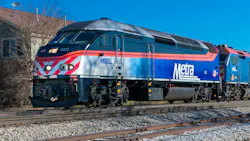
Metra riders will see schedule improvements on the Rock Island and Metra Electric lines. On the Rock Island Line, changes beginning June 1 include four additional weekday evening trains, seven additional Saturday trains, 11 additional Sunday trains, conversion of all flag stops to regular stops—flag stops occur where trains only stop when passengers are visible on the platform—revised stopping patterns and the same schedule operating on Saturdays and Sundays. On the Metra Electric Line, changes beginning June 15 include three additional weekday trains, conversion of all flag stops to regular stops and revised stopping patterns.
Pace riders will see another round of service improvements beginning May 31 and June 1 on several suburban bus routes. These changes, which build on enhancements introduced in March, will increase service frequency, extend hours of operation and improve routing along high-demand corridors. Affected routes include 290 Touhy, 330 Mannheim-LaGrange, 331 Cumberland, 364 159th Street, 381 95th Street, 383 South Cicero, 501 Jefferson, 533 Northeast Aurora, 550 Elgin-–Crystal Lake, 554 Elgin-–Woodfield and I-55 Express Routes 850, 851 and 855. Together, Pace says these updates strengthen connections to major destinations and regional transit hubs across the system.
Service changes in 2026 are being coordinated through a regional service planning process to improve inter-agency transfers at key transit hubs. The NITA Act requires preparation of service standards in 2027 and a regional service plan in 2028 to create a more unified, seamless network across six counties. Full service change information can be found on Chicago RTA’s website.
The access pilot, launched in 2024 in partnership with Cook County and Metra, allows people who qualify for the Supplemental Nutrition Assistance Program (SNAP) to ride Metra at a reduced fare. The access pilot will be made permanent and will expand later this fall to include reduced fares on CTA and Pace. This step will bring a unified low-income fare program to the six-county region. Riders can continue to apply on the Access website.
The NITA Act also freezes all fares until at least July 1, 2027. Riders can continue using the Ventra app to purchase the Regional Day Pass, a single fare product that allows unlimited rides on CTA, Metra and Pace all day. The Chicago RTA notes it will work to merge its Transit Benefit Program with CTA’s to create the NITA Transit Benefit Program and will work toward harmonizing fare policies for special programs, such as students, reduced fares, U-Pass and others. These steps, according to the authority, will ensure that NITA is able to deliver a full regional fare consolidation—a priority that will advance in later steps of transit reform.
The Chicago RTA/NITA will also advance customer information upgrades, including a pilot integrating digital signage across all agencies at 10 key interagency locations in collar counties, suburban Cook and the city of Chicago. The agency will also invest in language and accessibility improvements such as multilingual signage in specific locations, improved translation services and creating a language access plan as required by the NITA Act.
Further, Chicago RTA is awarding 21 projects across six counties for Access to Transit grants through a combination of funding sources, including $3 million from the budget amendment. These projects are set to make pedestrian, bicycle and other infrastructure improvements near transit stations as an early step toward setting up NITA’s future responsibilities in equitable transit-oriented development and transit supportive infrastructure development to grow ridership and create vibrant communities near transit.
“These improvements are the first step toward delivering on the promise of NITA: a more coordinated, reliable and rider-focused transit system for northeastern Illinois,” Dillard said.