MARTA Transforms Bus Service with NextGen Bus Network
Key takeaways
- Frequent service has expanded significantly: MARTA’s NextGen Bus Network tripled the number of corridors that offer 15-minute-or-better service.
- Customer feedback shaped the redesign: Riders consistently prioritized more frequent service over simply expanding geographic coverage while operators also provided input during the planning process.
- MARTA Reach expands on-demand service through 12 zones: The new microtransit service replaced fixed-route coverage in lower-density, lower-ridership areas and connects riders to rail, frequent bus routes and transfer points.
- The Rapid A-Line launched alongside the redesign: The region’s first bus rapid transit service goes between downtown Atlanta and the Capitol Gateway, Summerhill, Peoplestown and BeltLine Southside Trail areas.
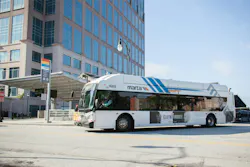
On April 18, the Metropolitan Atlanta Rapid Transit Authority (MARTA) launched its NextGen Bus Network, more than tripling the number of corridors that a MARTA bus arrives every 15 minutes or better, a project more than 50 years in the making.
Initial planning
The idea for the complete redesign of MARTA’s bus network came about during the height of the COVID-19 pandemic, when MARTA bus ridership plummeted like many agencies around the U.S. However, during that time, more people started moving to the city of Atlanta. According to 2020 Census data, the city recorded 498,715 people, the most people recorded since the 1970s—the last time MARTA updated its bus network.
With the population growing, the transit footprint needed to change. The agency already had a 48-mile heavy rail system and a 12-stop streetcar line in downtown Atlanta where ridership was steady. The same could not be said for its most popular form of transit —the bus—which was still lagging from the aftermath of the pandemic.
MARTA conducted multiple rounds of customer feedback throughout the five-year project. The first round was at the start of the project in 2021, which asked riders if they wanted a leaner network that runs more frequently or a larger network geographically that doesn’t run as often. Riders chose the more frequency option, setting the project in motion.
With the plans underway, the MARTA Board came up with multiple guiding principles the NextGen Bus Network redesign had to adhere to by:
- Expand access: Expand bus service to increase ridership, drive economic growth and advance environmental benefits.
- Equity: Offer quality bus service to enhance access, equity and regional growth.
- Future facing: Plan for the community’s future, not past travel patterns.
- Balance: Balance the goals of ridership and coverage effectively.
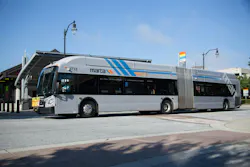
MARTA’s Director of Technical Services and Service Planning Ryan VanSickle notes that while the agency had transit centers and park and rides at rail stations, for the bus network, it needed to identify places where there could be a lot of transfer activity.
The agency refers to these transfers as pulse transfers. In a statement to Mass Transit magazine, MARTA Communications Manager Payson Schwin says that "the redesign was created to utilize several new major transfer points where routes would pulse and designed pulses at several rail stations, too."
The idea with the pulse transfers is that due to multiple routes being scheduled to converge at a location at the same time, the pulse transfers provide a timed opportunity for passengers to make connections while all the buses are in the same place, which helps to reduce wait times, as well as time spent at the bus stop.
“The end goal with this was to redesign key places away from rail where those low frequency routes can come together and then designing a scheduled pulse so that people aren't waiting on the side of the road for a long time,” VanSickle said.
VanSickle says that while the agency did re-order some route numbers, it did not do a comprehensive redesign like the Washington Metropolitan Area Transit Authority (WMATA) or the Metropolitan Transportation Authority in June of last year, as MARTA felt it was going to be too expensive to redesign everything. The agency also worried that all the changes at once could be too confusing for riders.
He notes the residents hosted a farewell party for Route 107, one of the routes that got renumbered. The route goes to Georgia State Station from the neighborhood of Glenwood Park, Ga.
“It didn't go anywhere, but the neighborhood was so attached to the number,” VanSickle said. “That community cared so much that they got together on Facebook and threw a party for it.”
After three years of development, in 2024, the full draft of the NextGen Bus Network redevelopment plan was created. A year later, the agency began a four-plus month engagement campaign with the public, including virtual and in-person meetings. The agency also got feedback from operators on the proposed routes.
According to VanSickle, one of the most common concerns among customers was the service timing, so the agency went back to the drawing board and found ways to create more 30-minute frequencies instead of 45-minute headways.
“We tried to calculate exactly how well we were connecting folks to jobs, to groceries, to schools to create more service,” VanSickle said. “One of the things we really did try to communicate to people is this was not a cut. We were rearranging the service, but we were not reducing the service.”
The MARTA Board adopted the redevelopment plan in June 2025. When planning the service launch, the agency reached out to other medium to large intermodal agencies that have launched similar programs in the same timeframe to learn about their successes and challenges. MARTA discussed the vision with the Capital Metropolitan Transportation Authority, which redid its bus network in 2019; the Greater Cleveland Regional Transportation Authority, which unveiled its NEXT GEN RTA system redesign in 2021; Dallas Area Rapid Transit (DART), which launched DARTzoom in 2022; the Akron Metro Regional Transit Authority, which went through the same process in 2023; and WMATA.
Due to all of the route changes, MARTA installed approximately 6,200 temporary rider notification signs at bus stops across the network to communicate four types of service changes at the stop level:
- A new stop was coming online for the new network.
- A stop was being closed as part of the new network.
- Fixed-route service at the stop was being converted to on-demand transit.
- Routes at a stop were changing, a route was being renumbered or destinations were changing.
The adopted plan included complements to the fixed routes with other services, such as bus rapid transit (BRT) and microtransit.
Microtransit fills the gaps
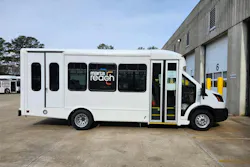
The agency launched its microtransit option, MARTA Reach, in March 2026. The on-demand, curb-to-curb service covers 12 zones across MARTA’s service area. The service operates 6:00 a.m. to midnight daily for all zones and uses small, ADA accessible vans. The service replaces fixed-route coverage in lower density and lower ridership areas. It provides first- and last-mile connections to MARTA rail, frequent buses and major transfer points throughout the system.
MARTA Reach launched using a temporary fleet of fully ADA-accessible Ford Starcraft vans because of a nationwide federal safety recall on the vehicles the agency purchased for the service. On Sept. 5, MARTA introduced the new fleet of blue Dodge ProMaster vehicles after the recall was lifted. The vehicles feature functional Breeze equipment, as passengers can tap to pay using their MARTA Breeze Card or mobile payment methods directly at the vehicle door. According to MARTA, while Breeze payment equipment are fully operational, traditional cash fareboxes are scheduled for installation in the near future.
“DART told us, ‘Launch your microtransit service early; give people at least a month to get used to how it works before you change the fixed routes around it,'” VanSickle said. “It was close to six weeks actually that we ran MARTA Reach before the launch of the NextGen redesign, and we've seen a pretty steady increase in ridership since then.”
The first BRT adds to the redesign
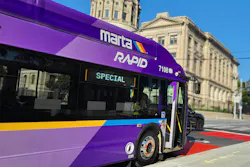
The agency’s first BRT—the Rapid A-Line —launched the first of two phases the same day as the redesign. The Rapid A-Line was a BRT project that existed prior to the planning of the NextGen Bus Network redesign. Compatible timelines for the Rapid A-Line and NextGen Bus Network redesign allowed MARTA to fully incorporate the BRT into the NextGen Network and launch the BRT as part of the new service.
The five-mile BRT connects downtown Atlanta to Capitol Gateway, Summerhill, Peoplestown and the Beltline’s Southside Trail, with connections to MARTA’s heavy rail system at Five Points, Georgia State and Garnett stations. The BRT runs daily from 5:00 a.m. to 1:00 a.m.
The Rapid A-Line did not come without its own set of challenges. During excavation, MARTA’s crew uncovered worn out infrastructure. There was also a battery recall on the New Flyer battery-electric buses that were purchased to operate on the line. The Rapid A-Line is the only line that uses zero-emission buses. The rest of the fixed-route fleet uses primarily 40-foot compressed natural gas (CNG) buses. The agency also has a small set of 30- and 35-foot CNG buses. Phase 2 of the launch is scheduled for the fall when all BRT stations are complete.
Modernized fare collection system for a modernized network
In March 2025 ahead of the launch of the redesign, the agency launched its Better Breeze fare payment system in collaboration with INIT, Inc. The system allows riders to tap and ride using contactless credit or debit cards, mobile wallets and the new Breeze card. In July, the agency launched its new mobility app and web platform. Powered by RideCo, the new scheduling and dispatching system offers riders a faster, easier and more accessible way to manage their travel.
Feedback on the NextGen Bus Network is ongoing. VanSickle notes the agency is looking to expand service in the future to Clayton County, Ga. Clayton County is approximately 16.9 miles away from downtown Atlanta. MARTA didn’t start serving the county until 2014 after voters in the county approved a referendum to dedicate a one cent sales tax for the expansion of MARTA service.
Because service to the county is less than 15-years-old, VanSickle says that while their service was factored into the redesign, it was “less dramatic” than the changes elsewhere, as the NextGen Bus Network redesign focused on routes that dated back to the 1970s.
By the numbers
The NextGen Bus Network features:
- 81 fixed bus routes
- Frequent service on 17 corridors
- 20-minute service on 11 routes
- 12 Reach on-demand zones
- Daily service systemwide
- Flatter frequencies
- No peak-only service
- Over 6,200 new bus stop signs installed
The NextGen Bus Network provides connections to:
- Over 75% more jobs on corridors with buses arriving every 15 minutes or better.
- More than 145,000 additional jobs near bus service arriving every 30 minutes or better.
- More than 25% improved access to grocery stores within 60 minutes.
NextGen Bus Network timeline
- 2021: Project kickoff and concept plan development.
- 2022: Public outreach.
- 2023: MARTA Board approves policy on the NextGen Bus Network.
- 2024: A draft of the redevelopment plan is created.
- 2025: Public engages with the redevelopment plan, and the MARTA Board adopts the redevelopment plan. Preparation for launch begins.
- 2026: NextGen Bus Network launches.
About the Author
 Brandon Lewis
Brandon Lewis
Associate Editor
Brandon Lewis is a recent graduate of Kent State University with a bachelor’s degree in journalism. Lewis is a former freelance editorial assistant at Vehicle Service Pros in Endeavor Business Media’s Vehicle Repair Group. Lewis brings his knowledge of web managing, copyediting and SEO practices to Mass Transit magazine as an associate editor. He is also a co-host of the Infrastructure Technology Podcast.