MTA issues RFP for accessibility upgrades at five Brooklyn subway stations
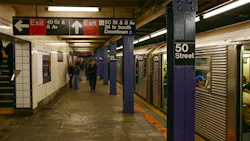
The Metropolitan Transportation Authority (MTA) has issued a request for proposals (RFP) for accessibility upgrades, including elevators at five Brooklyn subway stations. The stations were selected to improve geographic coverage of accessible stations throughout the system. MTA notes the project is being made possible with funds from congestion pricing, which is providing $15 billion in funding for the MTA 2020-2024 Capital Plan, including projects to rebuild, improve and expand New York's transit system.
“Wondering what congestion relief revenues are paying for? Well, here’s another five accessible subway stations to add to the list,” said MTA Chair and CEO Janno Lieber. “Drivers are appreciating speedier crossings and reduced congestion since the toll program started, but everyone is glad the air is cleaner, streets are safer and our mass transit system is getting major upgrades.”
The full list of stations and elevator additions include:
- Neptune Avenue F Station – one new elevator
- 18 Avenue D Station – two new elevators
- Jefferson Street L Station – two new elevators
- Nostrand Avenue A, C Station – three new elevators
- Fort Hamilton Parkway D Station – two new elevators
MTA says Fort Hamilton Parkway, 18 Avenue Jefferson Street and Neptune Avenue were all chosen to improve geographic coverage of accessible stations throughout the system, with each filling a gap of four consecutive inaccessible stations along their respective lines. Nostrand Avenue was chosen as a busy express station serving a major commercial area, and the investment in accessibility complements the reopening of the Bedford Avenue entrance at that station.
“The benefits of congestion pricing add up more every day: air quality is improving and traffic is down—all while generating billions of dollars to improve the transit system New Yorkers rely on," said MTA Construction and Development President Jamie Torres Springer. “These accessibility upgrades will be transformative for Brooklyn riders, and they’re exactly the kind of work congestion pricing allows us to deliver better, faster and cheaper."
Additional work throughout the five stations includes platform repairs, improved fare arrays, staircase replacements and security and safety upgrades.
“Thousands of Brooklyn riders will have new opportunities to use our system with these accessibility and station improvements,” said New York City Transit (NYCT) President Demetrius Crichlow. “Ensuring every New Yorker has access to safe and reliable transit remains a top priority for NYCT.”
MTA notes proposals from qualified firms are due on Sept. 14, and the MTA intends to award the design-build contract by the end of the year.
“The MTA is improving access for all our customers especially for riders with mobility needs, parents and caregivers with children on strollers, aging adults and anyone with access needs like bags or luggage,” said MTA Chief Accessibility Officer Quemuel Arroyo. “With these five stations, we are getting that much closer to delivering a completely accessible transit system for all.”
According to the agency, there is a total of 160 fully accessible stations across the MTA, 45 of which have been completed since 2020. As part of a long-term commitment to systemwide accessibility, the MTA is investing nearly $7.1 billion in station accessibility in the 2025-2029 Capital Plan to make 60 stations newly ADA accessible and modernize an additional 45 subway elevators. The MTA has already made several ADA upgrades to stations this year, including Locust Manor Long Island Rail Road (LIRR) station, Laurelton LIRR station and LED station lighting across 472 subway stations.
About the Author
 Brandon Lewis
Brandon Lewis
Associate Editor
Brandon Lewis is a recent graduate of Kent State University with a bachelor’s degree in journalism. Lewis is a former freelance editorial assistant at Vehicle Service Pros in Endeavor Business Media’s Vehicle Repair Group. Lewis brings his knowledge of web managing, copyediting and SEO practices to Mass Transit magazine as an associate editor. He is also a co-host of the Infrastructure Technology Podcast.