MTA completes Locust Manor LIRR station renovation
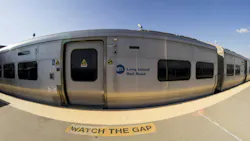
The Metropolitan Transportation Authority (MTA) has completed a restoration project at the Locust Manor Long Island Rail Road (LIRR) station. The agency says the renovation improves accessibility, modernizes the station and brings it into a state of good repair, noting the project was completed on time and on budget.
“The accessible transformation at Locust Manor makes it the perfect place to kick off MTA’s celebration of Disability Pride Month,” said MTA Chair and CEO Janno Lieber. “There’s a lot more to come as we continue to knock these projects out five times as fast as ever before.”
Station improvements include:
- Installation of two new elevators and elevator vestibules as required for weather protection.
- New elevator machine rooms, electrical room and service upgrades, communication room and safety/security systems.
- Replacement of existing platform rubbing edge boards and tactile strips along new area of work.
- New sidewalks connecting paths of travel to elevators and underpass and retaining wall alongside.
- New and rehabilitated stairs and ramps, including landing clearances and handrails and guardrails.
- Signage including wayfinding, directional, corporate and ADA.
- Roost free surfaces.
- Weatherproof Help Point emergency/information kiosks with equipment enclosures.
- New CCTV cameras and high security fencing.
- Rehabilitation of 84 platform support columns under Platform A.
The MTA notes this design-build project is part of the agency’s goal to make 98% of LIRR stations accessible in accordance with the Americans with Disabilities Act by the end of the 2025-2029 Capital Program . This project has added seven stations to the list of accessible LIRR stations and has replaced elevators/escalators at two stations that were already accessible.
“We're proud to mark the start of Disability Pride Month with a celebration of accessibility at the Locust Manor station—delivered on time and on budget," said MTA Construction and Development President Jamie Torres-Springer. "This is the ninth and final station completed under Long Island Rail Road’s first bundled ADA upgrade package--an innovative model that's helping us deliver accessibility projects across the system better, faster, and cheaper.”
The project was funded through more than $22 million in federal funding. Citnalta/Scalamandre, J.V. was the design-built contractor, with Parsons Transportation Group as the Designer of Record. Major subcontractors are Bana Electric, Mid-American, Premier, Superior and Welkin.
On weekdays, 42 westbound and 37 eastbound trains stop at Locust Manor. On weekends the station sees 42 westbound trains and 44 heading east. In 2025, monthly ridership averaged more than 72,000.
“With the introduction of these new elevators, the frequency and reliability of trains and the affordability of the CityTicket, we are expanding the accessibility of transportation and ensuring that Locust Manor is not a transit desert,” said LIRR President Rob Free. “Whether you are a person with a mobility impairment or someone who could use some help with traveling, these new elevators and site improvements enhance the customer experience for all.”
Locust Manor riders can make connections to MTA buses Q3, Q85 and Q89.
About the Author
 Noah Kolenda
Noah Kolenda
Associate Editor
Noah Kolenda is a recent graduate from the Craig Newmark Graduate School of Journalism with a master’s degree in health and science reporting. Kolenda also specialized in data journalism, harnessing the power of Open Data projects to cover green transportation in major U.S. cities. Currently, he is an associate editor for Mass Transit magazine, where he aims to fuse his skills in data reporting with his experience covering national policymaking and political money to deliver engaging, future-focused transit content.
Prior to his position with Mass Transit, Kolenda interned with multiple Washington, D.C.-based publications, where he delivered data-driven reporting on once-in-a-generation political moments, runaway corporate lobbying spending and unnoticed election records.