CHSRA inks trainset contract with Siemens, completes last environmental clearance
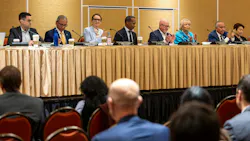
The California High-Speed Rail Authority (CHSRA) Board of Directors has greenlit a contract with Siemens Mobility to design, manufacture and deliver California’s first high-speed trainsets. The authority says this approval follows a multi-year, competitive procurement process as the program moves toward high-speed rail track installation in the Central Valley.
“This action reflects the board’s clear commitment to delivering a transportation system worthy of California’s future. By approving this trainsets contract, we are taking a decisive step toward a cleaner, faster and more connected state—one that will give future generations a modern rail option that expands opportunity and improves mobility for millions,” said CHSRA Board Chair Steve Kawa.
In a separate action, the authority also notes that the board approved the Los Angeles to Anaheim, Calif., environmental document, marking completion of the final project section environmental clearance for the full 494-mile Phase 1 system between San Francisco and Los Angeles/Anaheim.
“This board action marks a historic step forward in building the nation’s first high-speed rail system. With this approval, the [California High Speed Rail] Authority has selected the trainsets that will carry passengers by 2033. This decision keeps the project on course to deliver clean, safe, reliable high-speed rail service for California,” said California Department of Transportation Secretary Toks Omishakin.
Under the trainset contract, Siemens is set to deliver an initial three high speed trainsets, with options for additional units as the system grows. The agreement covers design and manufacturing, along with long-term maintenance, system integration and the testing and commissioning work required for certification. The first trainsets are scheduled to arrive for dynamic testing in the Central Valley by early 2030, aligned with the CHSRA’s construction and operations timeline for passenger service by 2033.
The authority notes that the trainset contract and track and systems work are coordinated: as systems construction advances, the authority says it will integrate, test and certify these new trains on the newly built high-speed rail alignment. With board approval, Siemens will now begin detailed design and schedule development —ramping up manufacturing over the next several years. Testing on completed portions of the Central Valley alignment will enable operations training, performance validation and safety certification well ahead of revenue service, according to the authority.
The board has also approved the final environmental document for the 30-mile Los Angeles to Anaheim project section. With this action, CHSRA notes that all 494 miles of the Phase 1 system from San Francisco to Los Angeles/Anaheim are now environmentally cleared—a milestone the authority calls major—that advances a statewide high-speed rail system designed to transform mobility, connect major population centers and deliver long-term benefits across California.
Work continues daily on the high-speed rail project, with major segments from Merced to Bakersfield, Calif., under design and construction. More than 90 miles of guideway are complete, along with 70 fully completed major structures and 22 more structures underway across Madera, Fresno, Kings and Tulare, Calif., counties.
About the Author
 Noah Kolenda
Associate Editor
Noah Kolenda is a recent graduate from the Craig Newmark Graduate School of Journalism with a master’s degree in health and science reporting. Kolenda also specialized in data journalism, harnessing the power of Open Data projects to cover green transportation in major U.S. cities. Currently, he is an associate editor for Mass Transit magazine, where he aims to fuse his skills in data reporting with his experience covering national policymaking and political money to deliver engaging, future-focused transit content.
Prior to his position with Mass Transit, Kolenda interned with multiple Washington, D.C.-based publications, where he delivered data-driven reporting on once-in-a-generation political moments, runaway corporate lobbying spending and unnoticed election records.