CTA awards contract for track upgrades between Kedzie and Pulaski Blue Line stations
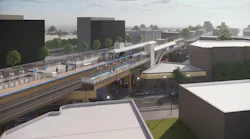
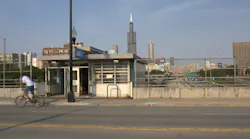
The Chicago Transit Board has approved the award of a design-build contract for Phase 2 of the Forest Park Branch Rebuild Project-- a multi-year, multi-phased investment program to reconstruct the entire Forest Park Branch of the Blue Line and make it ADA accessible. Phase 2 of this project aims to address the existing slow zones in the area by completely reconstructing track and underlying infrastructure between the Kedzie and Pulaski stations to restore operating speeds and service reliability.
“Rebuilding the tracks between Kedzie and Pulaski will give Blue Line riders on the West Side and in the western suburbs faster, more reliable trips to work, to school and home to their families,” said Chicago Transit Authority (CTA) Acting President Nora Leerhsen. “We’re excited to take another step towards a fully modernized and accessible Forest Park Branch that better serves these communities and strengthens our regional transit network.”
The CTA notes that construction is anticipated to begin in summer of 2027 and last for approximately 10 weeks to allow crews to fully rebuild the track between Kedzie and Pulaski, which has exceeded its useful life. Crews are set to remove approximately 8,000 feet of slow zones, including the Pulaski Crossover.
Currently, about 84% of the branch is categorized as a “slow zone,” according to the CTA, requiring trains to operate at reduced speeds for safety. The first phase of work, which kicked off in 2023, encompassed track and drainage renewals between the UIC-Halsted and Illinois Medical District stations, alongside a complete modernization and rebuild of the Racine station to make it ADA-accessible.
The construction contract for the Kedzie to Pulaski segment is being awarded to Kiewit Infrastructure Company for a total of $86.3 million. Funding for the project comes with the support of federal funds from the Reconnecting Communities Program. The project includes the design, removal and replacement of all sub-ballast, ballast, crossties, rail and drainage improvements. Improvements are also being made to the traction power, electrical, communications and signal systems.
The CTA says that Phase 2 is a critical next step in the ongoing partnership with the Illinois Department of Transportation (IDOT) to revitalize the I-290 and Forest Park Branch Blue Line corridor. CTA is a lead agency with the Chicago Metropolitan Agency for Planning (CMAP) and IDOT on the Connect 290 Blue Program that was established in 2024 to coordinate funding and rebuilding the I-290 Eisenhower Expressway and the Forest Park Branch of the Blue Line. According to the CTA, more than four million transit riders travel through the corridor annually and the expressway is one of the most congested in the U.S.
Much of the infrastructure along the Forest Park Branch of the Blue Line is original, dating back to 1958, according to the CTA. While the CTA notes it has performed routine maintenance and made modest improvements in recent decades, it says most of the infrastructure is far beyond its useful life and needs replacement and upgrades.
Last month the transit board approved a $17 million contract for the remaining track design work on the branch, a 13-mile segment from the Illinois Medical District to the I-290 Bridge, which is located just east of River Road to the east of the Forest Park Station.
About the Author
 Noah Kolenda
Associate Editor
Noah Kolenda is a recent graduate from the Craig Newmark Graduate School of Journalism with a master’s degree in health and science reporting. Kolenda also specialized in data journalism, harnessing the power of Open Data projects to cover green transportation in major U.S. cities. Currently, he is an associate editor for Mass Transit magazine, where he aims to fuse his skills in data reporting with his experience covering national policymaking and political money to deliver engaging, future-focused transit content.
Prior to his position with Mass Transit, Kolenda interned with multiple Washington, D.C.-based publications, where he delivered data-driven reporting on once-in-a-generation political moments, runaway corporate lobbying spending and unnoticed election records.