VIA Rail Canada begins co-development of unified station with exo in Dorval
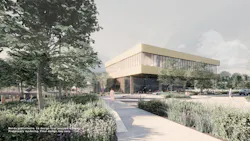
VIA Rail Canada (VIA Rail) has begun co-development of the Dorval Multimodal Hub—a new multi-service station that will host passenger rail services of VIA Rail and exo, as well as the shuttle service to YUL Montréal-Trudeau International Airport.
Construction and engineering firm Construction Kiewit Cie (Kiewit) has been selected as the project's design and construction partner. The project will be delivered in close collaboration with key stakeholders, including the Autorité régionale de transport métropolitain (ARTM), exo and Aéroports de Montréal (ADM).
"The Dorval Multimodal Hub is much more than an infrastructure project. It is a tangible investment in the mobility of our residents and in the future of our region,” said Dorval, Montréal, Mayor Marc Doret. “By bringing together rail, public transit and direct access to the airport, we are creating a modern, efficient and sustainable transportation hub that will make travel easier while reinforcing Dorval's strategic role within Montréal's West Island. We are proud to work alongside VIA Rail and all of our partners to deliver a transit hub that meets the needs and aspirations of our community."
This project comes as part of the rail operator’s VIAction 2030 strategic plan, an effort to generate savings, reduce greenhouse gas emissions and increase capacity—with this project’s efforts seeking to integrate the various operators in the metropolitan region on a single site in the west of the island of Montréal
"The Dorval Multimodal Hub is a great example of how bringing different modes of transportation together can improve the passenger experience for Canadians. By better connecting passenger rail, public transit and air travel, this project will increase the efficiency of the travel experience while making journeys smoother, more accessible and more sustainable," said Leader of the Government in the House of Commons and Minister of Transport Steven MacKinnon.
The co-development phase will enable VIA Rail, Kiewit and the project partners to jointly define the hub's detailed design, plan the end-to-end user experience and ensure seamless integration between the various transportation services. This collaborative approach will support the early identification of technical challenges, validate the feasibility of the proposed solutions and provide more accurate estimates of costs and the project schedule before undertaking the construction phase planned for 2027.
"At VIA Rail, we believe that transforming the rail experience begins before passengers even step aboard. That is why we have brought together Kiewit, exo, the ARTM and ADM to co-develop a hub that meets the real needs of the Dorval community and the 250,000 travelers who pass through our station each year. Our shared objective is to provide passengers with more efficient and user-friendly public transit solutions," said VIA Rail President and CEO Mathieu Paquette.
The work includes bringing VIA Rail and exo stations together on the current exo site, integrating the shuttle service to the airport and better aligning connections between the networks.
For passengers, VIA Rail says this will mean easier transfers, less travel between facilities, shorter transfer times and, ultimately, a more seamless and predictable travel experience.
About the Author
 Noah Kolenda
Noah Kolenda
Associate Editor
Noah Kolenda is a recent graduate from the Craig Newmark Graduate School of Journalism with a master’s degree in health and science reporting. Kolenda also specialized in data journalism, harnessing the power of Open Data projects to cover green transportation in major U.S. cities. Currently, he is an associate editor for Mass Transit magazine, where he aims to fuse his skills in data reporting with his experience covering national policymaking and political money to deliver engaging, future-focused transit content.
Prior to his position with Mass Transit, Kolenda interned with multiple Washington, D.C.-based publications, where he delivered data-driven reporting on once-in-a-generation political moments, runaway corporate lobbying spending and unnoticed election records.