Amtrak selects STV for static frequency converter replacement in Philadelphia
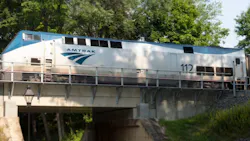
Amtrak has selected STV to create the preliminary design to replace static frequency converter (SFC) #4 at the Richmond SFC Station in Philadelphia. The facility is Amtrak’s largest traction power converter station, powering Amtrak’s Northeast Corridor between Washington, D.C., New York and Harrisburg, Pa.
The SFC has reached the end of its useful life, according to Amtrak’s Northeast Corridor Capital Investment Plan Project Information Appendix for fiscal years 2025-2029. The unit is being replaced due to increased downtime, obsolescence of components and because it’s requiring an increased number of service events to maintain reliable power output. The project is expected to cost $62 million and is aiming for completion by October 2029.
STV will conduct a full site survey, infrastructure assessment and state-of-good-repair review, followed by a technology evaluation. The firm is set to prepare design criteria, drawings, technical specifications and estimates for construction cost and schedule for the next project phase. STV notes that the project requires close coordination with environmental and historical preservation stakeholders, as the station is located within a National Register boundary.
“Modernizing this converter station is essential to strengthening the long‑term performance and reliability of one of the most heavily used rail corridors in the country,” said STV Vice President and Engineering Chief Brandon Swartley. “Our team brings the technical judgment and systems expertise needed to deliver upgrades that keep passengers moving and help to continue to enhance Amtrak’s traction power network.”
STV has supported Amtrak on several transformative programs, including design upgrades at Ivy City Yard in Washington, D.C.; project management and construction management (PM/CM) services for the Sawtooth Bridges Replacement project in Newark, N.J.; vehicle procurement of battery-electric passenger rail vehicles in both New York City for the Metropolitan Transportation Authority and in Chicago for Metra; and traction power and railway systems engineering for the Gateway Hudson River Tunnel Project.
About the Author
 Noah Kolenda
Noah Kolenda
Associate Editor
Noah Kolenda is a recent graduate from the Craig Newmark Graduate School of Journalism with a master’s degree in health and science reporting. Kolenda also specialized in data journalism, harnessing the power of Open Data projects to cover green transportation in major U.S. cities. Currently, he is an associate editor for Mass Transit magazine, where he aims to fuse his skills in data reporting with his experience covering national policymaking and political money to deliver engaging, future-focused transit content.
Prior to his position with Mass Transit, Kolenda interned with multiple Washington, D.C.-based publications, where he delivered data-driven reporting on once-in-a-generation political moments, runaway corporate lobbying spending and unnoticed election records.