NY: With billions on the line, advocates push priorities for DOT plan
Advocates are already jockeying for funding under a five-year plan for improving and maintaining the state’s transportation network.
The New York State Department of Transportation is preparing a five-year capital plan totaling tens of billions of dollars. The document — which guides road, bridge and mass transit projects — is developed in parallel with the normal state budget process. This is the final year of a $34.5 billion plan approved in 2022.
Groups representing various interests are pushing for as big a pie as possible, and making sure their priorities receive a big slice. The state needs to balance the demands of repairing existing roads and bridges with developing new infrastructure. There are also megaprojects, like the reconfiguration of highways that cut through urban neighborhoods.
There almost certainly won’t be enough funding, drawn from the state and federal governments, to cover every request.
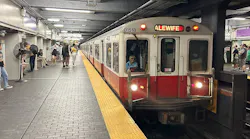
“We need to reinvest in safer, more affordable ways to get around public transit in counties where it’s lacking,” said Danny Pearlstein, the policy and communications director for Riders Alliance, a public transit advocacy group. “Trails, sidewalks, even accessible curb cuts, these are all things we could be funding to tie New Yorkers more closely together and give people more access to basic needs and opportunities rather than driving us apart.”
Riders Alliance and two dozen other organizations sent Gov. Kathy Hochul a letter last week urging her to force the Department of Transportation to focus less on cars and more on other means of getting around. The letter cited a 2024 study by the Brookings Institution think tank that showed New York ranked 49th out of 50 states when it came to state DOT planning and investment practices.
“New York’s topdown policy of car dependency never fit a state where one-third of households, whether due to community density, or someone’s age, income, disability, or choice, simply do not drive,” the letter states. “Accordingly, we respectfully request that you convene a study panel and adopt reforms to the Department of Transportation, prioritizing long-term planning, fiscal responsibility and transparency, and New Yorkers’ freedom to move safely and affordably.”
The DOT referred the Times Union to the governor’s office for comment. Sean Butler, a spokesman for Hochul, said the governor would unveil details about the plan as part of her executive budget proposal in January.
“New York has invested record amounts to repair our roads, making them safer and more resilient for all,” Butler said. “The governor recognizes the critical need to continue these investments in the years ahead.”
The capital plan has traditionally focused on preventing the decay of existing infrastructure. Construction contractors and labor groups said funding is desperately needed for New York’s existing roads and bridges. According to data from the Federal Highway Administration, New York ranks fifth out of all 50 states in terms of the number of bridges in poor condition, with a total of more than 1,700. It also ranks sixth highest among all states in terms of percentage of highway miles with poor pavement quality.
“Improving these conditions reduces the cost of operating a motor vehicle,” said John Cooney Jr., the executive director of the Construction Industry Council of Westchester & Hudson Valley. “It’s a necessary capital investment that provides very good employment, but in the end, it saves the motoring public money.”
With persistently high inflation and tariffs driving up costs since the last capital plan, contractors hope this plan will be larger than its predecessor. The American Road & Transportation Builders Association, a national federation of transportation construction groups including Cooney Jr.'s, published a recent study that stated the next capital plan for the New York DOT would need to invest around $60 billion in order to meaningfully improve infrastructure.
“There’s an argument that it should and could be more, but we recognize that this is a large challenge, and we want to work with the state of New York to get New York’s roads and bridges in a state of good repair,” Cooney Jr. said.
The five-year plan is approved via a memorandum of understanding signed by the governor as well as leaders of the state Assembly and Senate. State Sen. Jeremy Cooney, a Rochester Democrat who chairs the chamber’s transportation committee, said he “absolutely” expects the debate over DOT priorities to play out in the discussions of the upcoming five-year plan.
“There’s going to be a big fight for mass transit outside of New York (City),” said Cooney, who isn’t related to Cooney Jr. “Especially if the governor is putting in that affordability argument. A lot of people can’t afford to fill up their car with gas or can’t afford the price of insurance, so they’re taking public buses, but bus routes are being canceled and cut back or scaled down, and that’s not going to work for people.”
But Cooney also acknowledged the dire state of many roads and bridges across New York, particularly for upstate.
“The state roads are just not well-maintained. They’ve got more than potholes. They’re outdated,” He said. “A lot of the funding will go to that.”
© 2026 the Times Union (Albany, N.Y.)
Visit www.timesunion.com.
Distributed by Tribune Content Agency, LLC.