Transit sees big wins across U.S. in 2026 general election
Voters across the U.S. overwhelmingly chose to support transit in 2026’s general election, with questions on ballots in 11 states. While all results are still unofficial, transit ballot measures in Seattle, Pierce County, Wash., Riverside, Calif., San Bernardino County, Calif., the Bay Area and Charleston, S.C., have passed, bringing in more funding for public transportation—and in some cases, keeping agencies from fiscal cliffs.
While a majority of races have enough data available to be preliminarily called, the race in Tempe, Ariz., did not have enough published data for Mass Transit to make a call. Preliminary results don’t show popularity for the measure. Other races, like that to fund the Front Range Passenger Rail District, are poised to pass, though haven’t been called widely.
While transit was well-supported, measures didn’t pass everywhere, like that in Greenville, S.C., whose transit tax measure has now failed twice in the last two years. Fresno, Calif., also failed to pass Measure S that would have implemented a new sales tax to help fund transit.
Wins still happened across California, even with the Fresno measure failing. The regional transportation measure that will fund transportation in the Bay Area passed based on figures from early returns. The Connect Bay Area campaign behind the effort gathered over 300,000 signatures to get the measure on the ballot where it passed across five counties and the city of San Francisco.
“There is no doubt: the Bay Area believes in public transit,” Connect Bay Area spokesperson Jeff Cretan said in a statement accompanying results. “From the start of this historic campaign, the coalition behind the regional transit measure has been driven by a relentless focus to deliver a strong future for public transit. And thankfully the voters responded. We’re deeply grateful to the thousands of volunteers and coalition partners who have worked tirelessly to first get this on the ballot and then to get in front of voters over the last several months. This is a huge win for public transit and for the residents of the Bay Area.”
The measure prevents presumed fiscal cliffs for Bay Area Rapid Transit and for the San Francisco Municipal Transportation Agency. Cretan spoke to the impacts and the engagement efforts in an interview with Mass Transit prior to the polls closing on Tuesday.
“Talking to folks about how transit really matters for them and making those connections has been really interesting to watch because, say someone who lives in a more suburban area, reminding them that you might not use public transportation, but it certainly impacts your life,” Cretan said. “Not only because it's keeping cars off the highway so where you can get where you need to go, but also people in your life who you don't think about always are relying on transit. That might be your kid's teacher. It might be the person who works in your office. It might be the person who works in the cafe down the street from you. Those buses and trains are essential for everyone to get around and they impact your life whether you take transit or not.”
Other measures, like the Seattle Transit Measure, faced critique due to a crowded ballot and a possible sensitivity to multiple tax adjustments, though the measure passed. The measure is set to pay for more than a quarter of a million bus trips a year, double the number of free ORCA cards given out and fund construction projects.
The Seattle measure also looks to fortify east-west bus service, create frequent transit service throughout the entire day—including nights, weekends and midday—and improve transit access for the most transit-dependent neighborhoods.
“With this vote, Seattle voters are once again generously investing in building a transit system that is convenient to use, affordable to access and that easily connects them to opportunity and prosperity,” said Seattle Mayor Katie Wilson. “Seattle is already a great transit city, and this measure will deliver the largest expansion of transit service in our city’s history, double the low-income transit passes available to Seattleites and provide resources for faster and more reliable service. Together, these investments make transit, our most affordable and sustainable transportation option, an even more irresistible choice. I’m grateful to voters for their support and confidence in Seattle’s bright transit future.”
Transit has performed well on the ballot in 2026. In primary and special elections prior to the general, transit ballot measures had an 89% pass rate.
About the Author
 Noah Kolenda
Associate Editor
Noah Kolenda is a recent graduate from the Craig Newmark Graduate School of Journalism with a master’s degree in health and science reporting. Kolenda also specialized in data journalism, harnessing the power of Open Data projects to cover green transportation in major U.S. cities. Currently, he is an associate editor for Mass Transit magazine, where he aims to fuse his skills in data reporting with his experience covering national policymaking and political money to deliver engaging, future-focused transit content.
Prior to his position with Mass Transit, Kolenda interned with multiple Washington, D.C.-based publications, where he delivered data-driven reporting on once-in-a-generation political moments, runaway corporate lobbying spending and unnoticed election records.
Related
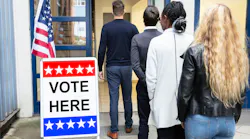 Voters wait to enter the poll.