Progress on King County Metro RapidRide R Line advances with three new strategies
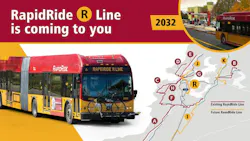
Three strategies are being advanced in an effort to support the expedited delivery of the King County Metro RapidRide R Line. The line seeks to deliver more reliable transit, safer access to bus stops and better connections across South Seattle. The proposal adds stops in response to community concerns, with further opportunities for residents to shape the route and proposal during Council review and beyond.
King County Executive Girmay Zahilay announced three steps to advance the long-awaited RapidRide R Line: proposing $64.4 million in accelerated funding, sending a proposed route and station plan to the King County Council and moving forward with the project’s design. The project aims to provide faster, more reliable transit in neighborhoods from Downtown Seattle, Chinatown-International District, Mount Baker, Columbia City, Hillman City, Brighton, Dunlap, Rainier Valley and Rainier Beach, Wash.
The project has been in development since 2015. The RapidRide R Line will upgrade King County Metro’s Route 7, with faster and more reliable buses and a new connection to the Rainier Beach Station.
“The Route 7 is a historic link for the communities that run through the heart of south Seattle,” said King County Metro General Manager Michelle Allison. “Upgrading this route to a RapidRide is providing these neighborhoods the service they have deserved for generations. The alignment plan has been developed with community outreach throughout all of the Rainier Valley to ensure that as many voices as possible were part of the final plan. When the RapidRide starts rolling, this route will improve transit and expand opportunities for those living along Rainier Avenue from start to finish.”
In addition to more reliable and frequent service, the project seeks to bring an investment in the everyday experience of taking transit in South Seattle: more dependable trips, safer ways to reach the bus and brighter, more comfortable places to wait. Planned improvements include upgraded shelters and seating, better lighting, improved sidewalks and curb ramps, signs with real-time arrival information, expanded bus-only lanes to reduce traffic delays and boarding improvements to make getting on and off easier for people using wheelchairs and other mobility aids.
“Our South Seattle communities deserve fast, reliable transit service. Residents have been waiting over a decade for the RapidRide R Line, and we are moving with urgency to deliver on this generational investment that will greatly enhance mobility while also making critical safety upgrades,” Zahilay said. “During [King County] Metro’s community engagement over the summer, we heard directly from seniors, people with disabilities and families who were concerned about losing stops along Route 7. In response to that feedback, the alignment plan proposes four additional individual stops. We know this will be a change for neighbors who have relied on Route 7 for years, and we will continue listening to community and working to ensure the R line meets the diverse needs of residents and riders in the Southend.”
Strategies to expedite delivery
The following three strategies are being advanced:
Accelerated funding: In Executive Zahilay’s second omnibus budget proposal, he advanced $64.4 million to expedite delivery of RapidRide R. The goal in accelerating this funding is to build a strong partnership with the Seattle Department of Transportation (SDOT) and bolster our shared commitment to transit improvements for South Seattle.
Transmitting proposed alignment ordinance: Following extensive community engagement, Executive Zahilay has transmitted the ordinance to the King County Council, establishing general station locations for the future RapidRide R Line. Approval of this proposed legislation will allow King County Metro to continue design and delivery of RapidRide infrastructure and facilities along the corridor in preparation for planned service by 2032.
The proposed line will have a total of 58 individual stops along the route. Based on community input, two stops have since been added to previous designs at Rainier Avenue South at State Street and South Grand Street and Rainier Ave South at South Bayview Street.
“When we say public transit should be irresistibly good, that promise should be realized first and foremost in the communities that rely on it most,” said Seattle Mayor Katie Wilson. “In the Rainier Valley, people ride transit at some of the highest rates in King County with more than 11,000 daily trips on Route 7 alone. Investing in fast, frequent, reliable, accessible, safe and affordable service here is more than just good transit policy; it’s a commitment to deliver on what government owes the people who count on it every day. RapidRide R is an upgrade for riders, a long‑term investment in the Rainier Valley’s future and a clear statement that great transit belongs here.”
In an effort to provide more reliable and faster service, the RapidRide R would not stop at 16 of the stops along the route that are currently served by the Route 7, as 12 of these would still be bus stops served by other bus routes, including routes 9, 14, 50, 106 and 547. The remaining four stops would be within 0.2 miles of a RapidRide R stop.
Other stops south of Henderson Street that are currently served by Route 7 would not be served by the RapidRide R but will be addressed through a separate service-planning process described below.
Releasing request for proposal (RFP) for project to begin design: The project is currently at 10% design. The county and King County Metro report they have worked with the county procurement office to expedite publishing a RFP for engineering, planning and design services for RapidRide R to ensure we have the team in place to move design on this project forward in partnership with community. Proposals are due by Nov. 5, 2026.
The legislation would establish the route and general station locations while leaving detailed design work ahead. Resident input is set to help shape how those improvements work on the ground.
King County Metro notes it is also evaluating how to maintain strong and convenient transit connections for people traveling to and from areas south of South Henderson Street that will not be directly served by RapidRide R Line. Before the RapidRide R Line launches, King County Metro notes it will engage communities south of South Henderson Street to better understand local travel needs, priorities and important destinations and connections.
About the Author
 Noah Kolenda
Associate Editor
Noah Kolenda is a recent graduate from the Craig Newmark Graduate School of Journalism with a master’s degree in health and science reporting. Kolenda also specialized in data journalism, harnessing the power of Open Data projects to cover green transportation in major U.S. cities. Currently, he is an associate editor for Mass Transit magazine, where he aims to fuse his skills in data reporting with his experience covering national policymaking and political money to deliver engaging, future-focused transit content.
Prior to his position with Mass Transit, Kolenda interned with multiple Washington, D.C.-based publications, where he delivered data-driven reporting on once-in-a-generation political moments, runaway corporate lobbying spending and unnoticed election records.