King County Metro continues construction on RapidRide I, J lines
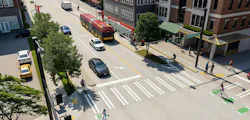
King County Metro is building 17 miles of new RapidRide service in Renton, Kent and Auburn, Wash. Once the I Line is in service in 2027, the agency notes the line will provide connections to the Renton Transit Center, Kent Transit Center and Auburn Station.
The I Line will also connect riders to the RapidRide F Line, Sound Transit buses, Sounder Train and local bus service, working to make it easier for people to travel to and from regional destinations and access a network of local bus routes. King County Metro says it is building RapidRide I Line to meet a need for improved north-south transportation options in south King County, Wash.
King County Metro is building or upgrading about a dozen bus stop sites across Renton, Kent and Auburn, as part of the project, with crews installing new sidewalks, curbs, gutters, ADA-compliant ramps and shelter footings. The work also includes underground electrical work, storm drainage and roadway paving, and most of it began Sept. 9 and is scheduled to wrap up by Sept. 30, with the last Renton site running through Oct. 2.
The total project budget is $128.5 million. It includes:
- $64.2 million from the Federal Transit Administration’s (FTA) Small Starts Grant
- $9.6 million from the Federal Highway Administration (FHWA)
- $6 million from the Washington State Department of Transportation (WSDOT)
- $6 million from the University of Washington (UW)
- $43 million from the city of Seattle, mostly from the voter-approved Levy to Move Seattle.
RapidRide J Line more than halfway complete
Additionally, the agency is also working on the RapidRide J Line, what King County Metro calls more than a new bus route—rather, a transportation breakthrough for the people who live, work, study and shop across the University District, Belltown, South Lake Union and Eastlake, Wash.
Right now, King County Metro says it has passed the halfway point of construction—a milestone that it says means the most disruptive work is largely complete. What comes next: brand-new sidewalks, bus stations, protected bike lanes, better lighting and a smoother street.
The J Line links together homes, jobs, schools and local businesses along the way:
- UW: Students, staff and faculty are set to gain an alternative to driving and parking, with direct connections to UW campus, which serves more than 50,000 students.
- Medical centers: New stations serve the UW clinic on Roosevelt Way Northeast and Fred Hutch Cancer Center on Fairview Avenue North, connecting patients, staff and health care workers to these critical institutions.
- South Lake Union and Downtown: The bus route runs through major employment hubs for Seattle’s tech, health care and service sectors.
- Eastlake and Belltown businesses: Upgraded streets, sidewalks, lighting and modern transit support the many local shops, cafés and restaurants that give these neighborhoods their character.
Construction on the RapidRide J Line is now more than halfway complete. Much of the work so far has happened beneath the street, and crews are finishing the final sections of new street surface on Eastlake Avenue East.
King County Metro says reaching this point meant tackling the hardest parts first. Before any paving could begin, the agency notes that crews rebuilt a network of aging infrastructure hidden beneath the street:
- Storm drainage upgrades: Most drainage improvements across the project area are now complete, helping treat surface water along Eastlake Avenue East and keep it from overwhelming sewer lines during major storms.
- A new water main: In partnership with Seattle Public Utilities, crews replaced a 100-year-old water main with 9,000 feet of new, earthquake-resilient pipe, added 27 new fire hydrants and coordinated 174 new service connections to nearby homes and businesses.
- A new street surface: With utilities in place, crews reconstructed and paved areas within the U District, Eastlake Avenue East and Fairview Avenue North, creating a smoother, more durable street ready for the next phases.
What community members see next
As construction moves into the next phase, neighborhood improvements are set to become more noticeable:
- Improved lighting and sidewalks: Brighter streets and updated, ADA-accessible walkways that make it easier and safer to get around day or night.
- Bus stations: New, well-lit bus stops with real-time arrival information and weather protection.
- Bus lanes: Dedicated red lanes that give buses a clear path through traffic, reducing travel time and improving reliability for riders.
- Bus islands: Concrete islands that make boarding safer and more efficient while keeping sidewalk space available for pedestrians and businesses in most locations.
This project is made possible by the voter-approved 2015 Seattle Transportation Levy, along with funding support from King County Metro, WSDOT, UW, Seattle Public Utilities, the FTA and the FHWA.
Project highlights by-the-numbers
- 15,130 feet of repaired sidewalks, making walking safer and more comfortable.
- Two miles of repaved streets, ensuring smoother rides for all travelers.
- 3.7 miles of protected bike lanes, promoting safer and more predictable cycling.
- Two miles of dedicated bus priority lanes, enhancing bus travel reliability.
- 177 improved crosswalks, increasing pedestrian safety when crossing the street.
- 131 upgraded curb ramps, making it easier and safer for people of all abilities to get around neighborhoods and to bus stations.
- 33 intersections equipped with new traffic signals, improving traffic flow.
- 190 newly planted trees, contributing to urban greening.
- 8,900 feet of replaced water main, ensuring reliable utility services.
About the Author
 Noah Kolenda
Noah Kolenda
Associate Editor
Noah Kolenda is a recent graduate from the Craig Newmark Graduate School of Journalism with a master’s degree in health and science reporting. Kolenda also specialized in data journalism, harnessing the power of Open Data projects to cover green transportation in major U.S. cities. Currently, he is an associate editor for Mass Transit magazine, where he aims to fuse his skills in data reporting with his experience covering national policymaking and political money to deliver engaging, future-focused transit content.
Prior to his position with Mass Transit, Kolenda interned with multiple Washington, D.C.-based publications, where he delivered data-driven reporting on once-in-a-generation political moments, runaway corporate lobbying spending and unnoticed election records.