Denver RTD to host Community Ambassador Program to help mold transit updates
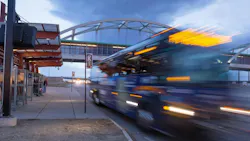
The Denver Regional Transportation District (Denver RTD) announced that its conducting operational analysis—RTD CONNECT, the Comprehensive Operations and Network Needs Evaluation for Community Transit. The agency says the program will create short- and long-term service plans, creating a road map outlining how most efficiently use resources to meet the transportation needs of the service area.
As CONNECT enters the stakeholder and community engagement phase, the agency’s program team has introduced the RTD CONNECT Community Ambassador Program, an opportunity for individuals to serve as a link between Denver RTD and residents.
RTD CONNECT is an 18-month, districtwide initiative to evaluate and redesign the agency’s transit network. The project aims to align services with post-pandemic travel patterns and guide future service changes while accounting for Denver RTD's current structural budget. With insights from data and stakeholder engagement, CONNECT will assess the balance between transit frequency and geographic coverage to ensure strong, reliable connections that reflect the unique community priorities within each of Denver RTD’s 15 districts. Community Ambassadors will engage directly with Denver RTD and translate community priorities into meaningful input that will inform the planning process.
This change comes as other transit agencies around the nation make their own service updates, like the Metropolitan Transportation Authority, who implemented its bus network redesign in Queens to better suit modern travel patterns, or the Massachusetts Bay Transportation Authority, which launched its Better Bus Network in December of 2025, with more improvements coming in September 2026.
RTD CONNECT is currently in Phase 1 with a focus on evaluating the current transit network, travel patterns, ridership trends and industry benchmarks. Denver RTD says that Community Ambassadors will play a critical role in ensuring community members are informed about the project and able to share their perspectives on potential network alternatives in Phase 2 in the fall of 2026 and short- and long-range service plans in Phase 3 that’s set to take place in the summer of 2027.
Community feedback
In addition to the Community Ambassador opportunity, over the course of the year, Denver RTD says it will create chances for community members to review, react to and provide feedback on three key proposals:
- May/June 2027 service changes: Short-term service changes to operate within the agency’s current fiscal constraints.
- January 2028 short-range service plan: A plan for optimized routes and service levels at a sustainable funding level.
- Long-range vision: A guide for future investments and system growth.
Residents interested in becoming Community Ambassadors can learn more on the agency’s website.
About the Author
 Noah Kolenda
Noah Kolenda
Associate Editor
Noah Kolenda is a recent graduate from the Craig Newmark Graduate School of Journalism with a master’s degree in health and science reporting. Kolenda also specialized in data journalism, harnessing the power of Open Data projects to cover green transportation in major U.S. cities. Currently, he is an associate editor for Mass Transit magazine, where he aims to fuse his skills in data reporting with his experience covering national policymaking and political money to deliver engaging, future-focused transit content.
Prior to his position with Mass Transit, Kolenda interned with multiple Washington, D.C.-based publications, where he delivered data-driven reporting on once-in-a-generation political moments, runaway corporate lobbying spending and unnoticed election records.