Votes are in: Who stays and who goes within DART's service network
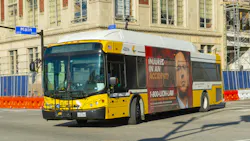
Voters in Highland Park, Texas, elected to exit the Dallas Area Rapid Transit (DART) system on May 2—the first time a city has elected to leave the system since 1989 when Flower Mound and Coppell chose to depart—while University Park and Addison opted to stay.
As of May 14, DART services no longer operate within the city limits of Highland Park after its city council canvassed the results of the election on May 13. While fixed-route buses and paratransit trips will still travel through the city, neither will start or end routes or conduct trips inside city limits. DART has confirmed to Mass Transit magazine that no service beyond the secession of Highland Park routes will be impacted.
To compensate for the exit from DART, the city launched Highland Park On-Demand, a microtransit service in partnership with Via Transportation (Via) that will provide on-demand rides within city limits and act as a connection to nearby transit options. The city is also launching Highland Park Access, a pre-scheduled paratransit service for passengers with different mobility needs. Both services will operate seven days a week from 5:00 a.m. to 12:00 a.m., with the base on-demand service costing $3 per trip and access trips costing $3.50.
The cities of Addison and University Park had also negotiated contracts with Via to facilitate microtransit services should their voters had elected to leave the system, though a University Park spokesperson confirmed to Mass Transit that the city council had elected to cancel its contract. As for Addison, Mass Transit was unable to confirm the status, as it hasn’t surfaced in any further city council meeting minutes, nor could the city manager be reached for confirmation.
Initially, six member cities were considering leaving the transit network due to a perception they were not receiving a fair return on the 1% sales tax revenue that each city contributes for membership to the network. The six cities include Addison, Farmers Branch, Highland Park, Irving, Plano and University Park—though three withdrew the ballot question when DART adopted a new General Mobility Plan (GMP). That plan gives back up to 7.5% of the contributed tax and contributes another 2.5% of funding from the Regional Transportation Council of the North Central Texas Council of Governments, which approved $75 million to fund transportation-related projects in DART member cities in early February.
While the funding from the GMP led to Farmers Branch, Irving and Plano’s city councils rescinding the vote, Addison, Highland Park and University Park still opted to proceed. Addison opted to stay, with 70% voting yes to staying, while University Park opted to stay with a slimmer margin of 53.7% voting yes. Highland Park opted to exit with 69.7% of voters voting no to staying in the system.
As for the financial standing of DART with the loss of the member city and in funding the GMP, the agency noted in an email to Mass Transit that the sales tax revenue from Highland Park only makes up a small part of its budget, and while any loss would be noticed, they prepared for the eventuality and for funding the GMP.
“Because of DART’s prudent fiscal policies and practices—and as evidenced by recent comments from credit rating agencies—our financial position remains strong,” said a DART spokesperson in the email. “While the loss of any city is detrimental to regional mobility, Highland Park represents [less than] 1% of DART’s annual sales tax revenue. Additionally, the GMP is a significant percentage of DART’s revenues, but we have already incorporated the first two years into the 20-year financial plan, following the board’s adoption of a different version of the program in March 2025. This gives us time to discuss with the board how to accommodate the GMP in fiscal year 2028 and beyond while minimizing impact to riders.”
The agency projects Highland Park’s exit creates a loss of $270 million in sales tax revenue over the next 20 years.
The transit system also notes that it will continue to collect the 1% sales tax until the obligations of Highland Park are met in accordance with withdrawal calculations laid out in Transportation Code Ch. 452.
DART Board Chair Randall Bryant shared how the agency will move forward post-vote in a press release issued after the vote.
“The future of North Texas will be shaped by the cities that choose to move forward with DART. We are focused on expanding this system with partners who recognize that transit drives economic growth, connects people to opportunity and strengthens communities,” Bryant said in the press release. “As we head into the next legislative session, we are united in our ask, give our cities room to breathe and allow the state to step in as a true partner in shaping what comes next. At the same time, we are pushing forward to expand our system and establish a fair, modern governance and funding model that works for everyone. This is our moment to move forward, and DART is ready to lead.”
As to what those specific priorities are, the DART spokesperson said that “member cities have agreed to structural changes on the board to resolve issues of representation,” changes that require legislative intervention. Currently, DART’s 15 board seats are weighted by population—meaning that the city of Dallas is represented with eight of the board seats, where other member cities can be represented by only one combination seat representing the interests of multiple member cities.
This departure also comes at a time where the agency lacks a permanent chief executive, as former CEO Nadine Lee separated from the agency in March, followed by the appointment of David Leininger—who’s returning to the role in an interim capacity after doing so before from 2020 to 2021.
In an email to Mass Transit, a University Park spokesperson shared a similar sentiment to Bryant, noting that the city was looking to DART for leadership in this moment.
“The outcome of the election indicates that University Park voters wanted to continue the regional transportation framework and have access to the services provided by DART,” said the University Park spokesperson. “The narrow margin is indicative of the challenges facing regional transportation, and the city will look to DART to ensure University Park residents receive a return on its transportation investment.”
As for the city of Addison, in a statement issued to CBS News Texas, Addison Mayor Bruce Arfsten said in part, "By choosing to remain part of DART, our community has reaffirmed the importance of regional connectivity and mobility. With the Silver Line now in place, Addison is well positioned to benefit from increased access and the economic opportunity it provides."
About the Author
 Noah Kolenda
Noah Kolenda
Associate Editor
Noah Kolenda is a recent graduate from the Craig Newmark Graduate School of Journalism with a master’s degree in health and science reporting. Kolenda also specialized in data journalism, harnessing the power of Open Data projects to cover green transportation in major U.S. cities. Currently, he is an associate editor for Mass Transit magazine, where he aims to fuse his skills in data reporting with his experience covering national policymaking and political money to deliver engaging, future-focused transit content.
Prior to his position with Mass Transit, Kolenda interned with multiple Washington, D.C.-based publications, where he delivered data-driven reporting on once-in-a-generation political moments, runaway corporate lobbying spending and unnoticed election records.