Four transit agencies launch microtransit pilot projects
The city of Phoenix, Lextran, New Jersey Transit (NJ Transit) and VIA Metropolitan Transit (VIA) have invested in new microtransit pilot programs to provide more service for riders.
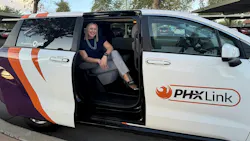
City of Phoenix launches PHXLink pilot
The City of Phoenix has introduced a new on-demand, shared ride transportation pilot. The city says PHXLink will operate in three service zones across north, west and south Phoenix. For $2 per ride, passengers can request a trip through the PHXLink mobile app or by phone and travel between designated pickup and drop-off locations within each zone. The pilot will provide another option for residents traveling to specific transit centers, light-rail stations, RAPID commuter routes and other local destinations.
“PHXLink gives Phoenix an opportunity to explore new ways of connecting residents to public transit,” said Phoenix Public Transit Director Jesús Sapien. “By pairing flexible, on-demand service with our existing transit network, we can better understand where additional connections may be needed and how different public transit options can work together to serve our community.”
The city notes that riders can also use PHXLink to connect with the I-17 RAPID and I-10 West RAPID routes. Expanded weekday bidirectional RAPID service will provide additional travel options for commuters.
The three-year pilot is part of Project Effective Access Solutions for Easing Congestion, supported by a $12.9 million federal Congestion Relief Grant from the Federal Highway Administration and partially funded through the city's Transportation 2050 program.
Lextran launches Lextran Connect pilot
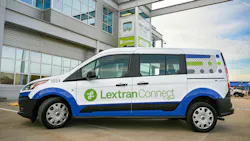
In partnership with public transit technology provider Via, Lextran Connect is a new on-demand service that offers shared rides bookable through a mobile app. Funded by the city of Lexington, Ky., the 12-month pilot project is designed to work together with Lextran's fixed-route buses to extend access to jobs, healthcare and essential services in Northwest Lexington.
The service will run from 6:00 a.m. to 8:00 a.m., Monday through Sunday. Riders will request their trip in the Lextran Connect app 20 to 30 minutes before they are ready to leave. They then walk to meet their driver at a designated location. Other passengers headed in the same direction may be picked up and dropped off along the way. Fares for each ride are $3, and the agency notes trips to and from Lextran bus stops within the service zone are free, meaning riders can continue their trip on a Lextran bus route at no additional cost. Lextran Connect utilizes wheelchair accessible vans that can accommodate up to four seated passengers and one wheelchair.
"Launching Lextran Connect is a great way for our community to see how public transportation brings a network of options to Lexington," said Lextran General Manager Fred Combs. "Whether it is a fixed-route city bus, a Lextran Wheels paratransit vehicle or now, Lextran Connect, we meet our mission by offering services that help folks get where they need and want to go."
NJ Transit introduces CG Hopper pilot
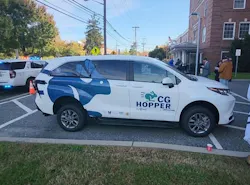
In partnership with the Senior Citizens United Community Services (SCUCS), Camden and Gloucester, N.J., counties, the free, on-demand shared-ride service is operated by Via. The service aims to provide seniors and people with disabilities who reside in Camden and Gloucester counties with convenient, accessible transportation throughout the designated service area. The service will also provide connections to NJ Transit services, giving customers greater access to the broader NJ Transit network and expanding their transportation options.
“Reliable transportation helps people live independently and remain connected to the people they love,” said New Jersey Gov. Mikie Sherrill. “With the launch of the CG Hopper, we’re making everyday trips easier for seniors and New Jerseyans with disabilities in Camden and Gloucester counties. I’m proud to work with our county and community partners to deliver a service that will make a real difference for South Jersey families.”
All senior residents (60+) and people with disabilities in Camden and Gloucester counties are eligible for rides on the CG Hopper. SCUCS and current Camden and Gloucester County riders will be automatically enrolled. New riders must complete a one-time eligibility registration through SCUCS or the county of Gloucester Division of Transportation Services program.
“The CG Hopper is a direct investment in South Jersey and the residents who count on accessible transportation most,” said NJ Transit President and CEO Kris Kolluri. “By combining the local expertise of Senior Citizens United Community Services and Camden and Gloucester counties with NJ Transit's network, we're giving seniors and people with disabilities a free, flexible way to travel across county lines.”
The agency is also partnering with the Alan M. Voorhees Transportation Center at Rutgers, The State University of New Jersey, which helped inform the pilot's development and will analyze service data, evaluate outcomes and identify promising practices to help guide future mobility initiatives in New Jersey.
"I want to commend NJ Transit for their forward thinking, progressive initiative to provide more access and opportunity to transportation options for our seniors and disabled community here in Camden County," said Camden County Commissioner Jennifer Cooley Fleisher, liaison to the Camden County Health Department. "Anytime we can bring these options to the front doors of our residents we are bridging a real gap that will ultimately enhance the lives of our neighbors and improve the social determinants of health for every individual participating in the program."
Riders can book a ride by downloading the CG Hopper app, using the CG Hopper web app or by phone through the service’s support team. Riders will then meet their driver at their pickup location. NJ Transit says the CG Hopper fleet consists of five accessible Toyota Sienna minivans, and the service offers curb to curb transportation.
VIA introduces Loop 410 pilot, new rideshare electric vehicles
On Oct. 19, VIA began offering on-demand rides between downtown and neighborhoods inside Loop 410 during the overnight hours as part of a pilot program.
“San Antonio doesn’t shut down at midnight and neither should the ways people get around it,” said VIA President and CEO Jon Gary Herrera. “Nurses, hotel staff, restaurant and bar teams — the people who keep this city running around the clock deserve a safe, affordable ride home when their shift ends. This pilot gives them one, and it will help us learn how to better serve late-night riders going forward.”
VIA Link After Midnight operates from midnight to 4:00 a.m. Monday through Friday. Customers can travel in either direction between Downtown and any bus stop inside Loop 410 for $1.30, VIA’s standard fare, with discounted fares available to those who qualify.
Trips can be booked through the VIA Link app or by phone. VIA says riders should expect wait times of less than 20 minutes, and If no VIA Link vehicle is available when a customer requests a ride, the program will dispatch an Uber or Lyft vehicle. The pilot is funded in part by an Uber Transit Innovation Fund grant VIA received earlier this year.
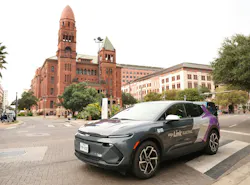
The agency is also adding two Chevrolet Equinox electric vehicles (EVs) to its VIA Link Downtown fleet, with service beginning Oct. 29.
The addition of the Chevrolet Equinox EVs builds on the agency's ongoing efforts to evaluate service options and respond to the evolving transportation needs of downtown San Antonio. Additionally, the VIA Link service has reached 2.5 million trips since its inception in 2019.
While riders cannot specifically request a Chevrolet Equinox EV for their trip, the agency says riders will be able to see when one has been assigned to pick them up through the VIA Link app. The vehicles feature a distinct VIA-branded design that maintains the familiar VIA Link look with an added element identifying the vehicle as electric.
“Adding these vehicles gives us another opportunity to explore how different technologies can support our service and better understand what works best for our customers and our operations,” Herrera said.
About the Author
 Brandon Lewis
Associate Editor
Brandon Lewis is a recent graduate of Kent State University with a bachelor’s degree in journalism. Lewis is a former freelance editorial assistant at Vehicle Service Pros in Endeavor Business Media’s Vehicle Repair Group. Lewis brings his knowledge of web managing, copyediting and SEO practices to Mass Transit magazine as an associate editor. He is also a co-host of the Infrastructure Technology Podcast.