Cedar Valley microtransit pilot awarded initial $750,000 grant
The Black Hawk County Gaming Association (BHCGA) has awarded a $750,000 grant to modernize public transit in the Cedar Valley, supporting a three-year microtransit pilot program.
The multi-year award provides support for a joint initiative led by the cities of Cedar Falls and Waterloo, Iowa, and the Metropolitan Transit Authority of Black Hawk County (MET Transit). Together, the partners note they are working to assemble a $4.6 million funding coalition designed to test and deliver on-demand, shared-ride public transit across communities where traditional bus lines cannot easily reach.
"Black Hawk County Gaming Association is proud to support the microtransit pilot program," said BHCGA Executive Director Emily Hanson. "Improving transportation access is a priority for the greater Cedar Valley community, and the BHCGA greatly values the collaboration and partnership between the cities of Cedar Falls and Waterloo in working together to develop a solution that best serves the needs of the entire Cedar Valley.”
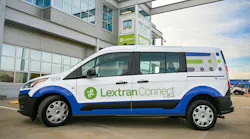
Using smaller passenger vans, the service aims to navigate designated zones to provide shared rides that connect riders directly to their destination or link them efficiently to MET Transit's existing fixed-route bus network.
While specific passenger fares remain under evaluation, the program aims to lower transit barriers, shorten travel times and increase ridership across the metropolitan transit system.
The cities note that the BHCGA grant represents the culmination of regional planning efforts that began in May when community partners established a dedicated microtransit task force. The working group brings together MET Transit’s General Manager, municipal administration from both cities—including the mayors, community development director, and finance director—regional transportation planners from the Iowa Northland Regional Council of Governments and BHCGA leadership.
"Increasing mobility for our communities helps support our residents and businesses by making it easier to access jobs and essential daily tasks," said Cedar Falls Mayor Danny Laudick. "This pilot program can provide useful information on both the challenges and benefits that such a system would bring to the Cedar Valley. Currently, we are working hard with our partners at the city of Waterloo, MET Transit, private grants and area employers to fund the pilot program."
The project advanced publicly following presentations to both the Cedar Falls and Waterloo City Councils, where MET Transit outlined the operational mechanics, logistics and neighborhood impact of a three-year pilot.
"Transportation is more than simply getting from one place to another. It is about providing opportunity, independence and access to the services that make a community successful,” said Waterloo Mayor Dave Boesen. “Microtransit gives us an opportunity to think differently about public transportation. It allows us to provide flexible, convenient and potentially more affordable transportation for seniors, individuals with disabilities, working families, students and residents who may not have access to reliable transportation. It can strengthen our workforce, support local businesses, improve access to healthcare and make our community more connected."
With the $750,000 BHCGA award serving as the project’s first major grant award, the coalition is working to complete the $4.6 million budget. The cities of Cedar Falls and Waterloo will be asked to participate in funding by providing a total of $471,875 and $502,625 respectively, along with several other local, state and federal grants that the group has applied for, as well as additional private and corporate partnerships.
About the Author
 Noah Kolenda
Associate Editor
Noah Kolenda is a recent graduate from the Craig Newmark Graduate School of Journalism with a master’s degree in health and science reporting. Kolenda also specialized in data journalism, harnessing the power of Open Data projects to cover green transportation in major U.S. cities. Currently, he is an associate editor for Mass Transit magazine, where he aims to fuse his skills in data reporting with his experience covering national policymaking and political money to deliver engaging, future-focused transit content.
Prior to his position with Mass Transit, Kolenda interned with multiple Washington, D.C.-based publications, where he delivered data-driven reporting on once-in-a-generation political moments, runaway corporate lobbying spending and unnoticed election records.