Infrastructure Technology Podcast: Inside Stadler's apprenticeship program
Key takeaways
- Stadler’s apprenticeship program allows students to work with rail technology: Mass Transit Associate Editor Brandon Lewis interviews Signaling North America CEO Lucy Andre on Stadler’s apprenticeship program, where apprentices gain experience with diesel, battery-electric, hydrogen and light-rail vehicles.
- Artificial intelligence (AI) is increasingly shaping rail operations: While Stadler's manufacturing process remains largely hands-on, AI is playing a growing role in predictive maintenance, signaling systems, passenger information and collision-warning technology.
- Automation is viewed as a tool to assist operators rather than replace them: The discussion highlights how AI can improve safety and efficiency by helping operators respond to hazards and manage routine tasks.
- The program creates a long-term talent pipeline for the rail industry: Although Stadler hopes graduates remain with the company, executives view the movement of apprentices throughout the transportation sector as a benefit for the industry as a whole.




On this episode of the Infrastructure Technology Podcast, Mass Transit Associate Editor Brandon Lewis interviews Lucy Andre, who serves as the CEO of Signaling North America and is the chief of staff and corporate security of Stadler US in Salt Lake City. They discuss how Stadler is building the next generation of the rail workforce through its apprenticeship program in Utah. Modeled after the Swiss apprenticeship system, the program gives high school students the opportunity to earn wages, gain hands-on experience in rail manufacturing, pursue an associate degree in advanced manufacturing and transition into full-time careers.
Listen time
31:38.
About the guest
Lucy Andre serves as the CEO of Signaling North America and is the chief of staff and corporate security of Stadler US.
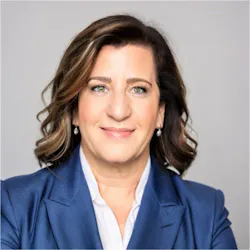
Here is a transcript from the episode:
BL: Welcome to another episode of the Infrastructure Technology Podcast. I am Brandon Lewis, the associate editor of Mass Transit magazine, and I am here today back with my duo partner in crime, Jessica Parks from Roads and Bridges. Jess, how are you doing today?
JP: I'm doing great. Happy to have our tag team back under unexpected circumstances.
BL: So it is Tuesday. It is a podcast day. I have an interview that you guys are going to get to hear shortly, but Gavin was supposed to be hosting today's edition of the ITP. And yet last week after we did that fantastic episode of Gavin's intervention of the Southwest, which if you have not listened, make sure you go back and listen right now on all audio podcasting platforms. But I think I made a joke last week that Gavin, now that he loves the Southwest after we interventioned him, that all of his sort of bad mojo towards the Southwest was going to come towards my hometown of Cleveland, and I think that bad mojo just went to Pittsburgh, Pennsylvania, because Gavin has no power this morning, and that's why he's not recording with us today.
JP: Yes, The technical difficulty we have. So you'll just get the two of us today, and it's great to be here with you, Brandon. I'm excited for everyone to hear your interview.
BL: So before we get there, Jess, I have a question for you. Before entering the roads and bridges industry, did you ever think about maybe entering an apprenticeship program or did you have any thoughts on these types of programs?
JP: I have never really thought about it. I didn't really know that they existed until I became a part of the roads and bridges industry, but it makes a lot of sense in the aspect that these are skilled jobs and starting early always gives you a head start. Being able for the companies to be able to select really good talent right out of high school gives them an edge. It makes sense for our industries for sure. I never thought of it. I don't think you want me building a train or building a road, but I think it's really great for people who are skilled in those areas.
BL: Well, this apprenticeship program at Stadler in Salt Lake City, Utah. It's a really unique one because it's really based off of how rail cars and trains are built. And today I sat down with Lucy Andre, who serves as the CEO of Signaling North America and is the chief of staff and corporate security of Stadler US in Salt Lake City. And since joining Stadler in 2016, she has helped oversee the setup and the expansion of Stadler’s North American operations. This program by Stadler is a really unique one to get young people in the door, get them involved in the transportation industry as soon as they leave high school. And so with that, Maz, why don't you go ahead and take us away to my interview, and we'll see you on the other side.
BL: And Lucy, welcome to the Infrastructure Technology Podcast. Thank you for being here with us today.
LA: Thanks so much for having me.
BL: Yeah, so you are of course the CEO of Signaling North America. You also are involved in what we are talking about today, which is Stadler's apprenticeship program. Can you talk to us a little bit about how this program sort of got started?
LA: You bet. So as you know, Stadler is a Swiss company and so we are well ingrained in the Swiss apprenticeship culture and work really well with apprentices in our Swiss and European sites. So that was something that we really wanted to bring over to the U.S., and it was just a really good time as we coordinated with our governor's office and with some of the educational partners here to really create a new model here that is based on the Swiss model. So it was a perfect storm, I guess, of a good time, a company that had a culture in doing this, and we just found a really perfect environment to set it up here.
BL: And when did this program begin?
LA: So we started in about 2018 talking about it, creating all the agreements and started to get the apprentices on board.
BL: For sure. So let's talk a little bit about the logistics of the program. Let's talk about how long the program is, how do you get apprentices in the program and then how many are in the program at a certain time?
LA: Okay. So the program, I'll just give you a brief description of how it works. So it's a three-year program. We start with students their senior year in high school and here in Utah, we have an A-B schedule, so they go to school on A days, and they come in and work with us on B days. And then when they graduate from high school, they continue on in the program at Salt Lake Community College. And so the next two years, they also go to school part-time and work here part-time, and it increasingly moves toward more work. So by the end, they're working about 70% maybe, and going to school about 30%. And they graduate with an associate's degree in advanced manufacturing. We pay all their tuition and costs for school, as well as giving them a wage here. And when they graduate, we give them a job offer. So it's a great pipeline for us. We take about 15 apprentices per year. So at any given time we have maybe 45 or so apprentices in the facility.
BL: And then in terms of how you decide whose apprentices, is there an application process that these students go through?
LA: There is. And so we partner also, it was with Talent Ready Utah, which was housed in the governor's office and is now under the Utah System of Higher Education. Because the state, when they saw this apprenticeship program, wanted it, and we wanted it to be a model and not just a Stadler program. So it's a model that we can use in a lot of different industries. In manufacturing, we have other partners that participate as well. So it's not just us, it's other companies that have joined this. We started off, but then gradually other companies have joined us. So Talent Ready Utah really runs the whole process, the application process. So we get applications from, we work with one school district, but we have some kids from outside the school district occasionally and then other employers might be in different school districts. But we have three or four employers in the Salt Lake School District right now who participate in this program. So Talent Ready Utah runs the application process. Kids start hearing about it at school and from their counselors and in different classes. And then they come in, they fill out applications at the beginning of maybe fall of their junior year. We go through a recruiting process during the late winter, early spring. And then that recruiting process involves, we take all of the applications that have been turned in, and we sit down with the companies, and the kids say who's their first choice, second choice, third choice, employers. And when we vet these applications, they also come in and do a job shadow, the kids, so that they can make a good decision about what their first choice is. And then we sit down with the other employers and go through, it's like a draft day. We kind of go through the applications, we decide, we choose our top 15, and they choose their top however many they're going to take, and we send out offers. And then there might be a little bit of movement from that, but usually that's about what happens. And then we have a fun, we do like the school's sports do. We do a fun signing day with everybody coming in where there's a media presence, and they get a hat from whatever company they're going to and things like that. Yeah, so then they're all on board by late spring.
BL: That's really cool. I mean, it really is. You think about college sports general recruiting.
It really is almost the same process.
LA: Yeah, it's a fun process. And in the beginning, we didn't have them come in, but now we figure it's just worked out a lot better to get kids to understand what they're actually getting themselves into by deciding on one or the other company and by doing a process. And so yeah, now we have them come in and see what it's like in the factory for a day to job shadow and test. And the other companies do that as well. So one of our other companies that's a lot like us is Doppelmeier. They manufacture ski lifts. So they do a lot of welding and putting big pieces of equipment together and things just like us, but kids can have the opportunity to really experience what it's like in the factory before they make a decision on the application.
BL: In terms of scheduling, is it difficult? Because obviously students all have different schedules. So do you generally tell them you're going to be working in the morning and doing school in the afternoon or vice versa? Or is it more of a flexible schedule?
LA: No, generally we kind of have to say you're here in the morning, you go to school in the afternoon. And part of the reason for that is just because of the classes, so we need to make sure for general ed classes, we have sort of precedence. Our kids can have precedence for the afternoon schedules and then there are some that are just the advanced manufacturing core classes that they're in, and those are all scheduled in the afternoons, so that they can come in and work in the mornings.
BL: So we are a technology podcast. Of course, this is the Infrastructure Technology Podcast, and this has been a perfect fit for us because this season we have been looking at all different sorts of programs that have advanced the next generation of transit professionals. So let's talk a little bit about what the students are actually learning when they're inside the program.
LA: Yeah, so I would say in school, much like school is, they're learning really general principles of manufacturing. And that goes from something as simple as reading a schematic, learning about how electricity works, things like that, to maybe something that's a little more principles of manufacturing that's maybe a little more general, like they learn lean manufacturing and things like that. When they're in the factory, they're specifically learning how to build a train. So we roll them through a number of. Their first year, the first semester or so is just very general. They're learning very general things, and we also give them some sort of soft skills like what's a 401k? How do you write a resume? What's a performance review?
BL: Oh, you go that far. That's really cool. Not a lot of programs do that, let me tell you.
LA: Yeah. So we want them to learn that, too. And then by the time they're in their second semester, we're doing hands-on things. They've got a 3D printer down in their classroom, so they can 3D print some of the things that they'll be working on. We talk about just wiring basics and things like that. And then they start doing rotations and their second and third year they do rotations. Also, in the summer they do capstone projects, so they get to come up with something that's particularly interested them during their time thus far and do a capstone project. And so those really vary, but the second and third year, they do rotations, so we rotate them into the truck assembly part. We rotate them through final assembly, through electrical pre-assembly. Sometimes if they have a particular interest, we can put them into, let's say, procurement or engineering or something else that they might want to do other than just the very hands-on on the floor. Our credits when they graduate with this associate's degree are stackable so that they can go on in their education if they want to, but they don't have to. They can also get a great job here right away on the floor or somewhere, but if they decide they want to get that engineering degree or that supply chain management degree or something like that, then they can go on and do that as well and the ones that are interested in that might rotate through some of those departments. We do logistics, and we're working on some things with our maintenance department, our commissioning department, so they learn how to build the trains, how to test the trains, how to maintain the trains, just everything that goes along with that.
BL: Yeah, and Lucy you mentioned that this program started in 2018, which it's hard to believe it's been eight years already. I mean, 2018 feels like yesterday. But with that, technology has sort of evolved, what is the role that technology is playing in this program?
LA: Well, it has a central role because of course our trains are very technologically advanced, so these kids are learning the cutting edge of what's available here. So they clearly learn what goes on a train, how to wire it, how to put things together, and that's obviously 100% technology, but also I think as we've changed things on our trains, we have over the last eight years brought a number of different models of train into our factory. So in the beginning, they were just working on our flirt model, which is our diesel multiple unit. But after that we have our electrical bi-level multiple unit. We've got metro trains in here. We've got fully battery trains in here. We'll have light-rail vehicles very soon in here. So I think they learn the technology that goes along with all of the different models of train as well, and as that changes, I think we made a change on our trucks for a new product a couple years ago, and they were right in there learning the changes on that. And so I think they're very up-to-date technologically.
BL: And to your point, the difference between a battery, electric, a diesel and an all-electric train and some of these battery, electric and all electrical, from my understanding, and I've been in mass transit now for a little bit, but from my understanding, they are more relatively new. And the way they are designed is so different as opposed to just a regular diesel train.
LA: Yeah, they are, and we also have hydrogen trains here in the facility as well, so that's something that they're looking at too. Just all the different propulsion systems are very different. I think the basic structure of our train, I mean, we always have an electric generator even if it's a diesel train. And the basic idea that we have, our crash energy management system, our open gangway system, all of that is similar. But the different models, the different weights, whether they're bi-level or single level, and certainly the propulsion systems account for a wide variety of technologies and learnings for the kids.
BL: As AI has sort of made its way into most jobs on everyday workforce in some capacity, has it played a role here?
LA: Sure. I think we're seeing it creep into a lot of places. As we look at the basic technology of a train, everybody says, ‘Well, how soon until you go driverless’? And that is a question for our customers more than for us actually because it depends when people will accept that, but you can see certainly varieties of AI in a lot of the things that we do. I would say our manufacturing processes themselves have incorporated some AI, but we keep it very personal. We don't have a lot of robotic anything here. But in terms of pure AI, yeah, I mean, as we look at the signaling systems that we incorporate into our train and then of course into the wayside and collision warning systems, the passenger information systems, the safety systems have increasingly incorporated AI into those, and it's a learning curve for us all, too. As we take the things that are new and balance them against the things that are service-proven, we have to make sure that we're maintaining the highest levels of safety and security, so they're getting incorporated slowly, but they're definitely getting incorporated.
BL: For sure, and I think to your point, especially with trains, it's almost more on the data side where the more the AI can physically collect data, and of course you have to make sure that that's accurate, but the more somebody else that's not a human can collect data, the more the human can actually be in the field.
LA: Exactly, and I think it runs in the places I think we're seeing it where it's made a major difference are things in predictive maintenance for the trains and collecting an odometry, understanding the track behavior and collision warning and things like that where just getting that data and being able to process it and react to it quickly is super important.
BL: Yeah. And let me tell you, too, obviously, I think we all know what's been happening out there. You mentioned the autonomous vehicle. Transit agencies have been deploying those. There's also the Waymos out there. I think those are going to be more commonplace obviously as society evolves, but I don't know if I'm comfortable yet with an autonomous train.
LA: It's funny because I'm not really either. I mean, I think they can do it. The technology's probably out there, although not entirely, but I think it's very close, And when you look at it, it's a lot like cars, I guess. I mean, you look at the percentage of accidents that are due to operator error is extremely high. So logically, you would say if we can automate that, then we can avoid that operator error. But it is a philosophical shift for all of us too, to be able to understand that and be comfortable with it. I think that where this sort of idea of autonomous driving comes in and people are really comfortable with is making those very rote tasks for an operator become something that they don't have to do all the time. I mean, if a train automatically slows down when a red light is coming up or when there is an object on the tracks and the other trains in the system are automatically slowed effectively, then that's important because that allows the operator to do their job better rather than having to rely on line of sight or something like that, so I think there are a lot of ways that AI and this advancing technology can really just help the operators do their job better rather than going to fully autonomous vehicles right away.
BL: So we talked about the before aspect of the program, the recruiting. We talked a little bit about what happens when they're inside the program. You have mentioned this a little bit throughout the recording of today's episode. Let's talk about the after and the kids go on and they graduate. You already mentioned the fact that they can get jobs at Stadler or already working. Do you guys though, do you work with other transit agencies potentially looking for other opportunities in other parts of the field?
LA: We love our apprentices, and we've put three years into them by the time they graduate. So of course we want them to stay. And so we give them job opportunities here. And really all but about one have taken that. One, because she moved and moved out of state. But I think of course we want them to stay. We love to have them stay. But the next best case scenario would be having them go somewhere that benefits our industry. If they went to a customer, if they, we had one who worked here for two, three years as one of our early apprentices did an excellent job. We loved him. And eventually he took a job with one of our suppliers, and it's hard to see someone go, but it makes you feel really good that you can have even more quality assurance with a supplier knowing that someone you trained for five years is now working at the supplier. So I think we talk to a lot of our customers, we do a lot of talking across the industry and hope that a lot more of these programs will crop up. And as much as we want to keep everybody, yeah, if they went somewhere else in the industry, that would be a pretty cool opportunity for them, and it would benefit all of us as an industry, so I think we couldn't feel sad about that.
BL: For sure, and I want to make a quick point to the listeners as well that what in my opinion at least makes this apprenticeship program unique is the timeline. You talk about three years. A lot of the apprenticeship programs that we've covered here from what I've seen could be anywhere from six months to 18 months, almost like an internship or an extended internship. This is really sort of a training program while you are working. So you really are mentoring these kids as you would say, Lucy, as they're coming of age, as they're becoming young people.
LA: Right. Yeah. And that's a tremendous privilege for us as well. We love having them in the factory. It's just an honor to be able to train them and start them off well. As I mentioned, this is a model, so it's not something that we feel super proprietary about. We just think it's a good thing for our community and our industry, and it was really important to us as we put this into place that there be an objective criteria at the end. And that for us is the associate's degree. An associate's degree in Utah is the same as an associate's degree, has the same meaning as an associate's degree in any other state. And so it does preserve the flexibility for the students, for the graduates. They have something to take with them now. They can't just say, ‘Well, Stadler trained me’. I mean, that's great, but nobody really knows what we did or how we trained them, so they have this objective degree that is granted to them, it's credentialed, and everybody accepts it. So that was important to us as well because it has to be a good deal for the students, for the kids to spend three years in this program. We wanted them to have something that they could carry with them that would mean a lot afterwards.
BL: Lucy, is there something that I did not cover on today's show that you would like to go further in depth about?
LA: I guess I would just say that starting a program like this and continuing a program like this can be, it's a heavy lift, but it's really worth it, and I think what makes it worth it are the tremendous partners that we have. And so the school district and also the Salt Lake Community College, they are just with us every step of the way. They've been such amazing partners to make sure that this has value for every student that enters the program, but I would also say our legislature has ensured that we have the optimal operating environment in which to do this. So there are obstacles that you come against, and you need a lot of partners to help you solve those obstacles and move forward, and we have that, and I think that's made all the difference.
BL: Lucy Andre, she is the CEO of Signaling North America. Lucy, thank you so much today for joining me on the Infrastructure Technology Podcast.
LA: Well, thank you so much for having me. It's been a pleasure.
BL: And that was my interview with Lucy Andre from Stadler. You guys have heard a lot of my voice today, but I'm going to kick it over to my co-host, Jessica Parks. Jessica, what was your thoughts on the interview you just heard?
JP: First off, great interview. I think this really fit into what we were initially going for this season with looking into college students, programs, technology. It really encapsulated the whole theme of our season. So great pick, Brandon. I thought it was really interesting, the program as a whole. I mean, as a journalism student, I was an intern, and I'm going to tell you that I didn't learn. I learned more in my three-month internship just doing what I would be doing in the field than I did in my classes. I mean, of course you have to have that background in everything, but I think it's just so important to get out there and be doing the work that you're intending to do than sitting in a classroom. I think real hands-on experience is unmatched, and I think this program is really, really unique and interesting. I know she said they wanted it to be a model for other programs like this, and I definitely see the structure of that being used in various ways. I also think it must be a really competitive program to get in. I mean, they only take 15 students a year so being one of those 15 students props to them. I think that's really special and definitely gives them an edge in the field, and it just sets up a school to job funnel that is really important nowadays, and you got your college paid for and everything, and you get paid, so there's definitely no negatives.
BL: And two things that are sort of unique to this program more so than other apprenticeship programs. I know we've done a few of them here on the ITP as well that I've interviewed, but this one lasts for three years. Usually most of the apprenticeship programs that we cover here are either 12 or 18 months. This one is three years, and it is not only the classroom and hands-on experience, but I know Lucy has said that a few of the people in the program have gone on to have careers elsewhere, but the majority of them stay at Stadler, and it's almost in a way like you're starting your full-time position, your career when you enter the program.
JP: Yeah. As a senior in high school, I believe she said, right?
BL: Yeah. And again, just getting your foot in the door, learning, asking questions and being hands-on. And again, we talk about the technology and the development that they're learning, and we talk about this all the time, the new technology that's coming in to build these new rail cars to last for the future. I also want to give a special shout-out to a friend of the show, my partner in crime over at Mass Transit, Noah Kolenda, who actually set me up with this interview when he was at APTA Mobility, which we talked about on the conference recap episode a couple of weeks ago, we talked about him touring the facility when he was there in Salt Lake. So he was actually the one that came up with the idea for this interview. So again, thank you, Noah, and thank you, Lucy, for being a wonderful participant today on the ITP. But I'm getting that noise again in my headphones from the one and only Karina Mazhukhina, The Maz, which means it's time to wrap up this episode of the ITP. So Jess, who should we thank?
JP: Thank you to our listeners. Thank you to our sponsor, our parent company, EndeavorB2B. And thank you, Lucy, for joining Brandon in the interview today. And thank you, Brandon, for hosting our episode. You did a great job. You do a good job filling in for Gavin. He should be on his toes with your hosting tech style.
BL: Thank you, Jess. I appreciate it so much. And before we get out here, if you have a pressing question and inquiry you want to send us, give us an email, [email protected]. You can also follow Mass Transit and Roads & Bridges on all the socials, X, Facebook, LinkedIn and Instagram. Let's hope that the illuminating company comes soon and turns on Gavin's power and that he is here next week. But for Jessica Parks and Roads & Bridges, I'm Brandon Lewis, the associate editor here at Mass Transit magazine.
JP: And I'm Jessica Parks. Thank you for joining us today.
BL: And goodbye.
About the Author
 Brandon Lewis
Brandon Lewis
Associate Editor
Brandon Lewis is a recent graduate of Kent State University with a bachelor’s degree in journalism. Lewis is a former freelance editorial assistant at Vehicle Service Pros in Endeavor Business Media’s Vehicle Repair Group. Lewis brings his knowledge of web managing, copyediting and SEO practices to Mass Transit magazine as an associate editor. He is also a co-host of the Infrastructure Technology Podcast.