Infrastructure Technology Podcast: The next generation shaping the public transit industry
Key takeaways
- Congestion pricing in New York City producing measurable results: This episode kicks off with Mass Transit Associate Editors Brandon Lewis and Noah Kolenda and Roads and Bridges Staff Writer Jessica Parks discussing the data on New York City’s congestion pricing program after one year.
- The future of transit is being shaped by a new generation: Brandon interviews Jorge Diaz, a student from Penn State University, who explains how young professionals are bringing data-driven thinking, global perspectives and a focus on multimodal transportation.
- Transit moves people: Diaz explains there’s a clear push to shift from car-centric planning toward systems that prioritize moving people efficiently across all modes.
- The cost of bridges: The show ends with the hosts playing a game where Brandon and Noah have to guest the cost of some of the bridges in Roads and Bridges’ Top 10 Bridge Awards.




Brandon Lewis, Jessica Parks and Noah Kolenda break down one year of congestion pricing in New York City and the real-world impact it’s having on traffic, air quality and urban mobility. The team explores how driver behavior is changing, where the policy is succeeding and what challenges remain.
Later in the episode, Brandon sits down with Penn State student Jorge Diaz to discuss the future of transit through the lens of emerging professionals, from data analytics and machine learning to the need for more multimodal, people-focused infrastructure.
Episode length: 49:10
About the guest
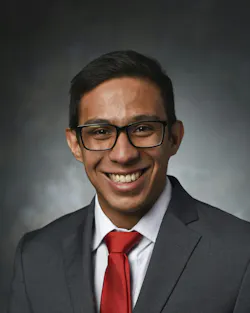
Jorge Diaz is in transportation engineering in the Department of Civil and Environmental Engineering at Penn State, with an emphasis on transit systems. His research focused on analyzing the impacts of transit policies on ridership, security incidents, accessibility and equity, elasticity, mode choice, induced demand, and trip purpose.
Here is a transcript from the episode:
BL: Hey there, ITP listeners, this is Brandon Lewis, associate editor of Mass Transit magazine, here. On today's episode, myself, Mass Transit Associate Editor Noah Kolenda and Roads and Bridges Staff Writer Jessica Parks talk about the success that congestion pricing has had in New York City during the past year. We recorded this segment last month, and since then, there is an update that we wanted to provide you. On March 3rd, the U.S. District Court Southern District of New York rejected the Trump Administration's attempt to eliminate New York City's congested pricing program, as U.S. District Judge Lewis Liman determined the administration's attempt to rescind the program was unlawful. And with that, let’s get into today's episode of the ITP.
BL: And welcome back to the Infrastructure Technology Podcast. I am not Gavin Jenkins. I am Brandon Lewis, the associate editor of Mass Transit magazine. Gavin is not here this week, as unfortunately his dog Bob, friend of the show, is not feeling well. But we do have Jessica Parks, staff writer from Roads and Bridges. We do have Noah Kolenda from Mass Transit magazine. How are we doing today, guys?
NK: Hello, Doing well.
JP: We're doing great. Thanks for asking.
BL: And of course, it is Tuesday. It is a podcast day, and we have a very interesting intro that we're going to be diving into today, as well as my interview that we'll get to in a little bit. But before we get things started, I would like to say that if you have any pressing needs for the ITP, if you want any questions answered, make sure to go ahead and email us at [email protected]. And now we're going to have Noah lead us through a little bit of a discussion on congested pricing, an issue that is relevant to both of our industries. So Noah, go ahead and take it away.
NK: Absolutely. So we just marked one year with congestion pricing in New York City. This is the first kind of introduction to this style of program in the United States, which essentially charges drivers for accessing a congested zone kind of above a normal toll. So in this application, it's below 60th Street in Manhattan, and after just 12 months, the results from this program are overwhelmingly positive in just about any metric that you slice it. I've pulled all of the data together and figured we could just run through it. Honestly, there wasn't really a great way to gamify this because there's no tension for us to play with. So I split it up with the benefits to Mass Transit and the benefits for Roads and Bridges. And then I figured we could just kind of talk about the way that the increased revenue will be spent by the MTA going forward. So first and foremost, the main goal of the congestion pricing program was to decrease traffic in the congestion zone, and that goal was achieved. Traffic was down 11% in the congestion zone from the same times recorded in the prior year, and that equals 27 million vehicle trips fewer over the year, and that's just a massive decrease from where the MTA was at before and that translates to 73,000 fewer cars entering Manhattan every day.
BL: And Jessica, as somebody who previously did live in New York City, how does that news sort of resonate with you?
JP: So yes, what you guys might not know, listeners of the podcast, is that I used to be a reporter in New York City right during the pandemic so during a very interesting time. During that time, I did drive into Manhattan a decent amount because the roads were empty. However, I agree with congestion pricing, as I do believe, as a person who's driven in New York City, there's just so many factors that you're considering when you're in that really populated part of Manhattan that I almost have a belief that there can just be too many users of a road, and it just creates a really high rate of conflict. When you're trying to take a left in New York City, you're not only looking for pedestrians, you're looking for bicycles that are coming from protected bike lanes, and it's just a lot to put on a driver to be considerate of, I think, in a lot of ways, so I do support congestion pricing, however, I do think that there needs to be more considerations for transit-barren neighborhoods that do rely on vehicles, and they don't really have a choice, so I just want to make sure when I think about it, I just want to hope that there are some concessions for them, but I know that there aren't in the pricing, but maybe with the projects that will be created with the new revenue.
NK: For sure.
BL: For us on the Mass Transit side, we always look at how do we get more vehicles off the road and the use of transit buses and public transit. The Roads and Bridges side, obviously the roads and bridges are mostly filled up by cars. So what is the biggest impact for congestion pricing on your guys' side of the industry?
JP: So I understand that congestion pricing has had an outsize effect beyond just the central business district that you have to pay to get into. I understand that it has reduced traffic on tunnels surrounding the city. It's even extended out to New Jersey and people who are taking buses from upstate New York to get to work, so I think that that, in my opinion, maybe that will allow for more road infrastructure projects to occur in New York City like the BQE, the Brooklyn Queens Expressway is absolutely crumbling, so hopefully this will allow that time to be able to maybe address that. That's a pipe dream though. The BQE has been a problem for years and years and years. I just read today that the, I think it's called the, I just read that the section that goes through Brooklyn Heights where the promenades over, it's called the tri-level cantilever or something like that, it is only supposed to last to at least 2029, and it's already has just quick fixes on it, so that's a pressing, pressing issue, so I'd like to see how it impacts, maybe accelerates road projects.
NK: Definitely. And to your point, this congestion pricing program isn't just a kind of make it better for pedestrians or for transit riders, it's also aiming to make the experience better for drivers as well, and that's shown in the data, too. For instance, the speed of travel over the roads and bridges, or excuse me, over the tunnels and bridges leading into Manhattan have sped up as much as 50% from the same time last year, meaning that drivers are getting through those zones much faster than they were before due to reduced traffic. So yeah, to your point, I'm hoping that that can also allow for the agencies to be able to make closures easier to allow for upgrades and renovations were needed, especially as we approached the ends of lives of certain large pieces of infrastructure.
BL: Now, Noah, you are located currently in Brooklyn, and as we all know, I am not a geography wizard. So how far away are you from where this congestion zone pricing is being implemented and have you seen personally any impacts living in the area that you're in?
NK: So personally here in Brooklyn, I don't necessarily feel a stark difference, but I do notice a difference when I go into Manhattan for things and largely the things that I notice are, yeah, vehicle traffic as a pedestrian was always a challenge, but I now notice that it's just not as loud in Manhattan as it was before and especially below the 60th Street where the actual congestion zone is. It's so much quieter, and it's also just a lot nicer to breathe the air there to those stats. I have stats to back this up, too. Air pollution is down more than 20% in the congestion zone or was six months into the program and that, excuse me, it's down 20% of the particulate matter in the air, and it's also brought greenhouse gas emissions down in the air, 6% in the same timeframe. And so pollution is improving. Complaints of illegally parked cars in the congestion zone have gone down, noise complaints have gone down. Really all of the quality of life metrics for residents in the congestion zone have improved, and that's noticeable as you just walk down the street.
JP: I also wanted to add something that I read in the New York Times about congestive pricing is that it's had an effect on traffic times in entering the central business district and exiting. Apparently a lot of drivers are rushing to get into the central business district before the tolling jumps to $9. I believe it starts at 5:00 a.m. and then there'll be a mass exodus from the central business district after the total price decreases to $2.25 after 9:00 p.m., so I thought that was kind of interesting, just how quickly an impact this can have on driving behaviors.
BL: Yes, great point. And being in Cleveland, we don't have a lot of tolls. $9 does seem a little bit high to me. Does that seem high to you guys?
NK: A bit? Yeah, it really does.
JP: So I lived in southern Brooklyn, and I lived pretty close to the Veno so when I had to exit the city, I would go through Staten Island a lot if I was going south, and that toll is $20. And so NAYA dollars is very, I think I really thought it would've been more, to be honest with you. I mean I know that that has an impact if you're driving on that road every single day, and there aren't really concessions, concessions to it as the Veno has for Staten Island residents, but I would've thought it would've been higher, so I was happily surprised by $9 personally.
BL: Do we have any more notes, thoughts, anything else that we want to address on congested pricing before we get into my interview today?
NK: Yeah, so there is just one stat that didn't necessarily improve. Unfortunately, complaints of illegally parked cars outside of the congestion zone. So above 60th Street have gone up 17% since the same time last year, so there still are some kinks to work out, whether that be finding places for additional parking or just as transit improves and allows more people to shift those trips away from cars entirely. I think that will continue to improve, but really if we're looking for a negative metric, this is that.
BL: Do we think that these cars are being parked a week just because people don't want to pay or think it's too high?
NK: I think it's definitely people that are just parking above the zone and then either hopping a train or just walking down into the zone because I mean, if the difference is a $3 subway fare versus a $9 toll and the risk, not a guarantee, but the risk of a parking ticket, a lot of people I think are going to take the gamble to park their car illegally and then only spend $3 as opposed to not.
BL: And if you're doing that every day, you're saving $6 a day, you say five days a week, that's $30 over the course of a month. I would assume most people, even though they say they're not risk averse, do take risks, a lot of people in natural situations outweigh the benefit versus the harm, right?
JP: But those savings are immediately eliminated if you get one ticket a month because the tickets are like $200.
BL: But most people think there are so many cars parked here, are they actually going to pick mine?
NK: And that's just kind of the general risk in a lot of these situations, too, and that's what we see when we talk about evasion. It's a lot of just kind of the risk of jumping or the risk of illegally parking and just taking the chance because if you don't want to spend $3, I mean you're risking it, but the other side of that is the possibility of the $50 fair evasion ticket in New York, so.
BL: For sure. Well, thank you guys so much, and we are now going to move on to talk about a great young man who just graduated from Penn State University, the home of the Nittany Lions, Jorge Diaz, who owns a master's degree and a PhD entrance transportation engineering from Penn State. He has professional experience in land use, planning, transit operations and traffic management, and I'm proud to say that on this season, the ITP, that we are going to primarily focus young people in the industry. Jorge was a great first guest. He's from Costa Rica originally. We talk about the difference between international and U.S. transit and his love of transit. So without further ado, let’s take it away to my interview with Jorge Diaz.
BL: And welcome back to the Infrastructure Technology Podcast. I am here with Jorge Diaz, who has a PhD in transit and engineering in the department of civil and environmental engineering at Penn State, the home of the Nittany Lions. Jorge, welcome to the Infrastructure Technology Podcast.
JD: Thank you so much for having me here. I'm really excited about this, and I want to talk about transit. That's what I like.
BL: Yeah, let's talk about transit, man. It's so exciting. So Jorge, I got a quick question for you though before we get into transit. Just out of curiosity, how old are you?
JD: I'm 30 years old.
BL: Okay. You are actually older than me. I just turned 27 about a couple months ago, and public transit has always been really a part of my DNA. Before I even started working at Mass Transit, I took transit all over the place. I'm originally and still am in the great area of Cleveland, Ohio, but I want to talk today about your interest in transit, sort of where it started, what you're learning and how technology relates to all of this because of course, this is the Infrastructure Technology Podcast. Let's start by talking about the place where you got your PhD in. Can you tell us a little bit about the program you were involved in, the Penn State department of civil and environmental engineering?
JD: Of course. Well, the department of civil and environmental engineering at Penn State is one of the best in the country. It's ranked the 13th best civil engineering civil engineer program in transportation. In general, they offer undergrad and also they offer grad studies, and in my case, I did the first master's and then the PhD, the master of science and the PhD in transportation for the PhD in transportation. They basically have several focuses. They have the focus on transportation safety. They also have focus on freight. They have focus on transit flow theory. And the one that I specialize that my advisor works with is transit. Basically what the PhD is about is we have core courses related to all the areas I mentioned, and as well, we have specialized classes such as there's one class in transit specifically where we learn a little bit more about transit planning and how to operate a transit agency. After that, you can take classes for all around the university that includes classes from the economics department or the stats department to help you understand a little bit more about transit.
BL: Let’s talk a little bit about what interests you in transit, like why transit?
JD: That's a good question, honestly. So I consider myself a transit nerd. Well, first of all, I was born and raised in Costa Rica. Well, I was doing my undergrad. I decided to specialize in transit because during my childhood and my teenage years, all the time I used transit. My family used to travel to all the places by transit, by bus specifically, so I learned that when a transit system is well managed, you can really impact people's lives and that experience just pushes me forward to studying transit. And then after graduating from civil engineering, I worked around two years in transportation planning in Costa Rica and then I decided to come to the states to do my PhD and my master's in transit. So basically my whole life.
BL: Yeah. Can you talk a little bit about why Penn State? Was that your first time experiencing the United States?
JD: Yes. This was my first time experiencing the United States. So when I decided to go, I decided to apply to so many universities. One of them was Penn State because my Costa Rican advisor is from Penn State, so he told me, ‘Why don't you apply to the same university I studied?’ I was like, ‘Okay, let's do it’ and then after applying, my current advisor, she contacted me, and we scheduled a meeting, and the meeting was honestly one of the best meetings I've ever had at the beginning. So we clicked. That's it. That's the reason why I came to the states, to Penn State, because I clicked really well with her.
BL: Now I'm going to throw a little bit of a curve ball, if you will, at you. We're order. Can you tell me a little bit about the difference in Costa Rica transit versus American Transit? And you talked a little bit about how fascinated you were by transit. You talk about how transit moves people, which is totally true, but is there anything in Costa Rica that drove you to transit that maybe the U.S. doesn't have or maybe doesn't offer yet?
JD: So I would say the first thing you notice when you go to Costa Rica is that most people travel by transit. So actually, well the last number I remember is in 2010, 70% of the population used transit to commute, so that's a really high number compared to the five to 3% numbers we have here in the states. That's the first big difference. The second big difference is the system in Costa Rica is centralized, meaning that we have a transit authority that controls the transit system all around the country, but that's basically because the country is a real small country compared to the states. So if you think about it, it works a little bit more like a transit agency, and the other part is that the transit system is mainly focused on buses. We also have a train that goes around the main city that is San Jose, but at the same time, the transit system is mainly focused on people traveling by paths. Now, if we compare that with the states, where each city has their own transit agency, and besides that, each city has their own unique infrastructure. It's completely different. There's no point of comparison.
BL: So let's look at transportation now in terms of modes, right? They’re so many different modes of transit. Obviously, we have bus, we have rail, we have commuter rail, we have light rail, we have heavy rail, we have these new mobility shuttles that are coming in, and we could even dive into the Waymo and the AVs and the autonomous vehicles. There's so much to talk about, but you, being here for the short run of time that you have, what is, I guess your favorite transit system, not necessarily to ride for yourself, but your favorite one to dive into and study?
JD: Ooh, my favorite one to study. I would say my favorite one would be light rail, but at the same time it goes so close to heavy rail that I want to say both.
BL: Okay. Do you have a favorite system? Have you ridden systems? And this could be international as well. It could be one in Costa Rica, it could be one in the U.S. Have you ridden a lot more systems than ones maybe outside of Pennsylvania?
JD: Oh, I would say my favorite one is to see is the TTC. It’s one of the best that the country has. It simply can go anywhere you want. The system is reliable. It's a little bit expensive, but at the same time, it offers you what you're looking for in a transit system, so this will be the answer.
BL: Let's talk now a little bit about technology wise and trains and one of the big things that we have talked about on the ITP at large, really over the last year, has been the influence of artificial intelligence and AI and transit. Just one of the things that you've been studying or maybe one of the things that you might be interested in with actually looking at how AI is being used to help better transit systems.
JD: Yes, I know I mostly work with statistics and machine learning methods. I haven't studied LLLM, I think that's the name. So the specific LLMS are not part of my interest right now. I think I feel that we still need to work a little bit on that side before logic completely takes over a transit agency system that will work with artificial intelligence. In my opinion, artificial intelligence is a great tool, but at the same time we're too far away to use it. In this case, it's a great tool to process information to get the answers transit agencies need, but you still need a human hand at the end to make all the decisions for the transit agency.
BL: Yeah, I think a lot of what's being used when it comes to AI and transit is, I know I did a couple interviews this past season on the ITP where we talked about what Hayden AI was dealing with the city of Sacramento and the SacRT. We had an interview in season one of the ITP where Zero Eyes detection was being used at the Regional Transportation Commission of Southern Nevada and the ability to detect whether a potential firearm is on transit. I think some of those things that are being developed are so cool. Are there any technologies within the program that you've been studying or that you sort of come across that you're using in your everyday statistics to study transit?
JD: Yes, of course. So the program in general gave me a lot of tools, including the machine learning methods and artificial, a little bit of artificial intelligence, so I can get the data from the transit process, the data that I want and the machine learning method or the artificial intelligence technology will give me an answer that I'm looking for, and with that answer, now that I have the answer, I can give recommendations to the transit agency. That's how it works. So for instance, neural networks is one of the examples I can give you or most simplistic methods such as a random forest. We go from the most simple to the more advanced ones.
BL: Can you say that again? Did you say random forest?
JD: Yeah, random forest is a mature layer method that is extremely simple. We start with that one and then you can move towards more advanced methodologies.
BL: Can you explain what that actually is though?
JD: Ooh, random forest. Okay. Random forest is a methodology that you have. You have your data, all the data that you have from a transit agency that you're looking for an answer. What random forest does is it starts splitting the data as a tree and by.
BL: Oh, like a forest tree.
JD: It's like it starts as a tree. So using the tree, just one tree, it gets the answer you're looking for, but at the same time, we know that one answer might not be the right answer, so the model creates two, three, four, five, six, 200 trees, and they have a forest.
BL: Okay. Wow. And how quickly does it take for this machine learning technology to develop this forest? Is it like a couple of seconds?
JD: It depends. It could run from a couple seconds to a couple hours. Everything depends on what you're looking for. If you have a small data set and small data, you can have the answer in just one or two seconds or even less, but if you're working with multiple transit agencies or a lot of information, you might take it a while to get the answer
BL: What kind of information is this data giving you? Is it giving you ridership data? Is it giving you realtime information data? What kind of data is it giving you?
JD: It depends on what you want again, but yes, it can give you ridership data. For instance, we used a machine, we used a random forest model that actually is publicly available. A transit agency can input their numbers, and they can get estimated ridership for that transit agency.
BL: And how far back does that data go? Are we talking years? Are we talking months? How can we compare it? Is it quarter to quarter?
JD: So it will give you yearly, monthly data. It will give you monthly results and the data, we use data from 2022, 2023 and 2024 to build up the data set.
BL: And just for the listeners at home out there, I know this is going to be airing in early 2026. We are recording here in November of 2025. So let's say Jan. 1, 2026, comes around, how quickly could you get that data for 2025?
JD: Oh, well most incidents have the data available, so once you have the data available, you just need to input the data into the model and the model will give you the answer of the ridership perspective for that specific month.
BL: Okay. Now obviously you and I, as two young peopl,e we're both very still learning about the transit industry. I mean, there is so much to learn. This past Halloween just surpassed my three-year anniversary here at Mass Transit, and I still feel like I'm learning more and more about the industry every day. What are you hoping to really dive into and learn and maybe is there's something that you're studying that you want to change for the better about the industry?
JD: Okay, so this is not something that the transit industry needs to change. I would say it's more that the transportation industry at large needs to change. Most engineers and planners are super focused on vehicle mobility instead of people mobility. So what universities do and what they teach and what people learn and what people put into practice is to prioritize the private vehicle but instead of that, I think my opinion is that we should focus the engineers and the planets work to make a multimodal network, so people can drive, walk, bike, use transit to get to their destinations and not rely on their cars, but that's an issue of the industry. If the industry doesn’t change and they don't offer a good alternative to people, they're going to pick the car. It's the only option they have.
BL: Right? Yeah, I know Transit app, we did an interview in season two with Steven Miller from Transit app, and he talked about their ability to basically put directions on a bike and that development to give more accurate bike directions. I think bike is one of those areas in transit, I don't want to say necessarily is overlooked, but I think when people think about transit, they think of the bus, they think about the rail. Some people may think about walking. I think again, it is more about accessibility, right? It's like you can walk, you can bike, you can take transit. It's really any of those options.
JD: Exactly. It's more an issue of giving people the option if you don't plan to give the option. If they don't have the option, obviously they're not going to use it because they can't.
BL: Jorge Diaz is from Penn State University, the home once again of the Nittany Lions. Jorge, it was wonderful having you on today as a guest on the Infrastructure Technology Podcast.
JD: Thank you so much for having me. I hope people learn something new about the transportation system, about the transit system and if anyone is interested in pursuing a graduate course on transit, Penn State is an option.
BL: And welcome back. You're hearing my voice once again, that's probably weird for all you ITP listeners, as you just heard me do an interview with Jorge Diaz from Penn State University. But now I'm going to shut up, and I'm going to let Jessica and Noah give their opinions of the interview, and we're going to let Jessica kick us off. Go ahead, Jessica.
JP: Listening to that interview, I'm just so impressed by our young people and the interest that they have in transportation and just his research. I thought it was just so interesting. He was so well-spoken, and I'm just really excited to be part of this season where we get to really highlight the voices of our young people in the industry. Noah, what do you think?
NK: Yeah, I thought it was a fascinating take too, and I know we didn't get to dig into really what the MTA is spending its congestion pricing revenue on, but it's so interesting to hear how people are learning about these new technologies and concepts that are starting to be implemented in the transit industry and hear that that come up as happening at the educational level, as agencies are starting to implement some new technologies and new policies and so fascinating take.
BL: Yeah, I just want to take a minute to say here that every single voice that you have heard on today's podcast is under the age of 30, so we are really the new generation in the transit industry, that whether we are reporting in the industry or whether we are in the industry itself, and the same thing can be said about the roads and bridges, the industry as well. If you think about it, we really are representing what the new era of our industries is going to be.
JP: But unfortunately, I'm the old one here because I'm 31, so everybody's out there who’s 31.
BL: Oh, don't worry. We're going to keep that in because see, I am doing my best Gavin Jenkins impression here today. But Jessica, I understand that you are about to do your best Drew Carey or Bob Barker impression to help us play a little game similar to The Price is Right with bridge prices so go ahead and take it away.
JP: Alright you guys. So I have put together a little over/under game. Here's how it works. I'll give you five bridges from Roads and Bridges 2025 list of the country's top 10 roads and bridges. The first will serve as our reference bridge, where I'll share its cost and a description of it and for the other four, I'll describe the project, and you have to guess if it cost over or under the reference bridge. Are you guys ready?
BL: Yes.
NK: Ready.
JP: Alright, so the first bridge that I'm going to tell you about, this is going to be our reference bridge. This project is the historic rehabilitation of the Brooklyn Bridge. It was a six-year project that restored New York City's iconic Brooklyn Bridge while preserving its historic character cruise strengthened, foundations repaired masonry in added public plazas, all while keeping traffic flowing on a span that stretches 6,000 feet and towers 275 feet above the East River. That project costs 320 million to complete. So let's remember that this is in the middle of the other projects that are either over or above it. So the first bridge I'm going to have you guys guess is the Buck O'Neill Bridge. It's in Kansas City. Kansas City, Missouri.
BL: Missouri, yes?
JP: Yes, and this bridge, the Buck Bucknell Bridge, replaced a 1950s era truss bridge with twin steel plate girder spans stretching about three miles over the Missouri River. It added flyover ramps to ease downtown congestion, a scenic bike, pedestrian path and public art honoring Buck O'Neill. Construction required massive steel and concrete quantities and barge mounted cranes to handle punctuating river levels. Do you guys think that project costs more or less than 320 million to complete?
BL: Well, what I know about Missouri is it's the home of the Chiefs, it's the home of the Royals, it's got a big arch and that's about all I know about Missouri. I'm going to go and say that because I think of the Brooklyn Bridge, and it being in New York and it being such a massive bridge, I don't think that this bridge was as big of a construction list as that bridge was, so I'm going to go in and say that it was less.
NK: Okay. See, I'm kind of torn because, well, this sounds like it's a bigger undertaking. It sounded like it was a full replacement. I'm also considering the construction material costs and the fact that it's not New York City and the charge to deliver things there and the cost of construction there in general, but I still think just it being a whole bridge replacement, I'm going to have to go with higher.
JP: Alright, I'm going to tell you guys the prices at the end, but it was less than 320 million, which I agree with you, Noah. This one's a full bridge replacement, so you’d think that it would cost more. However, the Brooklyn Bridge requires having to kind of uphold some of the historic elements, I think did make that project really costly because it was restoring elements of the bridge that are 100 years old so consider that on the future bridges we discuss.
BL: Yeah, I have a theory behind it. We'll see if I'm right when all this is completed.
JP: Okay, so now this bridge is really fun. This is my favorite bridge of the top 10 bridges. It's called the SR 520 Montlake Project.
BL: That's the name?
JP: Yes, that's the name. These are the names of the projects for the most part, by the way. Okay, so this project is in Seattle, Washington, and it replaced a 1.1 mile 40-span bridge across Union Bay and also built a three-acre landscaped lid over SR 520 to reconnect state Route 520 to reconnect the neighborhoods. It added seismic isolation bearings for earthquake resilience, future light rail accommodations and a transit hub, all while working under strict environmental restrictions in heavy urban traffic. Now, I want you guys to remember that this project included a bridge, the replacement of a bridge, as well as an additional element of constructing a lid over the highway. I don't know if you know what that is. It's just like you can walk across the highway.
NK: It's almost a park.
JP: Yeah, it's almost like a park that's over the highway. It's pretty cool. So do you guys think that project costs more or less than over or under 320 million?
NK: See, for this one, I'm still kind of leaning in the same over direction, especially because it's got the lid, and it's got some groundwork for light rail and stuff like that and seismic stuff for earthquake protection and all the environmental protections, a lot of that stuff usually really pushes up the cost it being around a similar length. I still, I think I'm going to have to go higher.
BL: Yeah, I agree with Noah. I think that addition is probably what puts it over and what I know about the state of Washington and what Sound Transit is doing, as we talked about last week in my game when we went over Mass Transit news questions, and we talked about all of the infrastructure that Sound Transit is putting into these transit projects, and I know that they cost a lot of money, and I'm going to guess that not only was this higher, but I think it may have been significantly higher.
JP: You guys are both right that it was higher. I'm not going to tell you how much higher yet. Okay, so the next bridge is called the New Harbor Bridge. It's in Corpus Christi, Texas. It's a nine-year project that built the tallest structure in south Texas and the longest cable stayed main span in the United States. The bridge features six lanes of bike and pedestrian paths and a 205-foot clearance from massive cargo ships construction that involved nearly 700 precast segments and complex crane operations to assemble its record breaking span. Some context because you guys aren't on the Roads and Bridges side. Precast segments is when they're built, when they're built not on location and then they're dropped in during construction, so it's fully fabricated segments that are built off site and then they're dropped in. And then also, my favorite part about this bridge real quick is that it allows, it totally revolutionize the economy in Corpus Christi because the previous bridge did not allow cargo ships that were a certain height to cross into there and a lot of ships are looking for that passageway because they can't fit on the Panama Canal, so I thought that was super interesting.
BL: I have no idea where Corpus Christi is in Texas.
NK: Very south.
BL: Okay, so that's thrown me off a little bit, but this sounds like a huge project with a lot of different elements, and I think the fact that it took nine years to complete, time is money and so for that reason, I think it's going to be higher.
NK: See, I'm kind of actually on this one actually going the other direction, and I should have more information on this because my sister lives there and so I've heard about some of the economic benefits and stuff like that, but the prefabrication part is really kind of making me think it could be less just because the cost of being able to establish or build that stuff somewhere where it's like the factory and they already have everything established for that and then bringing it in I feel like presents a significant cost savings, but I'm trying to rationalize if that's enough to make it less. You know what? Yeah, I'm going to go with less.
JP: Alright, so this one was over, and I also want to mention that this bridge won the Roads and Bridges Top 10 Bridge Awards. It was number one, the new Harbor Bridge. That was our number one bridge. Alright, the last bridge is the Blue Masons bridge, and it was an emergency repair. This one's super interesting. So in Colorado's remote Rocky Mountains, crews worked 24/7 for six months to repair a 1,500 foot bridge over the Blue Mesa reservoir. The project involved innovative crack arrest systems, bolt by bolt plate replacements and challenging logistics using ocean rated rescue boats and strict 15 management to keep crews safe in harsh conditions alter a store a critical route and avoid a 300-mile detour.
NK: Wow.
JP: What does that equate to? 300 miles? That's like four hours?
BL: Yeah, it's about right. Five hours. Well wait, probably about five or six actually.
JP: Yeah, that's a rude awakening right there.
NK: Definitely, especially considering all the specialized equipment and the oceanic things they needed to bring in. the fact that they're having to do 24-hour, seven day a week construction, there's no way that that's not costing them insane amounts in labor. I personally like this has to be over for me.
BL: Okay, so thanks to our lovely friends at AI, if you're driving at 60 miles per hour, it would take you five hours to get through 300 miles, so I think the fact that it's a huge bridge, it's a huge project, but it only took six months, and I think that spending that amount of money in six months seems pretty wild to me, regardless of what the figure is, so I actually think that because of the timeline on this, it's going to be lower, but Noah, you have good reasoning for it to think that it's higher.
JP: It's lower, somehow it's lower.
BL: Hey, I went four for four.
NK: You did it, Brandon. I did not.
BL: I think this is the first four for four successful game I've ever had in the history of ITP.
JP: Yep. I'm very proud of you. You got to join the Roads and Bridges team, I guess your greater guess in budgets.
BL: So my theory was basically based off where it's at and the timeline. That was it.
JP: Yeah. Okay. One little quick thing I'm going to ask you guys is, do you guys kind of remember the bridges? What would you guys guess is the highest costing one and what would you think is the lowest costing bridge?
BL: Okay. I actually think the lowest costing bridge would be the one we just talked about. I think the highest costing one would be, my guess it wouldn't be Corpus Christi. What was the second bridge that we talked about?
JP: The second bridge we talked about. So there was the one in Kansas City and then there's the one, the lake, the one that had the bridge in the lid.
BL: Yeah, that one I think is the highest one.
JP: Okay, what about you Noah?
NK: I think I perfectly agree with that. I think our final bridge was the cheapest and the lidded bridge was the most expensive.
JP: Brandon, you are so close to a perfect score, and you almost said it. You almost said the highest bridge. Okay, so the lowest costing bridge was the Blue Mesa Bridge emergency repair. That one cost $121 million. The second cheapest bridge to build was the Buck O'Neill Bridge, the one in Kansas City, Missouri. Then the middle of course was the Brooklyn Bridge, the rehabilitation. The second most expensive bridge was the Mont Lake Liddon Bridges project. And the new Harbor Bridge in Corpus Christi is the most expensive bridge. That one cost 1.3 billion. So just for your reference, the Mont Lake Liddon Bridges project, the next most expensive bridge to construct was 455 million.
BL: Wow. I'm guessing that’s because of the transferring of parts they had to drop into that bridge.
JP: Yeah, I think it required really heavy equipment. They also, that might have held, if I had mentioned this, I wrote about that bridge, so I remember some things about it, but they couldn't deliver any parts from the waterway, so they couldn't work at all within the waterway. They had to work from the land so that probably required some mysterious machinery.
BL: That's fascinating.
JP: And that's it for my game. I hope you enjoyed it.
BL: Jessica, that was fascinating, and I'm sure me and Noah being on the Mass Transit side learned a lot. And guys, unfortunately that's all the time we have for this Infrastructure Technology Podcast, ITP episode. As always, if you want, email us at [email protected], check up on Gavin's dog, ask us about bridge questions, ask us about transit questions. We are ready to hear them. Next week on the ITP, Gavin is interviewing two students from UC Berkeley, which is in the great state of California. And with that, we want to give a special thank you to Endeavor Business Media, EndeavorB2B, for letting us host this infrastructure technology podcast. We hope you all have a great day. We will see you next Tuesday and goodbye.
About the Author
 Brandon Lewis
Brandon Lewis
Associate Editor
Brandon Lewis is a recent graduate of Kent State University with a bachelor’s degree in journalism. Lewis is a former freelance editorial assistant at Vehicle Service Pros in Endeavor Business Media’s Vehicle Repair Group. Lewis brings his knowledge of web managing, copyediting and SEO practices to Mass Transit magazine as an associate editor. He is also a co-host of the Infrastructure Technology Podcast.