LADOT, city of Chicago advance automated bus lane enforcement
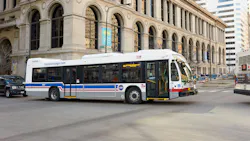
The Los Angeles Department of Transportation (LADOT) and the city of Chicago are advancing use of automated camera-based bus lane enforcement technology, with LADOT launching the tech on DASH Transit buses while Chicago expands its program city-wide.
LADOT kicks off camera-based bus lane enforcement on DASH Transit buses
LADOT has begun automated camera-based enforcement of vehicles parked illegally in bus lanes and bus stops with camera technology installed on DASH Transit buses. For the first 60 days of the program, warning notices will be issued by mail to the registered vehicle owners of vehicles illegally parked in bus lanes and bus stops. Paid tickets will be issued starting Jan. 2, 2027.
“As mayor, my focus remains on building a transit system that Angelenos deserve and demonstrating that Los Angeles can operate an effective, world-class transit system,” said Los Angeles Mayor Karen Bass. “By leveraging this new technology, we're ensuring that buses arrive on time, are accessible to everyone and connect communities to opportunities.”
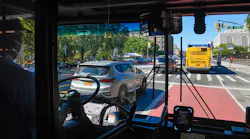
Under the new program, two forward-facing cameras mounted behind the windshields of DASH buses automatically detect and record instances of illegally parked vehicles obstructing bus lanes and bus stops. LADOT personnel review all potential parking violations before citations are issued. Payment plans are available to persons with low incomes.
“This program marks another step forward in our commitment to providing Angelenos with safe and efficient transit services. Keeping bus lanes and bus stops clear of illegally parked vehicles is essential to ensuring that DASH buses are on-time and accessible for the people who rely on our service.” said LADOT General Manager Laura Rubio-Cornejo. “When cars and trucks illegally park in front of bus stops, DASH bus operators are unable to safely deploy wheelchair access ramps and are delayed by maneuvering into general traffic, which slows down service and makes traffic worse for all road users.”
LADOT DASH joins Los Angeles County Metropolitan Transportation Authority, the city of Santa Monica Big Blue Bus and Culver City Bus in enforcing bus lane and bus stop parking violations with bus-mounted camera technology. In Santa Monica, this technology has reduced bus lane parking violations by 52% and bus stop parking violations by 40% in March 2026 than in August 2025, the program’s first full month of issuing unpaid warning notices, according to LADOT.
New York City, Washington D.C., Philadelphia, Boston, the East Bay of the San Francisco Bay Area and Sacramento also use bus-mounted camera technology to enforce parking violations that obstruct buses. In New York City, this technology has increased bus speeds by up to 36% on some congested road segments, and 91% of violators have not received a second ticket.
City of Chicago expands automated bus lane enforcement pilot to city-wide program
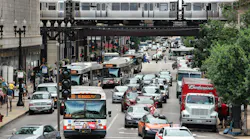
The Chicago City Council has unanimously greenlit an ordinance authorizing the expansion of the Smart Streets Program citywide while making the current pilot permanent. Ordinance 2026-0028833 builds on the Smart Streets pilot, which uses automated parking enforcement to improve traffic safety, keep bus and bike lanes clear and make Chicago's transportation network safer and more reliable for everyone. The city says the program has shown strong results in encouraging safer driver behavior, with more than 80% of drivers who received a warning not receiving a ticket with a fine.
"Chicago’s streets belong to all of us, no matter how you get around our beautiful city, and my administration is committed to ensuring every resident can travel safely and confidently,” said Chicago Mayor Brandon Johnson. “We are incredibly encouraged by the sustained success of the pilot program and will continue working collaboratively with our partners to hold the largest delivery corporations accountable while keeping our bike lanes clear and safe and our busses moving swiftly and reliably.”
Launched as a pilot in November 2024 and administered by the Chicago Departments of Transportation (CDOT) and Finance (DOF), the Smart Streets program initially focused on vehicles illegally parking and standing in bike lanes and bus lanes. The program uses camera technology on city vehicles and Chicago Transportation Authority (CTA) buses to enhance enforcement, making bike lanes safer for cyclists and bus lanes more efficient for transit riders. In late 2025, CDOT and DOF also began enforcing parking meters under the Smart Streets program, with street cleaning enforcement added in early 2026.
Throughout the pilot, the Smarts Streets program has demonstrated positive outcomes in improving compliance with parking and standing regulations. Since the launch of the program, Smart Streets has issued 140,000 warnings and violations, covering bus and bike lane violations, bus stops, street cleaning and meters.
"We have lost too many lives—including a 40th Ward resident this past weekend—due to the lack of safe streets infrastructure and policies,” said 40th Ward Alderman Andre Vazquez. “We owe it to their memory to get serious about expanding and enforcing the policies that we know protect cyclists and pedestrians. Smart Streets does just that: The pilot proved that enforcing bus and bike lane violations changes driver behavior. Expanding it citywide will now allow us to hold companies who continue to flout these rules accountable. It is not an exaggeration to say that this legislation will save lives."
Of those issuances, 75% were no-fine warnings, and 84% of drivers who received a no-fine warning changed their behavior and did not subsequently receive a fine. Bike lane incidents as a share of total violations have reduced by 25% within the pilot areas—from one in four to one in five of violations, according to the city.
The data also shows that 64% of drivers who received one ticket did not receive another, underscoring the program's effectiveness in encouraging drivers to change their behavior to keep bus lanes, bike lanes and other areas clear.
The city notes that the program is also helping address violations that delay CTA service. By ensuring dedicated bus lanes are clear of traffic, the program has also enhanced the speed, reliability and efficiency of public transit. Each instance of illegal parking in a bus lane or bus stop causes an average delay of at least 13 seconds, contributing to slower and less reliable service. CTA data also shows a roughly 26% decline in bus stop violations captured by their automated enforcement cameras between May and August 2026.
“Keeping bus lanes and bus stops clear is essential to delivering reliable service and ensuring customers of all abilities can safely board and exit our buses,” said CTA Acting President Nora Leerhsen. “The permanent, citywide expansion of Smart Streets will help reduce preventable delays, strengthen accessibility and improve safety for people riding transit and biking. This is a practical, yet valuable investment that will help our transportation network work better for everyone and support a more connected Chicago.”
Funded by the Northern Illinois Transit Authority (NITA), an additional 46 CTA buses have been equipped with automated bus lane enforcement (ABLE) systems and will start operating shortly. The city says these cameras improve safety, bus service reliability and accessibility for people walking, rolling and riding buses. The initial launch of the program included six ABLE-equipped buses.
“NITA was established, in part, to make the regional transit system more reliable, and this initiative moves us closer to that goal,” said NITA Interim Executive Director Jamie Rhee. “We’re excited to help get this innovative solution to scale to make bus trips faster and more convenient.”
The city also notes that the Smart Streets program is working to ensure that the biggest offenders of parking rules—large corporations in the package delivery industry—are held to account for their violations. Since 2024, the top three offenders have been large corporations operating in the city. The city has collected nearly $460,000 in fines from those companies through Smart Streets enforcement.
For residents who receive a fine, the city of Chicago offers several relief programs to help residents settle their debt without experiencing undue financial hardship. The Clear Path Relief program provides low-income motorists with relief for vehicle-related debt and the option to pay off their original fine amount for tickets issued in the last three years and have all older debt waived.
“The goal of Smart Streets, and all our traffic enforcement, isn’t to collect fines—it's to promote public safety,” said city of Chicago Comptroller Michael Belsky. “The Smart Streets program has ramped up enforcement by going after some of the worst offenders of illegal parking in bike and bus lanes, including large corporations. We’re pleased to receive the Council’s support for this priority of the Johnson Administration, and we are hopeful that by expanding citywide we will make all our roads safer to prevent future tragedies.”
The current Smart Streets enforcement area is bounded by Lake Michigan, Irving Park Road, Ashland Avenue, Archer Avenue and 26th Street.
The enforcement area will expand incrementally to citywide over the next two years. CDOT and DOF will prioritize the expansion based on demonstrated need, traffic and safety conditions and the concentration of transit and bicycle infrastructure. The city says that the phased approach will allow it to coordinate enforcement with public education and outreach.
“We've made significant investments in safer streets and better transportation infrastructure across the city, and the Smart Streets program helps ensure those improvements work as intended,” said CDOT Commissioner William Cheaks, Jr. “The results of the pilot show that this approach is helping improve compliance, and expanding the program will allow us to build on that progress and make our streets safer, more organized and accessible.”
The city notes that the permanent expansion of Smart Streets is part of a broader commitment to improving traffic safety and making Chicago's streets safer and work better for every resident. Investments in safer bike lanes, pedestrian crossings and infrastructure that improves public transit, including the recent installation of a new 1.5 mile northbound bus lane on Michigan Avenue, designed to improve the speed and reliability of CTA service, continue.
The city says that these investments are contributing to meaningful progress in reducing severe traffic crashes. CDOT's newly released Annual Traffic Crashes Report, which provides a detailed analysis of traffic crashes in Chicago in 2025, shows Chicago recording a 35% reduction in traffic fatalities from the 2021 peak, compared to 15% nationwide. Serious injury crashes have also declined by 26% since 2021, bringing the total number of people killed or seriously injured in traffic crashes to its lowest level in more than a decade.
About the Author
 Noah Kolenda
Associate Editor
Noah Kolenda is a recent graduate from the Craig Newmark Graduate School of Journalism with a master’s degree in health and science reporting. Kolenda also specialized in data journalism, harnessing the power of Open Data projects to cover green transportation in major U.S. cities. Currently, he is an associate editor for Mass Transit magazine, where he aims to fuse his skills in data reporting with his experience covering national policymaking and political money to deliver engaging, future-focused transit content.
Prior to his position with Mass Transit, Kolenda interned with multiple Washington, D.C.-based publications, where he delivered data-driven reporting on once-in-a-generation political moments, runaway corporate lobbying spending and unnoticed election records.