New York Gov. Hochul unveils results of MTA subway fare gate pilot
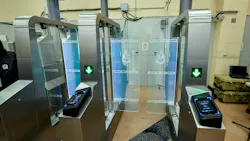
New York Gov. Kathy Hochul has revealed the results of the Metropolitan Transportation Authority’s (MTA) subway fare gate pilot, which saw fare evasion decline by an average of 35% at the 20 stations where new, modern gates have been installed. Gov. Hochul also revealed the next 20 subway stations that will receive new fare gates across all entrances, marking major progress to strengthen the system against fare evasion, modernize the system and improve accessibility and customer experience.
The MTA qualified three vendors – Cubic, STraffic and Conduent – to submit bids and compete to deliver the next generation of fare array systems at an additional 20 stations across Manhattan, the Bronx, Brooklyn and Queens. Bids for the first phase of the new fare gate program will be submitted this month, with new gates beginning to be installed by the end of 2026.
“The data is clear: these new fare gates have created a better riding experience for customers and made it harder for would-be fare evaders to enter the system without paying,” Gov. Hochul said. “Now, we’re ramping up our plan to install these world-class fare gates across the subway system so even more riders can benefit. New York’s transit renaissance is powered by historic investments in aging infrastructure and improvements to safety and reliability and by replacing turnstiles that date back to the token-era, we can achieve the twin benefits of accessibility upgrades and reduced fare evasion that riders deserve.”
This initiative, part of the 2025-2029 Capital Plan, is a generational investment of $1.1 billion to upgrade fare control areas across 150 stations. Following the pilot, the next 20 stations represent the first phase of the broader 150 station overhaul, which will see modern fare gates installed at stations serving nearly three quarters of all daily subway riders. The rollout of modern fare gates will continue into 2027, with a second phase consisting of 30 additional stations under construction by the end of next year. Between the pilot stations and phases one and two, 70 subway stations will be outfitted with modern fare gates.
“The early returns on the new fare gate pilot are pretty impressive – an average 35% reduction in fare evasion at these stations,” said MTA Chair and CEO Janno Lieber. “Right now, we’re focused on expanding to the next 20, but thanks to Gov. Hochul, we’ll get to 150 stations as part of the billion-dollar investment funded in the MTA Capital Plan.”
In December 2023, the MTA issued a request for information (RFI) to identify qualified firms to design modern fare gates that met specified technical requirements. Three vendors advanced to the piloting phase and provided new gates at no cost to the MTA at a total of 20 stations for a chance to prove they can work in the New York City transit system. Some stations received a fully replaced fare array, others received only a new wide-aisle access gate.
Last fall, the MTA began evaluating the new fare gates based on their impact on fare evasion, accessibility, customer experience, entry and egress throughput, maintenance, integration and data and detection accuracy. Since the pilot began, MTA says that roughly 29 million entries and 34 million exits have been recorded and roughly 40 to 50% of typical daily subway riders have used the new gates at least once.
According to the MTA, the largest decreases in fare evasion were recorded at Hoyt Street 2, 3 and Nostrand Avenue A, C, both with a 72% decrease, and 3 Avenue-138 Street 6 with a reduction of 65% in fare evasion.
Throughout the pilot, the MTA made adjustments to the technology based on performance and customer feedback. These findings were critical in determining the final designs for the system. The next 20 stations slated to receive new fare gates will be throughout the following burrows:
Brooklyn
- 36 Street D, N, R
- Bedford Avenue L
- Coney Island-Stillwell Avenue D, F, N, Q
- Hoyt-Schermerhorn A, C, G
- Myrtle Avenue J, M, Z
- Newkirk Plaza B, Q
Bronx
- 3 Avenue-149 Street 2, 5
- 161 Street-Yankee Stadium 4, B, D
- Fordham Road B, D
- Parkchester 6
Manhattan
- 14 Street-Union Square 4, 5, 6, L, N, Q, R, W
- 72 Street 2, 2, 3
- 86 Street 4, 5, 6
- 125 Street 4, 5, 6
- Chambers Street 1, 2, 3
- Spring Street C, E
Queens
- Astoria Boulevard N, W
- Flushing-Main Street 7
- Forest Hills-71 Avenue E, F, M, R
- Sutphin Boulevard/Archer Avenue-JFK Airport E, J, Z
The MTA is advancing the process of purchasing gates from the approved vendors for installation at the 20 stations listed. Early station preparation work is expected to begin in October 2026.
MTA notes the comprehensive overhaul of the fare array system is the first in more than 30 years, when the MTA began installing the tri-wheel turnstiles in the early 1990s. According to the MTA, the design dates back to the token-era and was not accessible for customers using wheelchairs or traveling with strollers or luggage. As a solution, the MTA created emergency exit gates to provide an entry and egress option with wider clearance for customers who could not use the traditional turnstiles.
"Station accessibility goes far beyond elevators,” said MTA Chief Accessibility Officer Quemuel Arroyo. “It’s about how smoothly one can move from the entrance to the platform. These touch-free fare gates represent a leap forward in making our transit system more welcoming for everyone, especially riders like me who use a mobility device, those pushing strollers or carrying luggage. Bringing these gates to more stations is a key step toward a system built for all New Yorkers.”