IL: Editorial: Kennedy Expressway mess demands approval for the O’Hare Flyer
With the Kennedy Expressway an ongoing nightmare for drivers — all day and even at surprising hours of the night — the need for improved public transportation to Chicago’s economically pivotal airport has become urgent.
A impressively thorough WBEZ/Sun-Times investigative report published Oct. 23 offered a dive into the horrors of life on the Kennedy, squeezing information on construction delays from a reluctant Illinois Department of Transportation and concluding that those three years of pain produced no improvements whatsoever in the remediation of congestion. Things actually got worse.
It’s long been our view that the timing and especially the bundling of that massively disruptive work was a mistake by the Pritzker administration, holding back the recovery of Chicago’s downtown in the pivotal months after COVID-era lockdowns. Now we’re seeing ongoing bridge construction, long delayed, extending the delays. And it’s also our view that CDOT reducing vehicular capacity on Elston Avenue, once a viable alternative to the Kennedy but now routinely as jammed as the freeway, was another mistake. But those horses have bolted.
So what to do about the road from hell? The only viable idea is to get as much airport traffic off the Kennedy as possible.
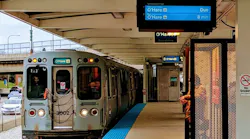
People headed to O’Hare are a big source of Kennedy congestion. That’s partly a consequence of there being no direct public transportation option from Chicago’s North Side, the locus of much of the airport’s business. Unless residents from Lincoln Park to Uptown are willing to backtrack downtown to pick up the CTA’s Blue Line or change modes of transportation, they’re effectively on the Kennedy, typically in a rideshare. So, of course, are business travelers from the Loop and McCormick Place, given the long journey time on the Blue Line, never mind the perception of it being unsafe, especially at night.
As of now, there are three options on the table to fix this, not counting a favorite of transportation geeks, which is to extend the CTA’s Brown Line west to the Blue Line at Jefferson Park, an idea that has gone nowhere at least since 2015, even as the CTA chose instead to extend its Red Line to a part of the city with few residents and a much cheaper Metra alternative a few blocks away. But the Red Line Extension has left the station with its $5.75 billion in costs. And digging a tunnel from the Brown to the Blue, even for a couple of miles, would probably only be completed in a decade. If we’re lucky.
So, trains, pronto.
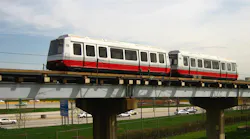
We’ve written admiringly about the “O’Hare Flyer,” a shovel-ready, privately financed plan to offer trains every 15 minutes between the main terminals at O’Hare, steps from the people mover, and a new downtown terminal. National rail advocates were impressed. Here’s what Jim Matthews, head of the National Association of Railroad Passengers had to say:
“The team behind the Flyer — including former Amtrak planner Mark Walbrun, transportation executive Kristi Lafleur and Chicago public-affairs veteran Dave Lundy — noticed that years of changes in freight-rail operations had left pieces of existing railroad right-of-way available between downtown and O’Hare. … This is about as close to a slam dunk as rail infrastructure projects tend to get.”
But this slam-dunk plan has run into NIMBY opposition in River Forest, where those who live near the existing rail right-of-way are alleging there would be too much disruption from, well, more trains. They’ve ginned up all kinds of local resistance, even getting House Speaker Emanuel “Chris” Welch to offer to use his clout with the state budget to mess with the O’Hare Flyer. Reportedly, Welch told the NIMBY crew he could “let ‘em know that your budgets can be held up at budget time if you do things to negatively impact the communities that I represent.”
That kind of threat was inappropriate. River Forest NIMBYs deserve a hearing but they should not be allowed to dictate transportation policy for the entire Northern Illinois region.
But Welch emboldened them. And the new Northern Illinois Transit Authority, which should be welcoming the O’Hare Flyer, as should everyone in this region, appear to be aiding and abetting them. We were surprised to read in the Wednesday Journal that the Oak Park Farmer’s Market on Saturday will be the scene of an anti-O’Hare Flyer protest (that part is fair enough) with officials from Metra reportedly showing up at the same market to promote their own plan for service from downtown to the big airport.
Coincidence? Maybe. But we smell old-school politics at work, given Welch’s threats.
To be clear: we’ve supportive of Metra expanding its airport service on the North Central Service (NCS), just as we agree with Metra transforming itself from a commuter operation into what it calls a “Regional Rail” operator, but it’s clearly an inferior airport plan to the O’Hare Flyer.
Why? Let’s start with money.
The O’Hare Flyer is to be developed and operate by private investors. The full Metra transformational plan comes with a $9 billion price tag, according to a newly released report. It’s not clear precisely how much improved service to O’Hare would cost, since Metra also is proposing through service on lines beyond the current NCS. But one item that is broken out in the report is $100 million, for turning tracks that would allow trains to be turned at the airport.
We repeat: The O’Hare Flyer has raised its own money.
Furthermore, Metra does not actually go into the airport. It operates in a sad little “O’Hare Transfer” station near but not in the remote rental car facility; there is a reference in the report to improving that station, but its location still is far from ideal. Business travelers want to take a train right in the terminal, as is the case at airports across Europe. The O’Hare Flyer says it can achieve that with private investment and, in essence, government issuing permits and getting out of its way.
Allowing self-interested neighbors to torpedo this vital project for all Chicagoland would be absurd. At London Heathrow, for example, rapid transit (“tube”) service, regional rail ( Elizabeth Line) and fast electric trains downtown aimed at business travelers (Heathrow Express) all co-exist. All are needed at O’Hare. Urgently.
But at this juncture, it seems like some Illinois politicians are trying to kill off the best idea of all, the one asking the least from the public purse, offering the most trains and likely to be the most reliable. Otherwise its customers would rebel.
And, by the way, if the O’Hare Flyer decides to sell tickets from a planned station in Forest Park, folks from River Forest and Oak Park could get a comfy 8-minute ride downtown. Transformative and not something we should be turning down.
©2026 Chicago Tribune.
Visit chicagotribune.com.
Distributed by Tribune Content Agency, LLC.