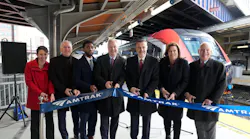
Amtrak to break ground on new boarding platform at Chicago Union Station
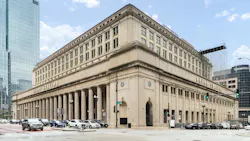
Amtrak reports that construction will soon be underway for Chicago Union Station’s first level boarding platforms, serving multiple tracks and enabling boarding without ramps, stairs or lifts. The $112 million project is set to create a more accessible and streamlined experience for Amtrak passengers.
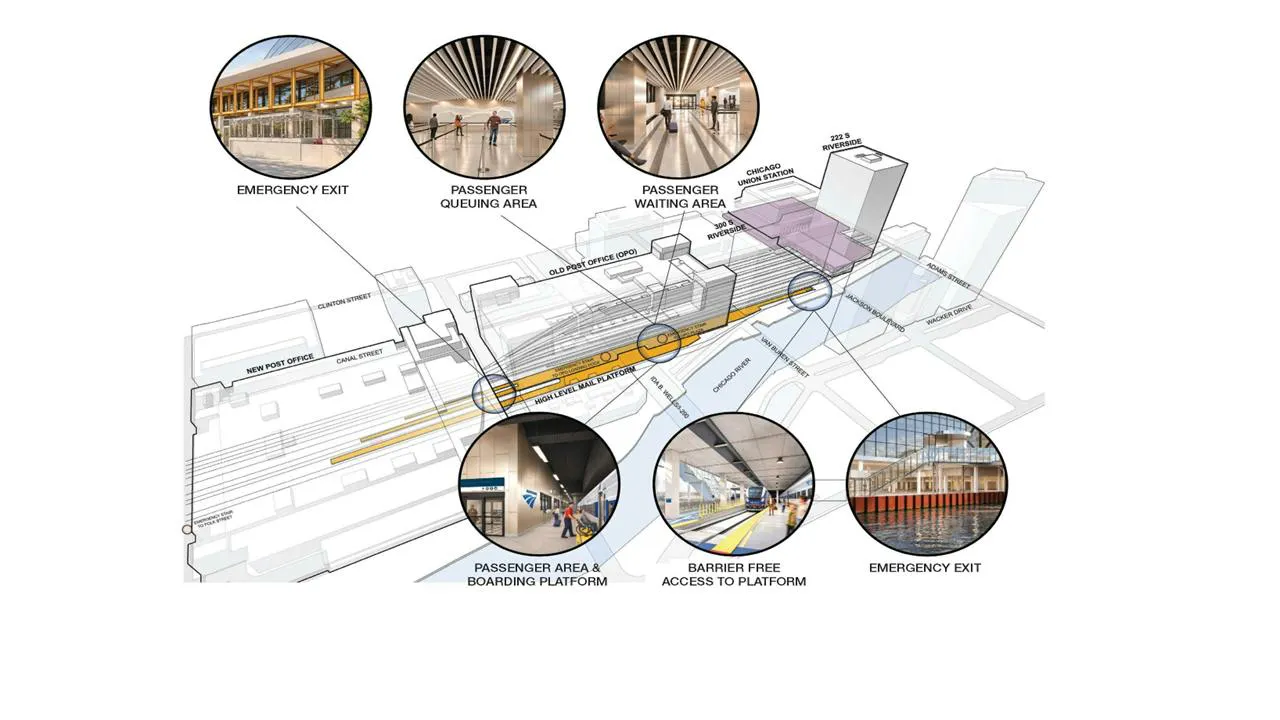
The project that the agency says aims to take 30 months seeks to convert dormant platforms originally built for mail and parcels into passenger platforms that will be compliant with the Americans with Disabilities Act, increase rail capacity and enhance operational flexibility. These platforms were connected to a post office above these tracks until the post office was relocated.
“Amtrak is committed to making our stations accessible to all customers and we are actively working on accessibility across the national network where more than 80 stations have accessibility projects under construction,” said Amtrak Vice President of Accessibility Dr. David Handera. “We want all of our stations to provide a welcoming environment for every passenger.”
“The start of this project is exciting for Chicagoans and tourists alike as it will create a more accessible and streamlined experience for Amtrak passengers at Chicago Union Station,” said Sen. Dick Durbin (D-IL).
The work will be done through a design-bid-build delivery method and major construction work will begin by the end of this year.
Clark Construction has been selected as the general contractor. WSP USA will continue in their role as designer of record, providing construction phase services. HNTB was awarded a project manager/construction manager contract and will provide management support through construction, embedded within the in-house Amtrak Capital Delivery Department.
“Today marks an exciting milestone for the Chicago Hub Improvement Program as construction begins on Platforms 30 through 38 at Chicago Union Station. This investment will deliver a fully ADA-compliant, level boarding platform that makes travel easier and more convenient for all Amtrak passengers while launching a new chapter of improvements at the station.” said Amtrak Vice President of Infrastructure Project Delivery Warren LeBeau. “Together, these investments are creating a more welcoming, modern and customer-focused station for the millions of travelers who pass through it each year.”
The project is funded by Congress through a $49.6 million fiscal year (FY) 2022-2023 Federal State Partnership Grant administered by the Federal Railroad Administration, $40 million in FY25 Federal Appropriations and $22.4 million in local match contributions from Amtrak, the city of Chicago and Cook County. Amtrak and the Illinois Department of Transportation were joint applicants for the federal grant.
Known internally as the Platform 30-38 Project, it is the first in the Chicago Hub Improvement Program (CHIP) to advance to construction. CHIP is transforming regional and intercity passenger rail in the Midwest with critical investments in rail infrastructure, facilities and Chicago Union Station.
“Chicago is a national epicenter of passenger and commuter rail, and these new level boarding platforms will make getting around easier for parents with strollers, wheelchair users and people of all ages. Modernizing infrastructure at Union Station is key to improving rail service and reliability across Illinois and making trips safer for the more than 30 million riders who pass through each year. Projects like this are transforming our transportation system one station at a time, ensuring it works for all riders. That’s a win for Chicago and our entire country,” said Sen. Tammy Duckworth (D-IL).
About the Author
 Noah Kolenda
Associate Editor
Noah Kolenda is a recent graduate from the Craig Newmark Graduate School of Journalism with a master’s degree in health and science reporting. Kolenda also specialized in data journalism, harnessing the power of Open Data projects to cover green transportation in major U.S. cities. Currently, he is an associate editor for Mass Transit magazine, where he aims to fuse his skills in data reporting with his experience covering national policymaking and political money to deliver engaging, future-focused transit content.
Prior to his position with Mass Transit, Kolenda interned with multiple Washington, D.C.-based publications, where he delivered data-driven reporting on once-in-a-generation political moments, runaway corporate lobbying spending and unnoticed election records.