Ballard Light Rail Extension could begin service by 2042 if project's funding gap is closed by 2033
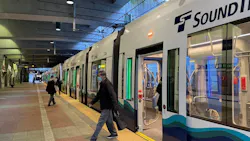
On May 28, the Sound Transit Board adopted an updated Sound Transit 3 (ST3) System Plan to bring the agency’s long-term financial outlook into balance. According to the agency, the process required difficult choices to address a projected $35 billion funding gap over the next 25 years. Now the agency is saying the Ballard Light Rail Extension could begin service to Market Street in Ballard, Wash., by 2042 if it is able to close the project’s funding gap by 2033.
The project is part of the agency's light-rail extension projects under ST3. The updated ST3 System Plan keeps every ST3 light-rail extension moving forward. The plan adopted in May fully funded an initial segment of the Ballard Link, from Chinatown-International District (CID) to Seattle Center. However, the rest of the project, from Seattle Center to Ballard, is designated as not currently affordable within existing resources. The proposed downtown Seattle to Ballard 7.1-mile extension includes nine new stations and a new rail-only tunnel through downtown Seattle.
“As a board and an agency, we are united in our commitment to deliver the full Ballard Light Rail Extension and all voter-approved ST3 projects,” said King County Executive and Sound Transit Board Member Girmay Zahilay. “The information provided by Sound Transit today shows we can deliver light rail to Market Street in 2042 if we stay focused over the next seven years on finding cost savings and additional financial capacity. I’m ready to do everything in my capacity as a board member and regional leader to make this happen."
As Mass Transit magazine previously reported, in February 2025, Former Seattle Mayor and Sound Transit Board Member Bruce Harrell issued an executive order to speed up the delivery of light rail to West Seattle and Ballard.
In March 2023, the Sound Transit Board identified a preferred alternative for the Ballard Link Extension, which includes stations south and north of the CID and shifts the Midtown Station to the location north of CID.
The agency notes it is actively searching for ways to reduce costs for the Ballard Link Extension. Similar work for the West Seattle Link Extension already identified around $2.5 billion in cost savings. According to the agency, there are several options for Sound Transit to expand its financial capacity through strategies such as pursuing state authority for longer term bonds, increasing debt capacity, reforming permitting to speed project delivery and securing additional third-party funding.
The agency notes potential additional financial capacity could include:
- Longer bond terms, which add capacity in the near-term to allow more projects to be delivered.
- Increasing debt capacity, which adds overall capacity for the agency to deliver more projects.
- Station area value generation, which leverages growth from development to increase agency revenue.
- Third-party funding, which could be from public or private partners to build more of the Ballard project than is currently affordable.
- Permitting reform that speeds up project delivery, which saves time in the project schedule and reduces overall project costs.
“As a lifelong transit rider, I know how important the full build out of ST3 is to people’s lives and to our region’s future,” said Sound Transit Board Member and Seattle Mayor Katie Wilson. “As your mayor, I’m going to make sure we get it across the finish line. Together with my fellow board members, Sound Transit staff and our partners in local government, I’m confident we will find creative ways to lower costs and fund construction of the Ballard Link Extension all the way to Market Street."
As part of the updated ST3 System Plan, the Sound Transit Board directed agency staff to develop and implement an adaptive program management plan and a project delivery framework by the end of 2026.
"Over the course of the past year, the board and agency staff have devoted significant time and attention to developing an updated, affordable system plan," said Sound Transit CEO Dow Constantine. “The level of engagement during this process demonstrates the passionate support for transit throughout the region. Following the board’s action, the direction to the agency is clear: Deliver more of the frequent, reliable transit people have come to rely on and do it as quickly and as efficiently as possible. We are resolute in our commitment to do just that."
Sound Transit says that in order complete the full Ballard Link Extension by 2042, the agency would have to meet the following milestones:
- By 2030: Identify approximately $1 billion in additional savings or financial capacity to begin acquiring property between Seattle Center and Market Street.
- By 2032: Complete final design, giving the board a clearer understanding of the project’s cost and remaining opportunities for savings.
- By 2033: Secure the funding needed to build the full extension and preserve the opportunity for a 2042 opening.
If the agency is unable to secure additional savings or financial capacity and must rely on waiting for existing revenues to pay for the extension, service to Smith Cove, Interbay and Ballard could be delayed until around 2060. Meanwhile, service from CID to Seattle Center would be scheduled to begin in 2042.
“The Sound Transit Board has been clear: Our commitment is to deliver the full Sound Transit 3 program that voters approved, including extending light rail all the way to Ballard,” said Sound Transit Board Chair and Snohomish County Executive Dave Somers. “While today’s financial realities require us to be disciplined and strategic, they do not change our commitment. By continuing design and environmental work on the full Ballard project, we’re preserving the path to complete the extension while aggressively pursuing cost savings, new funding opportunities and every available tool to make it a reality. The board is committed to keeping our promise to the public and delivering the full regional transit system envisioned in ST3.”
About the Author
 Brandon Lewis
Brandon Lewis
Associate Editor
Brandon Lewis is a recent graduate of Kent State University with a bachelor’s degree in journalism. Lewis is a former freelance editorial assistant at Vehicle Service Pros in Endeavor Business Media’s Vehicle Repair Group. Lewis brings his knowledge of web managing, copyediting and SEO practices to Mass Transit magazine as an associate editor. He is also a co-host of the Infrastructure Technology Podcast.