Chicago RTA awards $10.9 million in Access to Transit program funding for 21 projects
The Chicago Regional Transportation Authority (RTA) has awarded $10.9 million in funding to 21 new projects through its Access to Transit program, which provides funding to municipalities to complete engineering and construction for small-scale capital improvements to improve connections to transit for people who walk, ride, or roll to transit services. Chicago RTA says the $10.9 million in funding and the 21 projects are both the largest in a single round in its history. The group of new projects will be the eighth group accepted to the program, which has funded 50 projects since its beginning in 2014. The projects will take place across Chicagoland suburbs and municipalities.
According to the agency, the Northern Illinois Transit Authority (NITA) Act is a historic transit funding and reform package that will change the governance of the regional transit system and provide an estimated $1.2 billion in new annual operating funding. The Chicago RTA Board of Directors approved an amendment to the regional 2026 operating budget that allocates some of the funding to key short-term, rider-focused improvements in alignment with the NITA Act, including the Access to Transit program.
Funds from the Chicago RTA account for 30% of the total budget, and the agency is pursuing Congestion Mitigation and Air Quality Improvement (CMAQ) funding this winter to cover another 61%, which will likely be awarded in August 2027. The remaining 9% will come in the form of a local match from awardees.
The agency notes 15 of the 21 awards will fund Phase II Engineering and Construction of which 12 will depend on the Chicago RTA successfully obtaining federal CMAQ funding. The remaining six projects will fund Phase I Engineering, which assesses sites for future pedestrian and bike facility projects in transit areas. According to the agency, Phase I Engineering is frequently a challenge for communities of high need because of the cost, so the agency will fund 100% of the engineering costs, estimated at $330,000 total. Work on these projects can begin later this year.
Chicago RTA began offering funding for Phase I Engineering in 2021 to extend the benefits of the Access to Transit program to high and moderate need communities. According to the agency, the initial work can be prohibitively expensive for communities with a smaller local tax base and all communities who receive Phase I Engineering funding this year can apply for Phase II Engineering and Construction during the agency’s next call for projects so long as their project remains eligible for CMAQ funding.
Phase I Engineering projects
- Harvey: The city of Harvey will conduct preliminary engineering to construct several sidewalk improvements along 155th Street and Park Avenue, right next to the Harvey Transportation Center. The agency says the improvements are centered on Pace Suburban Bus (Pace) routes and the Harvey Metra Electric stop.
- Homewood: The village of Homewood will complete preliminary engineering to address pedestrian safety and comfort concerns along portions of Ridge Road and Dixie Highway in downtown Homewood. Proposed improvements include high visibility crosswalks, new ADA ramp construction, curb reconfiguration, curb radii reductions (to slow traffic and shorten crossing distances), in-street pedestrian crossing signs and flashing crosswalk signs. Additional safety signs will be added to the intersections of Dixie Highway and Olive Road, Dixie and Hickory Road and Ridge Road at Gottschalk Avenue.
- Lynwood: The village of Lynwood will conduct Phase I Engineering for the installation of ADA-compliant concrete boarding pads and passenger shelters at bus stops along Torrence Avenue, along with construction of short sidewalk gap connections to provide improved access to the stops. Additional ADA improvements, such as curb ramps and surface upgrades, will be incorporated as needed to ensure compliance with accessibility standards. Chicago RTA notes the improvements will enhance safety, comfort and accessibility for transit users without altering roadway geometry or relocating existing bus stops.
- Village of Phoenix: The village of Phoenix is improving aging sidewalk segments along 151st, 152nd and 153rd Streets. According to the agency, the corridors were identified as priorities due to hazardous conditions that limit safe and equitable access to local transit. Pace Route 348 operates along 151st and 153rd Streets, with 152nd Street serving as a vital connector for residents traveling to and from these bus routes. According to the Chicago RTA, existing sidewalks in these areas show extensive deterioration, with crumbling and uneven panels, creating safety risks and significant barriers to ADA accessibility.
- Wood Dale: The city of Wood Dale is completing Phase I engineering for a multi-use path that aims to increase mobility throughout the city and promote alternative means of travel. The connection will be created by upgrading the existing five-foot sidewalk on the west side of Wood Dale Road into a bike/footpath at least eight feet across. Chicago RTA notes the improved path will begin near the Metra station on Irving Park Road and continue about a half mile south to the Oakbrook Elementary School, where it will connect to the Salt Creek Bike Trail.
- Woodstock: The city of Woodstock is working on preliminary engineering for pedestrian improvements in its historic square and around the nearby Metra and Pace stops, including slope corrections, crossing upgrades repairs to tripping hazards and other ADA compliance measures.
Phase II Engineering and Construction projects
- Bensenville: The village of Bensenville is filling pedestrian infrastructure gaps along Roosevelt Avenue, Main Street, Grace Street, Rose Street and May Street. Chicago RTA says the gaps currently limit safe access to transit and local destinations. The improvements will add 16,000 square feet of new sidewalk and modernize over two dozen intersections with ADA-compliant curb ramps and detectable warning surfaces. The village is also upgrading its two small bike racks to a new high-capacity facility to better serve demand and encourage last mile trips.
- Berkeley: The village of Berkeley is building safer routes for pedestrians and cyclists along Taft Avenue from Maple Avenue to the Berkeley Metra station. The village will add new bike lanes in both directions and upgraded bike route signage. Chicago RTA notes the village of Berkeley also plans to widen and correct the slope of sidewalks in this area to adhere to accessibility standards. ADA-compliant crosswalks with tactile surfaces will be installed at key intersections.
- Chicago Department of Transportation (CDOT): CDOT and the Forest Preserve District of Cook County are working to close a gap in the Major Taylor Trail, which is near the 91st Street – Beverly Hills Metra station on the Rock Island Line. The project will extend the existing trail 165 feet south, allowing users to remain off the street until the 91st/Beverly intersection. On 91st Street, Chicago RTA says the trail will continue to use the existing railway crossing. However, the bike lane will be repaved and repainted. The adjacent sidewalk is receiving new ADA ramps and tactile surfaces, new curbs and gutters and resurfacing of the roadway to improve safety and comfort for people walking, biking and taking transit through this area.
- Des Plaines: The city of Des Plaines is constructing a new pedestrian crossing on Northwest Highway (US 14) with a flashing crossing sign directly in front of the Cumberland Metra/Pace bus station. According to the agency, local officials have expressed safety concerns about the current dynamics, as the agency notes the closest existing crosswalk is well used but forces pedestrians to cross the four-lane Northwest Highway, with a speed limit of 40 mph.
- Downers Grove: The village of Downers Grove will construct four curb extensions at the intersection of Burlington Avenue and Belmont Road ramps, just north of the Downers Grove Belmont Metra station. The project is designed to reduce pedestrian crossing distance and reclaim space for pedestrians and cyclists accessing the station from the north side of the railroad tracks. The proposed curb extensions provide refuge for active transportation users and train commuters crossing Belmont Road ramps. In addition to the curb extensions, the agency notes Downers Grove will restore the parkway, repave the roadway and repaint crosswalks and lanes.
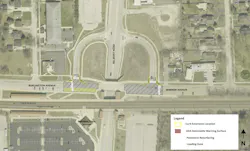
- Fox Lake: The village of Fox Lake is working on a shared use path that will connect the regional Chain O’ Lakes Trail directly to the Metra Milwaukee District–North (MD–N) Fox Lake station, as well as Pace bus routes 570 and 806. The shared use path project will include a new eight-foot-wide protected path along the village alley between Rollins Road and Grand Avenue, with connections to adjacent sidewalks, new ADA curb ramps and resurfaced alley segments to create a continuous, accessible travel way.
- Harvard: The city of Harvard is improving the area around its transit center. It will install a six-foot-wide sidewalk along the east side of Eastman Street, from Front Street to the Metra station. Harvard is also adding pedestrian improvements at the Front Street intersection and in front of the Metra station. Chicago RTA notes Eastman Street connects Metra UP-NW riders to downtown Harvard and Pace Route 808, but it does not have sidewalks on either side of the roadway. Both sides of the road have multiple interruptions where people may try to walk or roll, including dumpsters, retaining walls, ramps protruding from buildings and grassy areas.
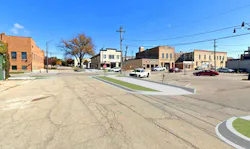
- Hillside: The village of Hillside is improving access to transit with safe and ADA-compliant travel options for pedestrians and bicyclists. The project area spans Taft Avenue from Butterfield Road (IL 56) to Ridge Avenue and is located less than 1/4th of a mile south of the Illinois Prairie Path. Improvements include adding on-street bike lanes and route wayfinding in both directions. Sidewalk improvements will include filling gaps and widening at key locations, as well as correcting the slope for ADA compliance. New crosswalks with tactile surfaces and high visibility markings will also be installed at key intersections to address accessibility barriers. Chicago RTA notes the project will create a continuous, safe pedestrian and bicycle route, allowing users to connect to Butterfield Road Pace bus routes and continue north to reach the Berkeley Metra station and bus routes on St. Charles Road.
- Illinois Medical District Commission (IMDC): The IMDC is improving the area along Harrison Street between Wolcott Avenue and Paulina Street to make it safer and more accessible to pedestrians and cyclists. The proposed improvements include raised crosswalks, sidewalk enhancements, curb extensions, audible pedestrian signals and retimed intersections that give pedestrians a head start over vehicles. Additional upgrades include a median island extension, a new median and flashing crosswalk signs to improve pedestrian refuge and driver awareness. Bicycle improvements include new bike lane markings and the installation of bike racks and bike lockers near key destinations and transit connections. Chicago RTA says Harrison Street is a critical east-west corridor serving the IMDC and functions as a primary route for employees, patients, students and visitors traveling via transit into and through the district.
- Kane County Division of Transportation: The Kane County Division of Transportation is working to close a sidewalk gap along Randall Road and add signalized crossing, which will create an accessible pedestrian route to the I-90 Randall Road Pace Park and Ride Facility on Point Boulevard. Chicago RTA says the new crosswalk will connect the existing sidewalk on the north side of Point Boulevard to the existing sidewalk in front of the newly constructed Elgin Kia dealership on the west side of Randall. The project will also provide pedestrian accommodations at the intersections of Randall Road and Point Boulevard and Randall Road and Saddle Club Parkway/Auto Mall Drive. The new sidewalk is set to be five feet wide and ADA compliant. The agency says the construction of the new sidewalk will require culvert work, lighting relocation and draining work.
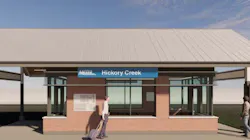
- Metra Central Street, Hickory Creek (Mokena) and Lisle: Metra is asking for funding to enhance facilities on the south platform of the Evanston Central Street Metra station along the Union Pacific North Line; the south platform of the Mokena Metra station on the Rock Island Line and the south platform of the Lisle Metra station located along Metra’s BNSF Line. Each station will receive a new warming shelter and a modern signage package, including points of interest wayfinding and digital display monitors.
- Metra Clarendon Hills: Metra is bringing the Clarendon Hills Metra station into full ADA compliance. Updates include more accessible parking stalls, tactile warning strips at the edge of train platforms, new ADA boarding signage and automatic sensors on station doors. Metra will also rebuild pedestrian crossings, platforms and slopes to meet ADA standards.
- Waukegan: The city of Waukegan is improving pedestrian safety and accessibility at their downtown transit hub, served by Metra and several Pace bus routes. Improvements will be made at the intersections of Sheridan and Washington, Sheridan and Madison and Washington and Spring. Chicago RTA says planned upgrades include a mid-block crossing with flashing pedestrian signage to better access the main Pace bus stop on Sheridan, high-visibility crosswalks at intersections, realignment of the pedestrian path to the Metra station and features to make pedestrians more visible to drivers.
About the Author
 Brandon Lewis
Brandon Lewis
Associate Editor
Brandon Lewis is a recent graduate of Kent State University with a bachelor’s degree in journalism. Lewis is a former freelance editorial assistant at Vehicle Service Pros in Endeavor Business Media’s Vehicle Repair Group. Lewis brings his knowledge of web managing, copyediting and SEO practices to Mass Transit magazine as an associate editor. He is also a co-host of the Infrastructure Technology Podcast.