Editor's Notebook: Chicago region ready to host APTA’s triennial event
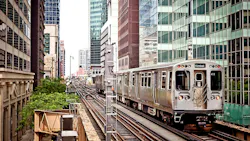
In just over a month, thousands of people will congregate in Chicago for the American Public Transportation Association's (APTA) 2026 TRANSform Conference & EXPO. From “What’s Next” to “Next Starts Here,” this year’s theme, “Elevate,” is fitting for our conference setting (‘L’evate, anyone?). By the time October rolls around, Chicago’s regional transit ecosystem will be a month into the Northern Illinois Transit Act taking effect—a mandate that promises to elevate the transit experience across the Chicago Transit Authority (CTA), Metra and Pace Suburban Bus (Pace).
That's not to say the region hasn’t already been investing in the rider experience. The CTA is making improvements on a number of fronts, including increasing bus frequency (shout out to routes #77 and #53), upgrading legacy rail stations and reinforcing safety and security efforts. Several major infrastructure projects are also taking shape. The Red and Purple Modernization Phase One Project, the second largest capital project in CTA’s history, reached substantial completion last summer. This massive undertaking involved installing new elevated track for the Red and Purple lines, completely rebuilding four Red Line stations, upgrading to a new signal system and constructing a new bypass (I'm astonished at how high this thing is every time I ride the Brown Line). Notably, this project required the agency to move an entire 1,000-ton, 127-year-old building 30 feet west and 10 feet south to make room for the new track structures. The authority’s Red Line Extension Project is also progressing, with soil boring, site preparation and utilities work happening across several locations.
Metra has at least eight major projects happening concurrently, supporting its over $500 million 2026 capital program. Projects range from station rehabilitations and expansions to bridge replacements and a new rail yard. On the vehicle side, Metra recently completed overhauling 302 railcars through its in-house railcar program. The rehabbed vehicles were outfitted with outlets, sensitive-edge outer doors, new LED displays, new toilets, bathrooms, wheelchair lifts, composite floors and seats.
Out in the suburbs, Pace is pushing ahead with Project Zero—its effort to transition to 100% zero-emission vehicles by 2040. Within the past few years, the agency launched its inaugural electric bus into service, received its first electric paratransit vehicle, ordered an additional 22 electric buses and opened a charging station out of its North Division.
As you make your conference plans, I encourage everyone to get on transit and explore one of the over 100 unique neighborhoods in what I believe is the best city (but I may be biased; I’m a proud Chicagoan).
About the Author
 Megan Perrero
Megan Perrero
Editor in Chief
Megan Perrero is a national award-winning B2B journalist and lover of all things transit. Currently, she is the Editor in Chief of Mass Transit magazine, where she develops and leads a multi-channel editorial strategy while reporting on the North American public transit industry.
Prior to her position with Mass Transit, Perrero was the senior communications and external relations specialist for the Shared-Use Mobility Center, where she was responsible for helping develop internal/external communications, plan the National Shared Mobility Summit and manage brand strategy and marketing campaigns.
Perrero serves as the board vice president for LIT, the second vice chair of the American Public Transportation Association’s (APTA) programs and communications committee and is a member of APTA’s Marketing and Communications Committee. She holds a bachelor’s degree in multimedia journalism with a concentration in magazine writing and a minor in public relations from Columbia College Chicago. Her work has been recognized with a first place AdWheel Award, AZBEE Bronze Regional awards, an AZBEE Regional Gold Award and an AZBEE National Silver Award.