NYC DOT to expand real-time information displays across network of bus stops
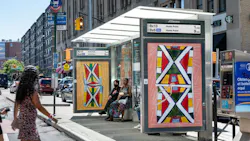
The New York City Department of Transportation (NYC DOT) revealed that the city has taken the first step in significantly expanding the number of bus stops equipped with real-time arrival information as part of the Next Stop: Faster Buses, Better Service (Next Stop) bus action plan that’s designed to improve bus service in New York City.
"Every New Yorker deserves to know when their bus is coming," said New York City Mayor Zohran Mamdani. "Riders shouldn't have to wonder if they'll make it to work, school or a doctor's appointment on time. Real-time bus information puts that uncertainty to rest and gives riders the information they need to plan their day. It's another step toward the fast, reliable, world-class bus service New Yorkers deserve."
The city notes that it will work with bus shelter operator JCDecaux to expand the number of bus stops with real-time bus arrival information from about 700 to about 1,400. The city says this will be achieved by installing screens on shelters, with the expansion beginning this year and reaching all five boroughs. Through Next Stop, the city aims to bring real-time bus arrival information to 2,900 stops by 2030.
"A key part of Next Stop is proving to New Yorkers that we value and respect their time during every aspect of their bus commute. When we add real-time information to bus stops, we make it easier for New Yorkers to choose the bus as their transit option and remove the frustration that comes from not knowing when the next bus will arrive," said NYC DOT Commissioner Mike Flynn. "These types of improvements to the bus stop experience, paired with state-of-the-art infrastructure upgrades to our streets, will help bring in a new era of service that New Yorkers will be proud of."
NYC DOT notes that it will begin adding the additional 1,452 digital real-time arrival information screens to feasible bus shelters across the five boroughs based on route ridership with an equitable approach to ensure the upgrades reach all New Yorkers.
"Providing reliable transit services is a core business of JCDecaux world-wide, and we know that the inclusion of real-time bus arrival information is important for transit riders," said JCDecaux Street Furniture New York Co-CEO Alan Sullivan. "We look forward to installing this critical improvement as part of our commitment to providing services to New Yorkers."
The city will soon solicit bids from companies for the installation of the additional real-time arrival information units, which will be installed on bus stop poles.
The joint action plan between Mayor Mamdani, New York Gov. Kathy Hochul and the Metropolitan Transportation Authority aims to make bus trips faster, more comfortable and more reliable. The city says the plan will shorten average commutes by up to six minutes across 175 bus routes, including Fordham Road.
"Nothing makes a wait at the bus stop feel longer than not knowing how long it will be. When you can see the bus is a few minutes away, you can sit down, relax and finally stop leaning out into the street to look for it," said New York City Council Majority Leader and Transportation and Infrastructure Committee Chair Shaun Abreu. "Real-time arrival information helps riders plan their trips with confidence, and I applaud Mayor Mamdani and Commissioner Flynn for this expansion."
About the Author
 Noah Kolenda
Associate Editor
Noah Kolenda is a recent graduate from the Craig Newmark Graduate School of Journalism with a master’s degree in health and science reporting. Kolenda also specialized in data journalism, harnessing the power of Open Data projects to cover green transportation in major U.S. cities. Currently, he is an associate editor for Mass Transit magazine, where he aims to fuse his skills in data reporting with his experience covering national policymaking and political money to deliver engaging, future-focused transit content.
Prior to his position with Mass Transit, Kolenda interned with multiple Washington, D.C.-based publications, where he delivered data-driven reporting on once-in-a-generation political moments, runaway corporate lobbying spending and unnoticed election records.