2026 40 Under 40: Lauren Krutty, AICP
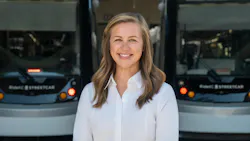
One word that describes you: Dedicated
Alma Mater: Elon University
Fast fact: Krutty goes where the need exists; whether that be a platform that needs shoveled, helping a new employee succeed or recognizing and motivating good work by others.
What’s your best experience on transit and what made it memorable? For me it isn’t one big memorable experience, it’s the daily “love notes” among riders—many of them from different socio-economic backgrounds that bring a community together. There aren’t many places where that happens and I love seeing it on transit.
Lauren Krutty has dedicated her career to improving communities by developing and improving transit. Krutty is a regular transit rider and is described as an emphatic transit proponent with a voice in demonstrating the value of more and better transit in Kansas City, Mo. Krutty’s career in transit was informed by her time living abroad in Copenhagen, Denmark, when she grew to appreciate the benefits of a robust multi-modal network. That experience inspired her to obtain a master’s degree in urban planning from the University of Kansas and to pursue a career in the transportation industry.
Currently, she serves as the deputy director for the Kansas City Streetcar Authority (KC Streetcar), where she manages the system’s operations and
maintenance contractors and daily operations of the KC Streetcar system.
Krutty has played a central role serving as rail activation manager for the KC Streetcar's 3.5-mile Main Street Extension, which opened to riders in October 2025, creating a nearly six-mile fare-free route connecting the River Market to the University of Missouri–Kansas City. She also led rail activation efforts for the 0.75-mile Riverfront Extension, which opened to passenger service in May 2026, connecting riders to Berkley Riverfront Park and CPKC Stadium. In addition, she oversees corridor expansion planning efforts, including studies underway for an 18th and Vine connection, midtown east-west expansion and north over the Missouri River into North Kansas City.
Prior to her time at the KC Streetcar, Krutty worked in the HNTB Transportation Planning and Policy group, where she consulted with various transit agencies on planning and implementation of corridor capital projects, operations and management projects and long-range planning. In that role, she focused on learning the fundamentals and nuances of transit service planning, scheduling and operations. While contributing to multiple transit networks and corridor development projects across the country, she was intentional about gaining an understanding of daily operations of various systems.
As a native of Kansas City, Krutty believes the KC Streetcar pushes the envelope for excellence in transit. Through her work, Krutty is described to show that she is not willing to settle for mediocre service, dirty vehicles or a poor rider experience. She represents a team that strives to set a high bar for the quality of service and rider experience, and that is willing to get dirty and dive into the details to make the KC Streetcar system what it is. Krutty is dedicated to the rider, having pulled all-nighters to get through vehicle and track testing to avoid disturbing passenger service, and has been seen lending a helping hand with track slab repairs.
Whether riding with the thousands of other transit riders, in the cab of a streetcar helping with operator training or crunching numbers in a spreadsheet to help refine the schedule with new run time information, Krutty works to be a transit leader that understands that great transit service and great communities are built collectively.
Is there a specific experience that led you to where you are today?
While studying abroad in Copenhagen, I saw firsthand what a robust multi-modal network could do for a city. That experience reframed how I thought about transportation—not just as infrastructure, but as a daily lived experience that shapes how people move through and connect with their community. It's what pushed me toward a master’s in urban planning and to pursue a career in transit.
What do you enjoy most about your job?
The variety. I get to go from crunching numbers at my desk, to riding in the cab to help with operator training, to public outreach, to testing maximum braking and propulsion of vehicles at 2:00 a.m. during testing. The job doesn't let you get stagnant, and I’m fortunate to work with an amazing team that keeps the work honest and works hard to stay close to the riders we serve.
What’s the most challenging part of your job?
Balancing the long view with the day-to-day. Corridor expansion planning happens on a multi-year horizon, but operations don't pause—vehicles need maintenance, schedules need adjusting and riders need reliable service today. Zooming back and forth without letting one view crowd out the other is a constant challenge.
What is the accomplishment you’re most proud of and why?
I’m proud of KC Streetcar’s two recent expansions (the $352 million Main Street Extension and the Riverfront Extension), which doubled the size of the system and fleet—and both opened within seven months of each other. Leading rail activation to progress both projects from construction through testing and into passenger service took relentless coordination across teams and agencies. Seeing new riders, friends and family use the new system and watching how it has transformed their daily transportation is extremely rewarding.
What is your best advice you can share from your area of expertise?
Never stop learning and asking questions. Don't let planning and operations work in silos. Good decisions come from understanding the long-range vision and the daily grind of running a system. If you want to provide high-quality transit, get close to the operation, not just the plan, and be a regular daily rider of the service you’re providing.
About the Author
 Noah Kolenda
Noah Kolenda
Associate Editor
Noah Kolenda is a recent graduate from the Craig Newmark Graduate School of Journalism with a master’s degree in health and science reporting. Kolenda also specialized in data journalism, harnessing the power of Open Data projects to cover green transportation in major U.S. cities. Currently, he is an associate editor for Mass Transit magazine, where he aims to fuse his skills in data reporting with his experience covering national policymaking and political money to deliver engaging, future-focused transit content.
Prior to his position with Mass Transit, Kolenda interned with multiple Washington, D.C.-based publications, where he delivered data-driven reporting on once-in-a-generation political moments, runaway corporate lobbying spending and unnoticed election records.