Infrastructure Technology Podcast: How Flagger Force uses virtual safety observations
Key takeaways
- Virtual safety observations give companies eyes on more job sites: Roads and Bridges Staff Writer Jessica Parks interviews Mike Doner and Luke Lazar from Flagger Force about how the company uses forward- and rear-facing truck cameras to observe work-zone activity in real or near real time, allowing safety teams to identify behaviors they might miss through traditional inspections.
- Technology can reveal how workers actually behave: Doner and Lazar note traditional in-person observations can influence behavior because employees know they are being watched. Virtual observations allow companies to see normal work practices and identify potential safety issues more naturally.
- The goal is to prevent serious incidents, not simply track injuries: Flagger Force views eliminating fatalities as the ultimate measure of its safety efforts, rather than focusing solely on reducing minor or recordable injuries. The company is exploring how artificial intelligence (AI) could identify unsafe behaviors through cameras, including issues such as missing fall protection, and potentially provide automated coaching and scoring for supervisors.
- Virtual observations can improve coaching and training: Doner and Lazar describe how video gives supervisors concrete examples they can use to coach employees on driving, work-zone setup and teardown, and other safety behaviors.



 Episode 51 graphics.
Episode 51 graphics.
Episode 51 of the Infrastructure Technology Podcast explores how technology is giving transportation and construction professionals new ways to improve safety and operations. Roads and Bridges Staff Writer Jessica Parks speaks with Mike Doner and Luke Lazar of Flagger Force about the company’s use of virtual safety observations, which use vehicle-mounted cameras to review work-zone activity and identify behaviors that could lead to incidents.
The episode also features a discussion of New Jersey Transit’s newly launched website and AI-powered Navvie chatbot, which are designed to make trip planning, service information and travel details easier for riders to access.
Episode length
43:40
About the guests
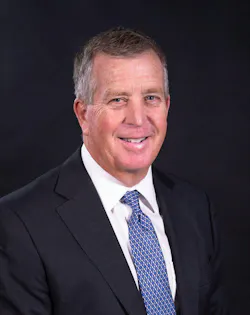
Mike Doner is the president and CEO of Flagger Force. He co-founded the company in 2002 and has led its growth from a local startup into a nationally recognized industry leader known for safety, innovation and workforce development.
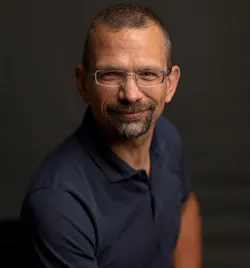
Luke Lazar is the vice president of risk and safety at Flagger Force. He has 30 years of experience in safety consulting across diverse industries.
Here is a transcript from the episode:
GJ: Welcome to the Infrastructure Technology Podcast. I'm Gavin Jenkins, head of content for Roads and Bridges, and with me, as usual, we have Brandon Lewis. He is the associate editor of Mass Transit magazine, and we have Jessica Parks. She is a staff writer here at Roads and Bridges, and we have a great show for you today. We have Jessica's interview with two people from Flagger Force. Who did you interview, Jessica?
JP: I spoke with Mike, the president and CEO, and then I spoke with Luke, who's the vice president of risk and safety.
GJ: Do these gentlemen have last names?
JP: Yes. Luke Lazar and Mike Doner. We had a great conversation about virtual observations, and I'll get more into their files later.
GJ: Luke and Mike. We're just talking to Luke and Mike, and we're talking about safety, and we're talking about virtual inspections, virtual checks, and technology is so advanced that you can do things on construction sites without leaving the office. It's amazing. Okay. Well, that's what's on today's program. But before we get into that, we're going to turn it over to Brandon to give us a little news.
BL: Well, thank you, Gavin. And what we're going to be talking about today is New Jersey Transit. They have launched a brand new website, and along with that website, they have debuted a new artificial intelligence powered chat box known as Navvie, and what this does is it allows riders to more easily access trip planning, travel details and the agency is also upgrading its mobile app, which is set to receive updates, and the agency is hoping to do so by the end of this year to streamline the experience in response to passenger feedback. And this is all part of the agency's ongoing efforts to modernize and improve the overall customer experience. NJ Transit is not the only transit agency that has modernized its website. A lot of agencies in the past six months have really started to modernize their websites to streamline it more in line with their apps so that you can get the same user experience, whether you are on a desktop or whether you are on your phone. Along with that, a lot of these agencies are implementing these AI chatbots. I know we have talked about quite a few, but this one is interesting because basically what it does is as soon as you log into the site, it pulls up service alerts, advisories, other essential travel details, a presentation, bus, light rail schedules that allows you then to easily see what routes are running, if there are any routes down and allows you to customize your trip planning, and it will tell you exactly what time a bus or train will arrive and then once you get on that bus or train, what time you will be arriving to your next destination.
GJ: And this is in New Jersey?
BL: Correct.
GJ: Oh, wow. Who knew traveling in New Jersey could be so convenient? I just thought everyone just sped up and down that massive highway of theirs. Have you ever driven on the turnpike?
JP: Yes. A million times.
GJ: The New Jersey Turnpike is like you're in an F1 race. It is wild. It is a herd. It is wild, but that's cool. Is this all throughout the state or just in Northern Jersey?
BL: So this is pretty much all of New Jersey transit service, so pretty much covering most of state lines. And like I said, it's really a part of their big customization navigation. I mean, their website and their app development really has not been upgraded since the mid 2000s, so this was vastly overdue.
GJ: Well, that's good. I mean, that's the thing with technology is you constantly have to update it, or the second you don't, you fall so far behind, and especially with the technology that's out there for planning a schedule or figuring out what buses you want to take, the routes, you have to update that so people have the best options in front of them. Yeah. Okay. Well, thank you, Brandon, for that. What are your thoughts on it, Brandon?
BL: Yeah, it's crazy to me because even with our own websites, Mass Transit, Roads and Bridges, we underwent a website re-navigation last year, and it's funny because I look at sites from 2010 or 2011, and you could see now clearly how bad they are designed. When they came out 15 years ago, it all looked brand new, and it's wild to me just trying to navigate something, and you're so used to something either being in one location or another and then they change it. I just think our mental capacity right now is we want to get everything available in one click. We don't like a lot of popups. We don't like having to go to a lot of navigation bars, so I think everything being right there as soon as you enter the site now is a good thing.
GJ: You know what website didn't need updated? MySpace. All right. Well, thank you for that. If you have any questions, comments, or you want us to take a look at any other transit apps that should be mentioned, shout us out, write us at [email protected]. And with that, we are going to go to Jessica's interview with Mike and Luke.
JP: Mike and Luke. So yeah, I spoke with Mike Doner. He's the president and CEO of Flagger Force, which they're a leading provider of short-term traffic control services across the Eastern United States. He co-founded the company in 2002 and has led its growth from a local startup into a nationally recognized industry leader known for safety, innovation and workforce development. While Luke has 30 years of experience in safety consulting across diverse industries, he serves as the vice president of risk and safety at Flagger Force, and I spoke with the two of them about virtual observations and how those have led to more safety advances. Better safety patrols in a way where they're able to get a clear picture.
GJ: They're good guys. I've interviewed them a couple of times. Really liked talking to Luke whenever I see him at the AFSA convention in February. Flagger Force, good people. All right, here now is Jessica's interview with Flagger Force.
JP: This is Jessica Parks, co-host of the Infrastructure Technology Podcast and staff writer for Roads and Bridges. I'm here today with Mike Doner and Luke Lazar of Flagger Force, and we're going to be discussing virtual safety observations. Thank you both so much for joining me today. How are you guys doing?
MD: We're doing great.
LL: Doing well. Thank you for asking.
JP: Awesome. Thank you guys both for being here. So I guess to start, let's talk about what are virtual safety observations and what prompted Flagger Force to begin using them?
MD: Well, if you don't mind, I'm going to take the first stab at this because Luke will talk more about the specifics, but as a business owner, I've always watched where employees will tend to do something differently when a supervisor is actually right over their shoulder. So in the short-term traffic control industry, our crews are largely working without a direct supervisor on every job site. We have supervision on the job site, but their boss, the crew leader supervisor has multiple jobs to visit, and that's normal in the construction business. A great example was a couple weeks ago I was in Florida, and I showed up on a job site, and I was dressed in my business clothes and was putting on my PPE, and I noticed a client changed their behavior. I found that very interesting because the client thought I was a safety observer or a supervisor, and they were changing their behaviors to do the correct thing because a supervisor had shown up, and that happens a lot in our industry. So over the last several years, Luke and I have talked about how can we do a better job of observing our employees in real time or near real time in a way that we watched them doing their behaviors as they normally would, and the intent was to find behavioral changes that would potentially negatively impact the safety of our employees, the clients or the motorists. So the intent was how can we use the technology we're investing in to help our drivers be better drivers to help coach our work zone set up and tear down? So I'm going to let Luke expand a little bit more from his perspective, but I wanted you to hear from the ownership perspective why we started down this path.
JP: Definitely. That's really interesting.
LL: Yeah, I'd like to add to that just a little bit. I actually don't know if Mike recalls this, but at one point we had a conversation about could we use drones to inspect our work sites? Could we somehow efficiently look at a large number of job sites in a short period of time and capture that information or capture that on a camera? And out of that, we changed the idea or changed the concept and said our trucks have forward and rear facing cameras. The work that we do primarily in setup and tear down is done behind the truck. The camera already captures that, and we have the ability to download those videos and view them. At the time, our camera system and our camera provider was significantly delayed. Our ability to download took quite some time. We have a newer system now and in a matter of minutes we can now download a video. That's why we say near real time and download that video and take a look at it.
JP: That's really awesome. So that gives you an ability to have more of an impact on that job as opposed to reviewing it after the fact. That's really interesting. Tell me, how do virtual safety observations differ from traditional in-person safety observations in a work zone environment? You kind of mentioned that, Mike. I don't know if you have anything to elaborate on that, Luke.
LL: What Mike mentioned is very accurate. People are very inclined to change their behaviors when they realize that they're being observed. You can see that in driving habits when you see a police officer on the side of the road and all the brake lights ahead of you go on as people slow closer to the speed limit. The virtual observations differ primarily because, well, for a few reasons, but primarily they're not in real time. They are somewhat delayed, so there Is a lag. There is a little bit of a lag there, but they're also viewed, as we've been saying, allowing people to perform the work they would normally do in a manner in which they would normally do. And then the unique part for us is they're viewed by two people. So Mike mentioned that we have supervisors and safety professionals and managers, and Mike and I are out in the field quite frequently doing work zone observations, going out and visiting our clients and our employees, but the virtual work zone observations are all viewed by two people, and what that allows us to do is have a very consistent view and match to our expectations and our standards. And that team actually has a healthy debate on whether or not something is 100% perfect or not. They've got an interesting perspective on being idealist relative to trying to have near perfection in the work zones, but they are also realists. They spend time in the field doing that work and they understand what it takes to get some things done. It allows us to have tremendous consistency. Today, we probably have between 75 and 80 people in the field doing what we might call regular work zone observations, and there's going to be some deviation from one to the other, one person in the other's view, whereas with the two people working together, it's a much more consistent view of what's going on.
JP: Definitely. Do you have anything you want to add, Mike?
MD: I think the important thing, and we are probably going to get to this at some point in time in the conversation, but I think it's appropriate to get here now, is there is a lot of lack of knowledge in the general population and even in the safety community and even with our customers about where are the hazards to people in our industry. So many people think that the hazard to our employees is during the actual operation of a work site, and that is completely erroneous. When a work site is set up correctly, the hazard to our employees is minimized because we have proper advanced warning signs, we have devices that protect them, we have escape routes, we have training as to how they avoid all those hazards, so their hazards are really reduced when a work site turns from setup to active and their hazards increase in tear down. Jessica, you probably already know this because you're in this industry a little bit, but the reasons why is because in setup there is always, always a first sign. So when you're setting up the first sign, there is by the definition of a first sign, no advanced warning that you were there. o as you move through the setup, the risk begins to get less and less and less until it reduces to its lowest point when the work site is set up accurately, professionally, and properly. Again, at reverse at the end of day, when you tear down the last sign by definition, it's the last sign. There is nothing else to tell someone you're there, so we work very hard to both educate our industry and educate our clients and certainly educate our employees. So many companies come out with safety devices to make the work site safer, but those devices actually cause us to be in the setup or the tear down period longer, and that increases the risk, and it's something that Luke and I are very passionate about educating people in our industry and globally in the safety environment to those facts. So you allowed me to get on my soapbox, I did. Luke can, if you wish, opine on his perspective on that, Jessica.
LL: Mike nailed it with those comments. There's a significant risk during our periods of driving, but we really focus on that concept of the first sign up and the last sign down. We have very strict procedures, policies and practices that are expected. We train to that time and time again in repeated events to try and ensure that that is truly learned and truly ingrained in the people's performance. And then it's essential for us to audit it. The work zone observations that we do in person are great. They're tremendous. You get that one opportunity to meet with the person, but for sure we're able to increase the volume, and we're able to have a more consistent view through the virtual work zone observation process.
JP: And that kind of leads into my next question. As you are able to see more work zones and have a more consistent process, I guess what trends or insights have emerged from those observations that you've conducted so far and were there any findings that surprised you?
LL: Well, Mike, if you don't mind, I'm going to jump in there and first I'm going to throw out a few numbers. In a given day, again, we have 70 or 80 roughly people in the field doing site visits, work zone observations, working with our employees. In a perfect circumstance, each of those 70 or 80 people would see a setup. If Mike could expand on this, I certainly can give you examples. It's difficult to find people during setup. Timing is sometimes only a few minutes. It might only be a 10- or 15-minute exercise to set up, so if you are stuck in traffic as a supervisor, and you don't quite get there at exactly the right time, you miss the setup, so it's going to be less than 70 or 80. Collectively, we do approximately 30,000 work zone observations in a year. We are able to add 30% to that by adding two full-time employees. Our people who do virtual work zone observations out of our quality department can focus in on a time of setup and tear down based on truck movement. So telematics allow us to understand the truck movement. The truck movement dictates what people are doing. You basically see them going back and forth in the same location at a given period of time, you know what's going on. You know based on a time of day, it's likely that it's going to be a setup process. They then can watch the videos, and I am not capable of this, but they first begin by watching the videos in anywhere from two to five times normal speed, and they zip through a portion of the video until they get to the portion of the video where they know they have to focus in and then they can slow it down and watch it. Now what's unique is the screen is both forward-facing and rear-facing cameras. And again, I don't have this skillset, but they can watch both screens at the same time and pick out those details very, very quickly.
JP: That's awesome.
LL: And what we do with that information is we then push that information to field supervision through some reporting, and they must follow up, so the supervisor gets the video where the deviation is. The supervisor then has to respond in a certain amount of time and do coaching of those employees. We use an approach, and we train our supervisors to coach in a cognitive behavioral coaching technique, and if we really break that down, what that means is they review the video so that they can show the employees the behavior. They talk to the employees and get an understanding of why they behaved in that manner, what did they do, what was on their mind at that time? We discuss the potential outcomes, what could have happened, where could have had an issue both from an incident standpoint or also from a compliance standpoint with our policy. And then they get a commitment to change from the employee and saying, ‘Do you understand why we're doing this? Will you commit to this change?’ And they get an understanding of the consequences, too. If we see the same individual deviating from the same procedure time and time again, obviously we have to escalate that beyond a simple coaching and take a little more aggressive accountability actions.
JP: Definitely. And so tell me, how has this approach helped identify potential safety risks before they become incidents or near misses?
LL: Well, again, I think that our previous conversation hit most of that. We're watching people in that near real time and then by tracking it in our system, we're able to look at those trends. So let's use a very specific example, and we say we see a trend of people parking their truck and not correctly exiting the truck to do setup and tear down. There's a certain expectation. They're to check their mirrors to make sure there's not oncoming traffic, they're to exit the vehicle in full PPE, they're to fold their mirrors and walk around the front of the truck rather than walk into the oncoming traffic around to the back of their truck to work, and let's say we begin to see some trend more than a single person doing that. What we would do is we would push that information out to the supervisors for sure to address, but we also would push it out to our safety professionals to focus their auditing and conversations. We would focus that communication through our app and our communication platform known as In the Zone or ITZ, and we would also focus that information into our micro learning platform. Our employees get a weekly notification of a computer-based micro-learning less than five-minute training piece, and in some circumstances, we might actually use an example video that we saw so that, again, we can say, ‘Here's the behavior, here's what you're supposed to be doing, here's how you make that change,’ so we can use them in those ways, and if we start to see trends in a certain area, pick a market, whatever it is, Western Kentucky, we can focus on that area and give it more support. We can bring people in as part of our safety and operations meeting and give them some refresher training. It really documents everything and allows us to see the trends much better.
MD: Jessica, one of the things that I hope that you're hearing out of this is that early on in our company's history, we learned from incidents when bad things actually happened. The entire video safety inspection process is watching behaviors and nothing bad has happened, but you just heard how specific it is to exit our vehicle. I'm sure, Jessica, that you probably have never been trained on how to exit your vehicle. We just get out of our cars, right?
JP: Yes.
MD: But there is a process. So when we are in setup and tear down, there is a very specific act that has to happen, and that is one person is doing a task, they are setting up a sign, they're moving a device. The other person, the sole responsibility of that person is to care for the safety of their partner, to be in an advanced position where they're alerting the traffic that there is a worker present doing a task so that that worker doing the task is protected and can focus on their task while the other individual is what we call watching their back, which means they're watching oncoming traffic. They're either stopping or slowing that oncoming traffic to allow our employee to do the task. So if you heard how specific we are about getting out of a vehicle, imagine how specific we are about watching their back, how far in advance, how to communicate, what to do. These are the types of things that keep people safe and going home every single day to their families. And so that is the power of a virtual safety observation.
JP: They are more of a proactive approach as opposed to a reactive approach.
MD: You nailed it, Jessica. This is all about being proactive, and it's a great conversation to have with an employee when you can simply say, ‘Watch this video, observe how your behaviors did not follow our standards’ and then we turn it into the why. Why are we coaching you this? Because we don't want you to get hurt. There are people that care and love for you at home, and our job is to get you back home in the exact same condition with which you came to work. So when you have a conversation like that as opposed to, ‘Hey, you ran into a post and here's the repercussions of that", these are all conversations to say, ‘We don't want you hitting that post. We don't want you being struck by a vehicle. We don't want you falling into a hole and twisting your ankle’. I'm really proud of Luke and his team for the work that they've done and more work yet to be done, but we are on a path that continues to elevate the safety of our employees, and our employees appreciate that. They appreciate the amount of effort and intensity that is put into this company so that we eliminate as many twisted ankles as we possibly can.
JP: I like that too, because that was one of my questions is how do you frame this conversation, these observations as not being disciplinary in it? I like that you guys frame it around their safety, that this is something that's going to help them. It's not to punish them, it's to help them, keep them going home every day and keep them safe. I think that's really important. I think it gives them the want to follow these processes, and I think that's really important. My next question is, so have you seen any measurable improvements in safety performance, worker engagement or overall work zone operations since implementing the program?
LL: You want me to take that one, Mike?
MD: Go ahead, Luke.
LL: Probably the most visible, measurable operational improvements through the use of our videos is in our driving, and we've made a tremendous impact in our driver safety, in our fleet performance. We've cut our expense by about 40% in the first six months of this year, just based on some of the programs we have in place. There's a little less measurable effect of the video work zone observations because again, like we're saying, it's proactive, but we're looking at things that could lead to an incident, and it's really difficult to say, ‘What did we save by what didn't happen’? Now, it has had an impact on our workers' compensation expenses. Again, it's kind of difficult to attribute that impact all to the virtual work zone observations because we're doing so many other things. One thing about Flagger Force is we don't attack a problem with just a single technique. We look at it and try to do multiple things the best that we possibly can to get the most improvement out of it, so it's a little difficult to put some specific numbers on injuries relative to that.
MD: So Jessica, I'll just add one thing. I'm not the safety professional that Luke is, but I've been running a business where I've put people in harm's way for over 40 years, and what I learned years ago was what they call the risk triangle. If you have a certain number of minor incidents, then you'll have a smaller but significant number of moderate incidents, which ultimately end up being a few severe incidents, which leads to one fatality. That was the risk triangle that sort of was prominent in the safety circles when I started being in this business. Our clients are all world-class utilities. Every major utility company in the eastern third of the United States is a customer of ours, and we're really proud of them, and we learn a lot from them. Over the years, I would hear their executives say, ‘We've really reduced a number of minor injuries, but we still have those flash fatalities from time to time’, so that's actually what we are working on, transparently. I have lost two employees in those 40 years that have worked for me, and that is impactful beyond belief and so when every day goes by and every employee that came to work for me is still going home to their families at night, that's a win. It's not about revenue or earnings or anything else. That's the win. As an owner and a leader of a company, you can't measure the impact of that single loss of life, so we are working to eliminate a loss of life, so that's the measurement that we use. And yes, we want to have less severe injuries, less minor injuries, all that, but at the end of the day, let's get our employees home to their families. That's the driving factor. That's the measurement.
JP: I agree with you, and it is interesting that you do see these drops in injuries, but exactly, there's just that one fatality that happens, and that blows everything else out of the water. That is what we need to prevent, and it's so interesting how technology has played such a role in getting ahead of the curve in these ways. It gives us eyes where we didn't have them before as well. So it's great how that plays a role in all of this. Okay. I'm going to ask you one more question because I think we're running out of time here, so looking ahead, how do you see virtual safety observations evolving, and what advice would you give other organizations considering a similar approach?
LL: Well, I can jump in there on that if you'd like first. With the introduction of artificial intelligence, we're now beginning to see systems that the cameras can actually help with identifying the deviations or variations, and you might've heard of them being used at fixed construction sites, such as a building where you have steel erection, and what they can do is capture the site on the camera, and the camera and the artificial intelligence can be trained to identify people that aren't wearing fall protection during steel erection, so it's looking for certain things. That technology is more prevalent in the general construction field than it is in the very specific area of road work that we do, short-term traffic control, so we are in conversations with our provider about what we can do to start to train the systems and train the cameras better to help us through this process. The cameras aren't specifically designed for the use that we're using and that we're discussing today. It is designed specifically for driving, and that artificial intelligence is already built into the driving components. So it's recognizing eye movement, it's recognizing potential drowsy driving, it's recognizing mobile device usage, and we're in conversation about can we train these devices to help us in the work zone observations? That's in the very infancy or early stages. We think that in time that would certainly be able to help us. Where the technology is going now is that the cameras are able to use examples and start to build examples to help us with coach training. Our employee, our supervisors are beginning to engage in AI coaching examples where they talk essentially to a bot, but it sounds like a person, and it gives them scenarios and scores and grades their coaching. Again, although it's focused around the driving, the hope is that it improves the coaching for both driver coaching, but also for work zone observation coaching, so we're in the early stages of that as well.
JP: That's really interesting.
MD: Jessica, you asked a two-part question. I think Luke really answered well, where's the technology going, And your second part was, what would you tell business owners or leaders of businesses? And the thing I would really encourage them to do is humans, regardless of our advances in technology, the human is still going to be needed in an awful lot of environments, and we tend to think that technology can solve all the evils of the world, whether it's safety or production or anything like that, and what we often have to think about is what are the unintended. Sequences of what we do. So for example, we have in our industry automated flagger assisted devices. Those are devices that can replace the human flagging station, if you will, and a person can operate that remotely. We use those devices when a proper human escape route is not possible. We do not use those devices where a human escape route is possible because in addition to a vehicle coming through your work site, we have bicyclists, we have pedestrians, we have people in wheelchairs, we have walkers, all sorts of other things that are happening. Plus the motorist doesn't believe that that device might be actual working. They might see the arm down, they might not see some traffic coming from the other direction, so they will go around it, and when a human is there, they can see that that human is trying to communicate. There's a reason I can actually walk, if I'm at a flagging station, I can walk to the motorist car and say, ‘There's wires down up there. It's going to be about 10 minutes’, and the motorist might say to me, ‘Okay, thank you. I'm going to turn around and go in a different direction." So a machine can't do that. My point is to a business owner, regardless of the industry you're in, look first to how you can use technology to improve the human performance. Don't think that technology can replace that human because it oftentimes can't. There are always going to be things that a human can do better than a machine. I'm 65 years old. Maybe when I'm dead, that won't be true, but right now, today, and in the foreseeable future, we are in a business of helping to educate people do their jobs better, safer, more efficiently by using technology and not using technology to make their jobs more cumbersome or even sometimes more dangerous.
JP: That's a really interesting point, and I agree with you. It's just humans can pivot in a way that can provide insight that technology cannot, and I like the use of technology to enhance the human experience as opposed to replace the human involvement, so I completely agree with you. Luke and Mike, you guys are amazing guests. I loved our conversation today. Is there anything I didn't ask you that you think is important to share with our listeners?
MD: I think you nailed it, Jessica.
JP: I love to hear that. Thank you.
MD: We enjoy talking about people, and we enjoy talking about safety, and Flagger Force was founded 23 years ago with four employees and a truck, and about 15 years ago, part of our mission statement is to be recognized as a leader in work zone safety and education across the nation. And humbly, we're on that path, and we enjoy every opportunity to talk about safety and the human element and professionalizing in an industry that historically wasn't professional, so we look for opportunities to work with best in class organizations. Luke is involved in national organizations that talk about safety, so we really appreciate you taking the time to talk with us and we're available to speak to you or any of your listeners that ever want to talk about safety. We're a phone call, email away. So thank you very much, Jessica.
JP: That's very true, and Flagger Force is a great friend of Roads and Bridges, and I thank you guys both so much for hopping on with the call with me today, and I'm sure we will have you on the podcast again. So thank you guys so much. It was a pleasure.
GJ: And we are back. That was Jessica's interview with Mike Doner and Luke Lazar from Flagger Force. Heck of a job. Great interview, Jessica. Brandon, what were your takeaways from the interview?
BL: So my first takeaway is Mike and Luke are very right that when someone is watching me, I just immediately get nervous about everything. I don't like people hovering over me. I don't like people looking at what I'm doing. I'm very self-conscious, weirdly, in that regard, but I found it interesting that they talked about the public perception of safety hazards is just flat out wrong, that when all these technology companies come together and they start putting out these products that are deemed to help us make safer, that actually as soon as they are launched is when they are the most dangerous because they are still technically in the testing phase. Everybody wants to go out and rush and buy these products, and they're going to work right away. It's like in reality, there's probably going to be bugs. It's the same thing with any industry, but overall, great job with the interview, Jess.
JP: Thank you.
GJ: All right. Well, that is all for today's show, and we have some people to thank. Brandon, who should we thank?
BL: Well, we got to thank a few people. We got to thank Mike and Luke for coming on the podcast and being a great guest today. We have to thank our wonderful editor, the great Maz, for making us look all wonderful, not only on audio, but beautiful on camera as well, by the way.
GJ: Karina Mazhukina.
BL: And by the way, subscribe to the ITP Podcast, not only on YouTube, but on all audio podcasting platforms. Of course, we got to thank Endeavor B2B, our wonderful parent company, for giving us the opportunity to come on here, talk about new transit apps, talk about safety every week right here on the ITP.
GJ: All right. Excellent job, Brandon. Excellent job, Jessica. Thank you to all you out there who are listening and watching. For Roads and Bridges, I'm Gavin Jenkins.
BL: I'm Brandon Lewis.
JP: And I'm Jessica Parks.
GJ: All right, we'll see you next time, but until then, goodbye.
About the Author
 Brandon Lewis
Brandon Lewis
Associate Editor
Brandon Lewis is a recent graduate of Kent State University with a bachelor’s degree in journalism. Lewis is a former freelance editorial assistant at Vehicle Service Pros in Endeavor Business Media’s Vehicle Repair Group. Lewis brings his knowledge of web managing, copyediting and SEO practices to Mass Transit magazine as an associate editor. He is also a co-host of the Infrastructure Technology Podcast.