BART, Riverside Transit Agency launch new digital tools to improve transit accessibility
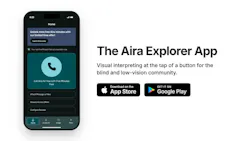
Two California transit agencies – Bay Area Rapid Transit (BART) and Riverside Transit Agency (RTA) – have made improvements to its apps to make it easier for riders with disabilities to navigate their systems.
BART launches video interpreter service pilot
BART has launched a pilot program to test Aira, a video interpreter service designed to help blind and low vision customers navigate to, from and through the BART system. The pilot began Oct. 6 and runs through Jan. 3, 2027.
According to the agency, Aira connects users with live, professionally trained visual interpreters through a video call on a free smartphone app called Aira Explorer. Using the camera on a rider's phone, interpreters can describe surroundings, read signs and text and help with tasks such as finding a station entrance, locating fare gates and ticket vending machines, identifying the correct platform and boarding the right train.
"Blind and low vision riders have told us that navigating to and through our stations can be a real challenge, especially finding fare gates and other key features," said BART Customer Access and Accessibility Director Ryan Greene-Roesel. "This pilot gives us a chance to test whether a live, on-demand interpreter can make those everyday trips easier."
The agency notes Aira interpreters will receive basic training on the BART system and will have access to BART's website and mobile app to help answer rider questions. According to the agency, Aira usually charges users by the minute, but during the pilot period, the cost of any call related to a BART trip — from a rider's front door to their destination – will be covered. Riders do not need to be inside a BART station to use the service, and it can be used anywhere in the BART system.
Riders will need to download the free Aira Explorer app from the Apple App Store or Google Play. After opening the app and creating an account, riders will need to give the app permission to use their phone camera, microphone and GPS location, so the interpreter can assist them.
Within the app, on the home screen, riders tap “Browse Access Offers” and then in the search bar at the top of the next screen, type in “BART”. The offer is then applied to a rider’s next call.
BART notes that at that point, when riders are ready to place the call, they open the app and tap “Call an AIRA agent” to connect. They will reach a live visual interpreter in 10 to 15 seconds. Riders will then need to let the interpreter know they’re making a BART-related trip, point their camera at what they need information on and the visual interpreter will assist them.
According to BART, the service is available 24/7 throughout the pilot. BART will gather feedback from users and review usage data to evaluate how riders are using the service, what they find most helpful and whether BART should seek funding to offer this type of service in the future.
RTA launches Convo Access for deaf and hard-of-hearing riders
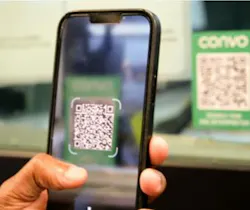
Convo Access, a live American Sign Language (ASL) interpretation service, is now available on RTA buses and at RTA facilities to help deaf and hard-of-hearing riders communicate more easily with RTA staff.
Riders can use Convo Access to connect with a live ASL interpreter in real time using their smartphone. To do so, riders scan the QR code displayed on any RTA bus or at an RTA facility, which will allow them to connect instantly with a live ASL interpreter and communicate with an RTA employee through the interpreter. RTA notes no appointments, special equipment or advanced scheduling are required.
According to the U.S. Census Bureau's American Community Survey, approximately three out of every 100 Riverside County, Calif., residents report having a hearing difficulty.
About the Author
 Brandon Lewis
Brandon Lewis
Associate Editor
Brandon Lewis is a recent graduate of Kent State University with a bachelor’s degree in journalism. Lewis is a former freelance editorial assistant at Vehicle Service Pros in Endeavor Business Media’s Vehicle Repair Group. Lewis brings his knowledge of web managing, copyediting and SEO practices to Mass Transit magazine as an associate editor. He is also a co-host of the Infrastructure Technology Podcast.