CA: S.F. may soon use smarter cameras to crack down on this type of parking violation
Transportation officials in San Francisco might soon apply new technology to an age-old problem: The scofflaws who double-park in transit lanes, sometimes forcing a bus to maneuver around them.
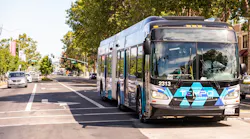
For two decades, the agency has cited violators using a video-recording system that seemed cutting-edge when it was introduced in 2008. Cameras mounted on the front of buses continuously record footage, which is “physically taken to an office where a trained parking control officer” has to go through all of it, said Viktoriya Wise, SFMTA’s street division director.
Now her team wants to install new hardware that would only roll cameras when the sensors detect a bus lane obstruction. Relevant video would be uploaded to the cloud so an officer could double-check it.
“We need to have a new generation of technology that improves efficiency and privacy and generally takes us to the 21st century,” Wise said. On Tuesday she and her staff will seek the Board of Directors’ approval for a three-year contract with Hayden AI Technologies worth up to $55 million, with options to extend it three more years. If both the SFMTA board and the Board of Supervisors sign off, Hayden AI’s platform could be in place by next summer.
Whether it yields a mountain of citations and fines is an open question. SFMTA already works diligently to deter drivers from pulling into red lanes or bus stops, where they impede public transportation and pose a particular danger to people with strollers or wheelchairs. In the first three months of 2025 the agency issued 1,350 tickets for this offense, about quadruple the number for the same period in 2024, a Chronicle analysis found.
But Wise stressed that SFMTA’s goal is not to penalize or extract payment from people.
“Just like with automated speed (camera) enforcement, this technology is meant to change behavior,” she said, noting that the city would enter a 60-day warning period after testing the cameras on two buses, then ramping up to 210. Policymakers are also reevaluating the $108 penalty for transit lane violations, which is currently steeper for people who park directly in a bus stop.
To Dylan Fabris, community and policy manager for San Francisco Transit Riders, more robust enforcement seems like a “no-brainer.”
Sitting on the 22 bus in Japantown the other day, Fabris watched a relentless stream of delivery drivers commandeer just about every bus stop.
“People want to just drop their cars in these spaces so they pop into a store,” Fabris said. “And leads to delays for hundreds of transit riders.”
© 2026 the San Francisco Chronicle.
Visit www.sfchronicle.com.
Distributed by Tribune Content Agency, LLC.