BART crime falls 67% following systemwide fare gate upgrades
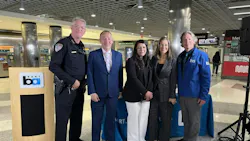
Crime has fallen 67% on Bay Area Rapid Transit (BART) from Q4 2024 to Q2 2026. Over that same period, BART notes the number of BART Police Department (PD) and safety-related delays fell 47%, as BART PD had to respond to fewer reported incidents.
The agency notes this month marks one year since BART completed the successful installation of Next Generation Fare Gates at all 50 stations. The work was completed several months ahead of BART’s deadline to have new gates fully installed by the end of 2025.
“We knew updated, modern gates would improve the rider experience. They have been a real game changer,” said BART General Manager Bob Powers. “The new fare gates are at the core of what I call the ‘New BART.’ We are offering our riders a safer, cleaner and more reliable experience than even just a year ago.”
According to BART, since the Next Generation Fare Gates have been installed, the percentage of riders who say they witnessed fare evasion during their trip is down 60%. The agency notes early indications show the gates are responsible for BART revenue growing by about $10 million annually through reduced fare evasion.
"The data speaks loud and clear: BART's new fare gates prove without a doubt that investing to improve and modernize our public transit infrastructure pays off big time," said Bay Area Council President and CEO Libby Schaaf. "BART riders want and deserve nothing less than a safe, convenient and clean system and BART has delivered. The Bay Area Council is proud of our advocacy in support of these new fare gates and our partnership with BART to help get this done.”
The new gates have clear swing barriers that are very difficult to be pushed through, jumped over or crawled under. The overall fare gate array forms a tall barrier of a minimum of 72 inches to deter fare evasion.
“New gates and our high-visibility patrols on trains and in stations are providing layers of security for our riders,” said BART Police Chief Kevin Franklin. “As reports of fare evasion drop, it frees up members of my team to respond more rapidly to emergencies in the system.”
In March, BART rolled out new fare gate tones that are more pleasing and audible over station background noise, making stations more welcoming and simpler to navigate, especially for blind and low-vision riders. In June, BART began a fare gates advertising pilot at nine stations as part of an ongoing effort to explore new and creative revenue opportunities as the agency faces a structural deficit starting in fiscal year 2027.
About the Author
 Brandon Lewis
Brandon Lewis
Associate Editor
Brandon Lewis is a recent graduate of Kent State University with a bachelor’s degree in journalism. Lewis is a former freelance editorial assistant at Vehicle Service Pros in Endeavor Business Media’s Vehicle Repair Group. Lewis brings his knowledge of web managing, copyediting and SEO practices to Mass Transit magazine as an associate editor. He is also a co-host of the Infrastructure Technology Podcast.