BART outlines major service reduction plan without new funding stream
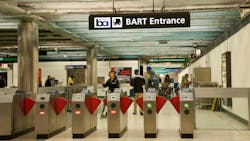
The Bay Area Rapid Transit (BART) Board has adopted an alternative service plan that outlines how the agency would adapt its spending to solve a $376 million deficit for the next fiscal year if no new funding source becomes available to the agency. BART notes that it is facing a structural deficit of $350 million to $400 million because ridership is still down 50% compared to pre-pandemic levels, and the agency’s current funding structure relies heavily on the farebox model for its budget.
The plan includes specific cuts and financial strategies needed to balance both the fiscal year (FY) 2027 (July 1, 2026-June 30, 2027) and FY28 (July 1, 2027-June 30, 2028) budgets. The plan includes service cuts, station closures, fare increases, a 40% reduction in system support services and laying off 1,200 employees, among other cuts. The plan does not name specific stations to be closed and clarifies that the BART Board will be responsible for all decisions on station closures.
BART says it has already made budget cuts across all departments and instituted a series of cost controls, including rightsizing service, labor savings, operational efficiencies and reducing BART’s office space footprint. At the same time, the agency has also worked to increase revenue by installing new fare gates, leasing out BART parking lots and offering new fare products such as Clipper BayPass.
Alternative service plan details
To take place in January 2027 barring new funding sources:
- Three-line service: A service reduction that would include continuous service only on Yellow, Blue and Orange lines, with limited peak service in only the peak commute direction on the Red and Green lines.
- 30-minute frequencies on every line.
- Closing at 9:00 p.m., seven days a week.
- An overall 63% reduction in train hours.
- 30% fare and parking fee increases, with the estimated average fare increasing from $4.98 to $6.38.
- Target approximately $30 million in savings over six months from non-service budget reductions to fleet and non-fleet maintenance, police, cleaning and administrative support functions.
- Continue deferrals of priority capital allocations and retiree medical contributions.
- Balance remainder of FY27, with one-time resources and financial deferrals.
Following the January 2027 cuts, staff will continuously assess ridership and revenue impacts and the performance of all district functions to determine if further reductions can be safely and legally implemented.
To take place in July 2027, if feasibly safe, the agency aims to target over $175 million in annual cost reductions through a cumulative 70% reduction in service hours:
- Maintain three-line service, 30-minute frequencies on each line, closing at 9:00 p.m.
- Close up to 15 stations and/or up to 25% of system track miles.
- Increase fares and parking fees up to a cumulative 50%. The estimated average fare would increase to $7.26.
- Target annual operating expense savings of more than a cumulative $130 million from non-service budget reductions to fleet and non-fleet maintenance, police, cleaning and administrative support functions.
- Continue to defer retiree health contributions; defer most remaining capital allocations.
Contingency:
- If at any point it is determined BART can’t safely or legally operate with available resources, stop passenger service.
- Use existing district tax revenues to secure system assets.
- Work to determine the system’s future.
Use of the state loan
BART says it can’t use state loan money to avoid station closures and service cuts if no new revenue becomes available. Without new revenue, there is no way to pay the loan back. The state loan will function primarily as a bridge loan and helps with cash flow if a November 2026 transit funding measure is successful.
The loan gives what BART calls reassurances money that will be available to continue to deliver the best service possible until the sales tax dollars from the successful ballot measure become available for its use. This is projected to happen in July 2027 but could take longer. If a funding measure succeeds, BART will use $97 million in loan funds to help balance the FY27 budget.