New Metra study examines possible service increase
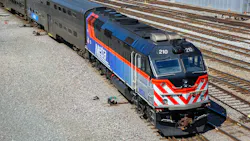
A draft of a new Metra study details what needs to be done and roughly what it would cost for the agency to offer more frequent, all-day service on its rail lines.
The agency will be hosting a virtual public hearing on Nov. 16 for members of the community to comment on the study, which is known as the Systemwide Network Plan. Feedback on the draft plan will be accepted through Dec. 14. The final draft plan will then be submitted to the Northern Illinois Transit Authority (NITA) for future regional planning efforts.
Metra says it undertook the study in response to its current strategic plan, which looked at post-pandemic ridership patterns and challenged the agency to work towards a “regional rail” vision. In that service model, Metra would still have rush-hour service for downtown work commutes, but also offer more service in both directions all day throughout the week for other kinds of trips.
The NITA Act requires Metra to implement a regional rail pilot on the Rock Island Line by January 2027, and specifies that the transition to regional rail will be part of the service standards that Metra is held to going forward.
“This plan lays out near- and mid-term implementation steps to support the evolution of our service, but it also defines a long-term vision for what regional rail can become,” said Metra Executive Director and CEO Jim Derwinski. “We hope it will serve as a blueprint to support the transition and success of NITA in a regionally coordinated effort to implement regional rail.”
Metra says that because every line has different challenges with infrastructure, freight traffic, ridership patterns and/or other factors, there is no “one size fits all” solution included in the plan. For some lines, the service pattern will be similar to today's service, only more frequent. On other lines, a pattern where trains serve an inner zone and an outer zone might make more sense. The plan details how Metra’s rail lines could offer trains every 30 to 60 minutes (Regional Rail 1.0) or every 15 to 30 minutes (Regional Rail 2.0) with a greater investment.
“Metra’s Systemwide Network Plan represents an opportunity to put years of work and rider engagement into action and improve transit connections across the region,” said NITA interim Executive Director Jamie Rhee. “We know that riders want to move more easily from city to city across the suburbs and collar counties in addition to more frequent service downtown. NITA looks forward to incorporating all Service Board efforts into our regional service planning framework beginning 2027.”
Metra estimates the bill for Regional Rail 1.0 would be $2.7 billion in capital costs and $269 million in additional operating costs while Regional Rail 2.0 would cost an additional $6.4 billion and $411 million more in operating costs.
The agency has taken some small steps already toward regional rail, including implementing train schedules that were standardized and simplified, with fewer stopping patterns, shorter headways in off-peak times, improved service for reverse commuters and improved transfer connections. According to the agency, the more regional rail elements that were included in new schedules, the more robust ridership recovery has been.
About the Author
 Brandon Lewis
Associate Editor
Brandon Lewis is a recent graduate of Kent State University with a bachelor’s degree in journalism. Lewis is a former freelance editorial assistant at Vehicle Service Pros in Endeavor Business Media’s Vehicle Repair Group. Lewis brings his knowledge of web managing, copyediting and SEO practices to Mass Transit magazine as an associate editor. He is also a co-host of the Infrastructure Technology Podcast.
Related
 Metra commuter train arrives in Mokena from Chicago.