RailWorks to design, construct two new traction power substations for L.A. Metro K Line
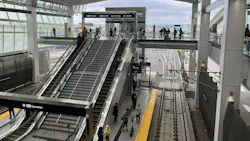
RailWorks has been awarded a $24.5 million contract by the Los Angeles County Metropolitan Transportation Authority (L.A. Metro) to design and construct two new traction power substations along the K Line, designed to support increased service frequency and expanded passenger capacity on the transit corridor that’s seeing growing ridership.
The project is part of L.A. Metro's ongoing efforts to enhance rail operations and improve the rider experience by enabling three-car train operations at five-minute headways. The upgraded traction power infrastructure is set to provide the electrical capacity needed to support more frequent service and accommodate increasing ridership demand along the K Line.
Delivered under a design-build model, RailWorks bnotes that it will provide end-to-end project delivery, including the design, installation, testing and commissioning of the two new traction power substations. The scope also includes integration with the existing overhead contact system, modifications to emergency trip and transfer trip systems and upgrades to communications infrastructure to ensure seamless coordination with L.A. Metro's existing network.
"RailWorks is proud to continue supporting [L.A.] Metro's investment in critical transit infrastructure that enhances service for riders and strengthens the region's transportation network," said RailWorks Track Services President Mike McGee. "Our team brings extensive experience delivering complex rail systems projects, and we look forward to partnering with [L.A.] Metro to provide the infrastructure needed to increase capacity and improve operational efficiency along the K Line."
The installation of the two new substations will require close coordination with the Los Angeles Department of Water and Power, Southern California Edison and L.A. Metro to integrate the new facilities with existing traction power and communications systems. Once complete, the project will enable shorter train headways and increased passenger-carrying capacity, working to help L.A. Metro meet growing transit demand while supporting reliable and efficient operations.
This project is currently in the design phase, with construction expected to begin in early 2028. Substantial completion is anticipated in mid-year 2029.
About the Author
 Noah Kolenda
Associate Editor
Noah Kolenda is a recent graduate from the Craig Newmark Graduate School of Journalism with a master’s degree in health and science reporting. Kolenda also specialized in data journalism, harnessing the power of Open Data projects to cover green transportation in major U.S. cities. Currently, he is an associate editor for Mass Transit magazine, where he aims to fuse his skills in data reporting with his experience covering national policymaking and political money to deliver engaging, future-focused transit content.
Prior to his position with Mass Transit, Kolenda interned with multiple Washington, D.C.-based publications, where he delivered data-driven reporting on once-in-a-generation political moments, runaway corporate lobbying spending and unnoticed election records.