MTA awards contract for climate resiliency efforts on Metro-North Hudson Line
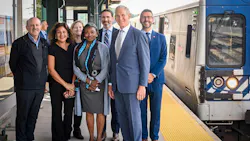
The Metropolitan Transportation Authority (MTA) awarded a $19.7 million contract for the design phase of a major project to protect vulnerable portions of the Metro-North Railroad’s Hudson Line from the effects of climate change and fortify the line against future stormwater runoff, tidal floods and other risks between Spuyten Duyvil to Hastings-on-Hudson—efforts that began in 2025. The agency says the contract is a major step forward in a flagship $800 million resiliency effort to fortify the Hudson Line in the MTA’s 2025-2029 Capital Plan.
“As I always say, mass transit is the antidote to climate change—but we need to deal with the accelerating impacts it is already having on our system. This project takes a comprehensive approach towards protecting essential Metro-North service for decades to come,” said MTA Chair and CEO Janno Lieber.
The $270 million project is targeting assets that manage water flow and drainage, stabilize the right of way and are in poor condition along a segment of the lower Hudson that is highly vulnerable to extreme weather. Work includes:
- The fortification of retaining walls and slopes
- Expansion of culverts and drainage along slopes and track
- Shoreline structure rehabilitation
- Flood protection measures for tracks where possible
This project also aims to develop a resilient design blueprint to guide future investments along the entirety of the line. The agency says this work is a clear example of how the MTA is taking a forward-looking approach to tackle the impacts of climate change and addresses climate vulnerability findings from the 2024 MTA Climate Resilience Roadmap, as well as state of good repair findings from the 2025-2044 Twenty-Year Needs Assessment.
"Millions of New Yorkers rely on the Hudson Line every year, but the future of the line depends on us taking action now. This design award marks a major milestone in our effort to protect our system from the effects of climate change and to safeguard the reliable transit service our region depends on," said MTA Construction and Development President Jamie Torres Springer.
Located on banks of the Hudson River, Metro-North’s Hudson Line is vulnerable to flooding from stormwater run-off during extreme rain and coastal flooding—both of which are heightened by climate change. The segment between Spuyten Duyvil and Hastings-on-Hudson has experienced numerous recent floods and mudslides given its unique location between the Hudson River on the west and several steep slopes on the east, causing service disruptions on a portion of the line used by 25,000 Metro-North riders each weekday, along with Amtrak and freight rail.
“We have a responsibility to protect this corridor and the people who depend on it every day. We are meeting that responsibility through careful planning, sustained investment, and a series of projects designed to strengthen and safeguard the Hudson Line for the long term,” said MTA Metro-North Railroad President Justin Vonashek.
The project is part of a broader effort to fortify the Hudson line. After Superstorm Sandy, the MTA completed more than $400 million of work to make the Hudson Line more resilient by improving power, communications and signals systems along a 30-mile portion of the line from the Bronx to Croton-Harmon. The MTA is also in the midst of implementing a project to stabilize vulnerable, steep slopes and improve stormwater infrastructure on a portion of the Hudson Line between Glenwood and Greystone station, thanks to $20 million in the fiscal year 2025 state budget. This project is currently in design.
“The impacts of climate change and extreme weather put the commutes of millions of riders who rely on the Hudson Line each year at risk,” said New York Gov. Kathy Hochul. “That's why we're making historic investments to ensure the long-term resilience of this vital rail corridor, fortifying it for the long term and ensuring that service is more reliable than ever before."
The design phase of the project will be a joint venture between STV and WSP. Construction is expected to begin in 2029.
About the Author
 Noah Kolenda
Noah Kolenda
Associate Editor
Noah Kolenda is a recent graduate from the Craig Newmark Graduate School of Journalism with a master’s degree in health and science reporting. Kolenda also specialized in data journalism, harnessing the power of Open Data projects to cover green transportation in major U.S. cities. Currently, he is an associate editor for Mass Transit magazine, where he aims to fuse his skills in data reporting with his experience covering national policymaking and political money to deliver engaging, future-focused transit content.
Prior to his position with Mass Transit, Kolenda interned with multiple Washington, D.C.-based publications, where he delivered data-driven reporting on once-in-a-generation political moments, runaway corporate lobbying spending and unnoticed election records.