Sound Transit, WMATA open new, upgraded stations to improve the rider experience
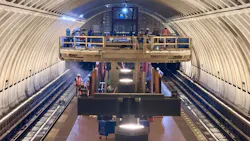
Sound Transit and the Washington Area Metropolitan Transportation Authority (WMATA) have completed construction on new and upgraded stations, respectively, for their networks.
Sound Transit connects new neighborhood to network with new station
Sound Transit is opening Pinehurst Station for service on Sept. 30—the newest Sound Transit station connecting communities near NE 130th Street to high-capacity rail rapid transit service.
Line 1 and 2 trains are expected to arrive at the station every four to five minutes. Over time, the new station is expected to serve around 3,400 riders, according to the agency, with connections to community resources and King County Metro bus service.
“Traveling around our city and region should be easy and affordable. Every new light-rail station gets us further toward that goal. Pinehurst Station will create more and better options for people in North Seattle to get to the important places in their lives,” said Seattle Mayor and Sound Transit Board Member Katie Wilson.
Pinehurst Station was approved in the 2016 Sound Transit 3 ballot measure and is the first infill station in agency history. Originally projected to open in 2031, the Sound Transit Board advanced this station into final design in February 2020 and approved additional budget and contract changes for the accelerated delivery in 2022—according to the agency.
These decisions ultimately resulted in early construction beginning before the opening of Lynnwood Link, allowing for what the agency says was a faster and less disruptive construction process—and for the station to open five years before originally planned.
“Opening Pinehurst is another landmark moment in a year of firsts,” said Sound Transit CEO Dow Constantine. “This is the first infill station in agency history, and the lessons we learned delivering it will guide us as we build out Sound Transit 3 and carry an ever-greater number of riders in the years ahead.”
For more about the station and opening day celebration, visit the agency’s website.
WMATA completes Grosvenor-Strathmore station renovation
Major construction on the Red Line between North Bethesda and Friendship Heights has concluded, wrapping up nine weeks of work that began on July 6. Full Red Line service resumed on Sept. 7, restoring rail service to Grosvenor-Strathmore, Medical Center and Bethesda stations. WMATA notes that the work for the project was completed on time and on budget.
"We appreciate our customers and community partners for their patience throughout this project," said WMATA General Manager and CEO Randy Clarke. "This work delivers immediate improvements for customers today at Grosvenor-Strathmore while laying the foundation for a better-connected transit network in the future."
WMATA says it was able to complete critical infrastructure improvements while advancing long-term investments that will improve customer experience for decades to come.
At Bethesda, crews built a new mezzanine structure on the platform in preparation for the Maryland Transit Administration's Purple Line, which is slated to begin service in late 2027. At Grosvenor-Strathmore, riders will find a rehabilitated station platform and amenities. WMATA says it also completed aerial structure work along the closed stretch of track.
What this work means for customers:
- Improved regional connections:Progress was made on Bethesda station's second mezzanine, creating the future connection point between WMATA and the Purple Line and creating another entry point in the station. The 6,000-square-foot mezzanine includes two new escalators, two new elevators, a new station manager kiosk and faregates. About 60 tons of steel and 220 cubic yards of concrete were used to build the structure.
- No future disruptions:WMATA says the majority of work requiring extended access to the track area has now been completed. Construction on the Bethesda mezzanine, including the bridge to the elevator banks, will continue behind protective barriers over the next 18 months without requiring additional station closures.
- A modern Grosvenor-Strathmore platform:Passengers will notice upgraded lighting, new passenger information displays, replaced platform tiles, upgraded station shelters and benches, improved drainage and rehabilitated platform edges that enhance both safety and the station experience. Crews poured 280 cubic yards of concrete, laid 16,000 square feet of tile, installed 108 new globe lights and 288 new edge lights, six wind shelters and 26 new digital information screens.
In addition to rider-facing improvements, crews completed extensive structural, electrical and station rehabilitation work throughout the construction zone, utilizing the extended shutdown and unincumbered access to accomplish work that would have been difficult to complete during normal rail operations.
WMATA says it chose to close the station during the summer after the Fourth of July when ridership tends to be at its lowest. The project was completed in just two months instead of what the agency says could have been two years of weekend and overnight closures.
WMATA notes that its crews moved more than 1.2 million customers with free shuttle bus service during construction. The Maryland Department of Transportation State Highway Administration and the Montgomery County Department of Transportation also created temporary bus lanes during the project to speed up shuttles.
About the Author
 Noah Kolenda
Noah Kolenda
Associate Editor
Noah Kolenda is a recent graduate from the Craig Newmark Graduate School of Journalism with a master’s degree in health and science reporting. Kolenda also specialized in data journalism, harnessing the power of Open Data projects to cover green transportation in major U.S. cities. Currently, he is an associate editor for Mass Transit magazine, where he aims to fuse his skills in data reporting with his experience covering national policymaking and political money to deliver engaging, future-focused transit content.
Prior to his position with Mass Transit, Kolenda interned with multiple Washington, D.C.-based publications, where he delivered data-driven reporting on once-in-a-generation political moments, runaway corporate lobbying spending and unnoticed election records.