Surrey Langley SkyTrain extension stations see construction take shape
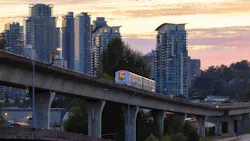
Construction is now underway at all eight stations along the Surrey Langley SkyTrain extension, working to provide an improved transit experience for the residents south of the Fraser River. The project is being delivered by the province of British Columbia and federal government of Canada, with funding from both levels of government.
Once complete, this project will extend the Expo Line from King George Station in Surrey to Langley City Center, connecting riders to destinations in metro Vancouver. Funding for the project is coming in a split from the government of British Columbia, which is contributing C$4.4 billion (US$3.2 billion) to the project, and the government of Canada contributing C$1.3 billion (US$949.3 million). The government of Canada notes this represents the largest federal public transit investment in British Columbia.
“The Surrey Langley SkyTrain will transform the way people move around Metro Vancouver,” said Canada Housing and Infrastructure Minister Gregor Roberts. “Breaking ground on the last of eight stations is a huge step towards building vital and reliable public transit connections. Through collaboration, we are building the first rapid transit project south of the Fraser in 30 years.”
Once complete, the government of Canada notes the Surrey Langley SkyTrain will make travel faster across Metro Vancouver, with an average commute time of 22 minutes between Langley City Center and King George station, which is more than 25 minutes faster than the current bus route.
The government of Canada says the Surrey Langley SkyTrain will unlock opportunities to build transit-oriented communities, especially around the eight stations, with more options for housing, employment and services like health care and childcare. The project is also set to include 14 kilometers (8.7 miles) of new, fully separated multi-use pathways, connecting into regional active transportation networks and the new SkyTrain stations.
Station foundation work is already complete at six stations, with work continuing at 152 Street Station and getting underway at Willowbrook Station, according to the government of Canada. Above ground progress of station construction is already visible at Fleetwood and Green Timbers stations, where station structures are already going up. With all eight stations now under construction, the government of Canada notes that the focus will shift from foundation work to vertical construction, building the stations that will soon serve future riders.
“As construction begins on Willowbrook Station, we’re moving closer to a transit system that better connects people, communities and opportunities across the region,” said Canada’s International Development Secretary of State Randeep Sarai. “The Surrey–Langley SkyTrain extension will make it easier for residents to get where they need to go by reducing service gaps, shortening commute times and expanding public transportation across Metro Vancouver for years to come.”
In addition to station construction, the government of Canada notes that contractors are progressing on all aspects of the project.
- Guideway foundation construction is almost 90% complete, and 75% of guideway columns are built.
- All four launching gantries are in operation constructing the elevated guideway, with more than 30% of guideway segments installed—five kilometers (3.1 miles).
- The Precast Concrete Facility in South Surrey is producing segments for the elevated guideway, with half of all segments now cast.
- The 16-kilometer (10-mile) underground duct bank, which will house the electrical lines needed to power the SkyTrain, is more than 75% complete—approximately 12 kilometers (7.5 miles).
- Trackwork began in the last week of April, with rail installation starting just 18 months after the start of major construction.
“The Surrey–Langley SkyTrain extension is about more than just moving people—it’s about building stronger, more connected communities,” said British Columbia Transportation and Transit Minister Mike Farnworth. “This project will reduce congestion, cut commute times and provide a reliable transportation for the region’s growing population.”
The new transit route is expected to enter service in late 2029.