Center for American Mobility forms to support transit at the ballot box
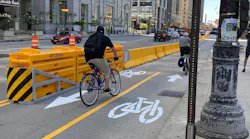
Leaders in elected office, government, technology and private business came together to announce the launch of the Center for American Mobility, Inc. (CAM), a national nonprofit that aims to expand mobility options across America, including trains, buses and microtransit and safer streets for biking, scooting and walking.
The goal: strengthen local economies, create greater access to opportunity and enable healthier, more connected communities.
Founders say that CAM is unique in that it is the first national organization dedicated to “building the political power to get there.” The announcement comes after a midterm election that the founders say reflected voters’ economic concerns, including frustrations with rising transportation costs, the second-biggest expense for American households after housing. CAM founders note the organization launches with founding support from Arnold Ventures and Via.
CAM brings together two affiliated organizations working toward one mission: the Center for American Mobility, Inc., a 501(c)(4), and the Center for American Mobility Research and Education Fund, Inc., a 501(c)(3). The Center for American Mobility, Inc. is set to back transit ballot measures, legislative campaigns and candidates who champion modern mobility. It aims to provide messaging and resources to shape public opinion, lift local voices and win campaigns. CAM will connect and activate agencies, advocates, business groups and industry leaders to speak with one voice.
The Center for American Mobility Research and Education Fund is set to publish and amplify research that makes the case for investments in transit and safe streets, connecting local wins to build a national story for expanding mobility options across the country.
CAM notes that it made its first political investments this fall, backing successful local transit measures on the November 3 ballot . In Pierce County, Wash., voters approved a 0.3% sales tax increase, generating $64 million annually for Pierce Transit, which is set to fund a 47% increase in service.
“Thanks to a tireless coalition of advocates, labor, and community leaders, Pierce County is finally going to get the bus service it deserves. The Center for American Mobility provided early and consistent support for the Keep Pierce Moving campaign. They believed in us even when the polls said it would be tough. With their support, we’ve achieved a huge victory for transit riders in Pierce County,” said Transportation Choices Coalition Executive Director Kirk Hovenkotter, who led the campaign for Pierce County and attributed CAM’s support as critical to their success.
In northwest Colorado, voters approved a half-cent sales tax for the recently created Yampa Valley Regional Transportation Authority, which is estimated to generate approximately $7.9 million annually to launch and expand regional bus service across the Yampa Valley.
“Voters across Colorado’s Yampa Valley decided to fund their own regional transportation authority. That’s good news for a valley whose towns have come to depend on one another, and for workers, families and seniors, whether or not they ever ride the bus. We’re grateful to the Center for American Mobility for its contribution to our campaign. Now the Authority’s work begins, and we’ll be at the meetings with our neighbors,” said Friends of the Yampa Valley Regional Transportation Authority Organizer Luke Philips
CAM is led by President and CEO Shelley Brindle, a 22-year New Jersey Transit (NJ Transit) commuter and former two-term mayor of Westfield, N.J. Brindle co-founded the Raritan Valley Line Mayors’ Alliance, a bipartisan coalition of 32 mayors recognized by the Regional Plan Association for its advocacy on behalf of more than 23,000 daily rail commuters.
“For 22 years, I rode NJ Transit to work and experienced firsthand the decline in reliability as investment fell behind. As mayor, I saw what good transit means to a town: it attracts businesses, draws new families, helps seniors age in place and connects workers to jobs without the cost of a second car. Voters get it. They’ve approved more than 80% of transit ballot measures since 2018. But too often the political support doesn’t follow. CAM exists to change that,” Brindle said.
About the Author
 Noah Kolenda
Associate Editor
Noah Kolenda is a recent graduate from the Craig Newmark Graduate School of Journalism with a master’s degree in health and science reporting. Kolenda also specialized in data journalism, harnessing the power of Open Data projects to cover green transportation in major U.S. cities. Currently, he is an associate editor for Mass Transit magazine, where he aims to fuse his skills in data reporting with his experience covering national policymaking and political money to deliver engaging, future-focused transit content.
Prior to his position with Mass Transit, Kolenda interned with multiple Washington, D.C.-based publications, where he delivered data-driven reporting on once-in-a-generation political moments, runaway corporate lobbying spending and unnoticed election records.